
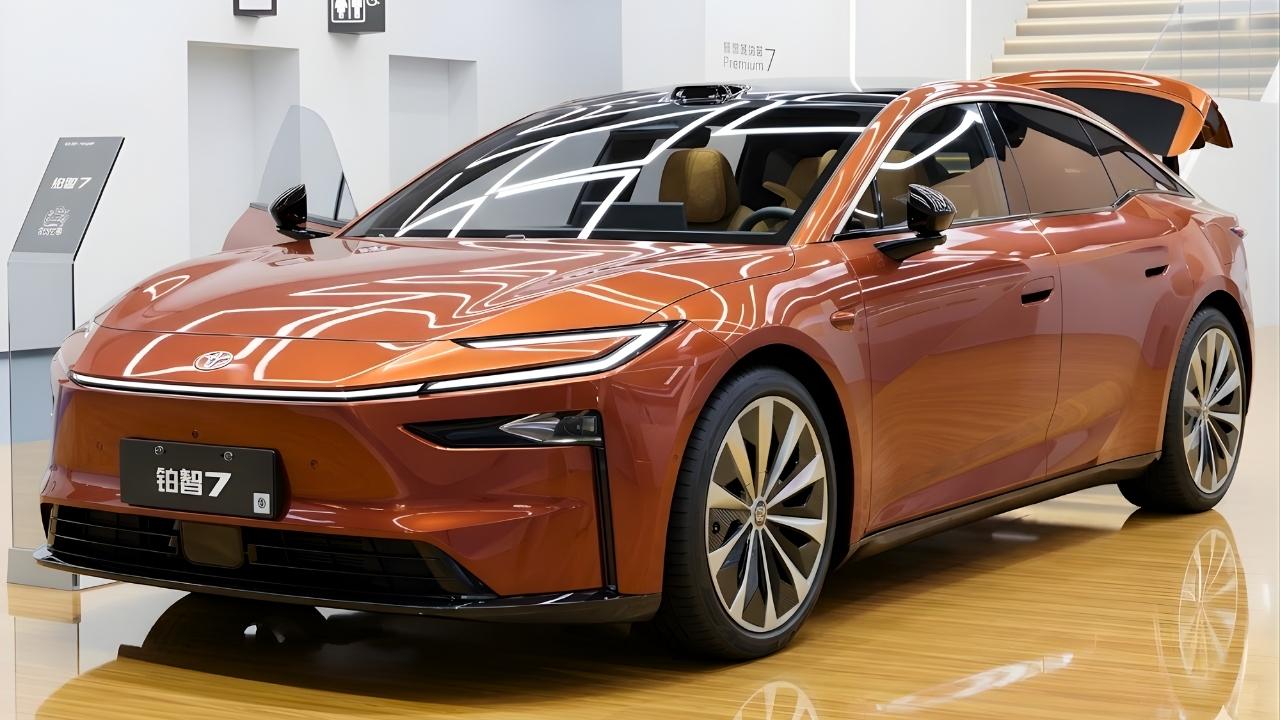
The GAC-Toyota launched the bZ7 for the Chinese market on March 29, 2026, in five configurations, priced between 147,800 and 199,800 yuan, equivalent to ₹20.2 lakh to ₹27.4 lakh. Its look is quite stylish and aerodynamic, appealing to buyers who seek premium and high-tech features.
Within just a few hours of its launch in the Chinese market, it received 3,100 confirmed orders; the Huawei HarmonyOS 5.0 cockpit, Momenta R6 ADAS, and the Huawei Drive ONE electric powertrain are believed to be key factors behind this success.
How’s its design?
It looks quite futuristic, aerodynamic, and premium. Its front fascia features a ‘Hammerhead Shark’ design, a full-width LED DRL strip, complete with a C-shaped lighting signature, and a closed-off grille integrated into a sculpted bumper; overall, the front profile looks sharp and commands a strong road presence.
Its side profile lends it the look of a sporty, luxury fastback; from the sides, we observe a coupe-like silhouette characterised by a sloping roofline. Thanks to its long and flowing body lines, both its elegance and aerodynamics are enhanced, while the 20- or 21-inch alloy wheels further accentuate its premium stance.
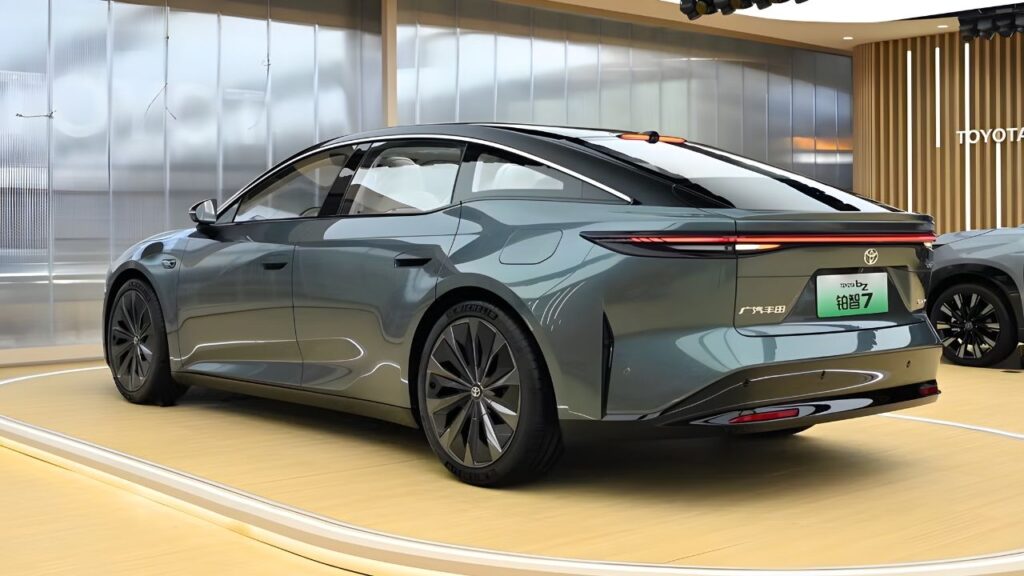
The design is incredibly realistic and minimal yet modern. It features connected LED tail lamps that span the entire width of the vehicle; the subtle boot-lid spoiler adds a sporty touch, while the clean bumper design serves as a visual mirror to the front-end styling.
Speaking of its dimensions, it measures 5130 mm in length, 1965 mm in width, and 1506 mm in height and has a wheelbase of 3020 mm, which places it in the large sedan segment and offers a footprint similar to that of executive luxury sedans.
What’s about its interior?
It comes with a standard five-seater layout, two seats in the front and three in the rear. Thanks to its long wheelbase, the three rear seats offer excellent legroom; furthermore, being an EV, it features a flat floor, which has substantially enhanced the usability of the rear seating area.
Its interior is minimalist yet adheres to a high-tech design philosophy; it features a 15.6-inch floating touchscreen for passenger infotainment, a compact digital instrument cluster, and an optional head-up display, whose overall vibe is more like a luxury lounge and smart device.
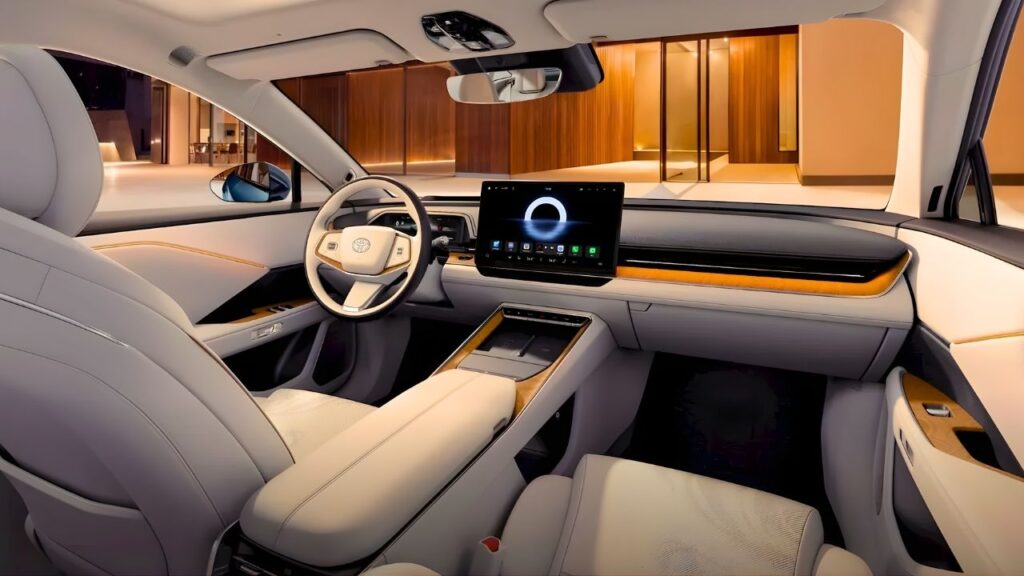
It is heavily tech-focused and powered by the Huawei HarmonyOS 5.0 cockpit, which features an AI-powered voice assistant with support for continuous conversation and multi-command inputs. Its front seats come equipped with a “zero-gravity” feature, incorporating ventilation, heating, and massage functions.
To give it a premium-like feeling, its features include a 23-speaker Yamaha sound system, a four-zone voice recognition system, front and rear wireless charging pads, and an onboard refrigerator and rear tray table. Overall, the cabin feels like a smart luxury lounge in comparison to a typical Toyota cabin.
How is its performance?
It comes with two LFP (Lithium Iron Phosphate) battery packs of 71.35 kWh and 88.13 kWh, which provide a CPCT range of 600 km and 701 km on a full charge, respectively. The real-world range is expected to be approximately 520–530 km and 640–650 km under better conditions.
The 3C does support fast charging, providing a range of 300 km on a charge of just 10 minutes. Exceptionally good charging speed, as the vehicle becomes ready for a long journey during the time it takes for a tea break.
It is powered by the Huawei Drive ONE system with a single-motor rear-wheel-drive option having a power output of 278 hp. Its acceleration time from 0 to 100 km/h is 5.8 seconds, and it has a top speed of 180 km/h, which is ideal for highway cruising, daily city driving, and chauffeur-driven comfort.