
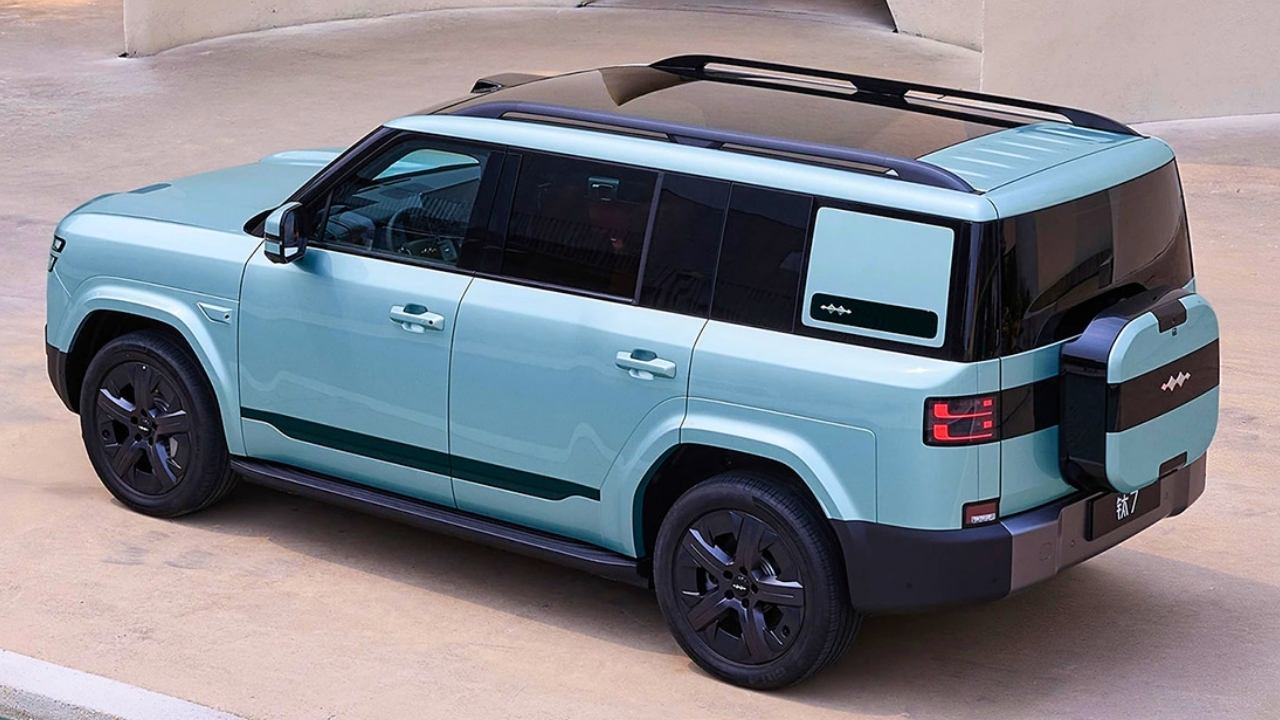
The premium automobile sub-brand of BYD, Fang Cheng Bao (FCB), has come with a flash charging edition for the Tai 7 EV, a mid-size all-electric SUV, for the domestic market on April 29, 2026, in two variants, referred to as base and long range. The price for the first one is 199,800 yuan (29,221 dollars), and the latter is 209,800 yuan (30,683 dollars).
The prices mentioned above are for the vehicles that feature a single-motor RWD configuration. The Chinese automaker is charging an additional 30,000 yuan (4,387 dollars) from the driver who wants their vehicle with a double-motor AWD drivetrain and God’s Eye B advanced driving assistance system, a smart feature that makes the driving almost autonomous.
Meaning to get the base variant in the double-motor AWD drivetrain and with God’s Eye B ADAS, one needs to pay 229,800 yuan (33,609 dollars), and with these additions the long-range variant costs 239,800 yuan (35,086 dollars). In the Chinese market, the main competitors of the new Tai 7 EV are the Tesla Model Y L, Xpeng G9, and NIO ES6.
Battery & Charging
The flash charging edition of the Tai 7 EV is introduced in China with two of BYD’s next-generation LFP battery packs, which are 92 kWh, quoted above as base, and 105.7 kWh, referred to as long range. With one full charge, the base one gives the CLTC range of 675 km (420 miles), and the larger battery packs run up to 470 miles.
Notably, the vehicles with the double-motor setup have a little lower range; the ‘FCB’ is yet to reveal it, but there’s quick acceleration. Thanks to the Blade 2.0 battery LFP, all variants and trims of the vehicle support BYD’s flash charging, meaning they can be charged with a 1.5 MW DC charger that takes 5 minutes for 10-70% of charging, such as quick refueling. similar to the technology recently unveiled by Geely.
Motor Setup & Performance
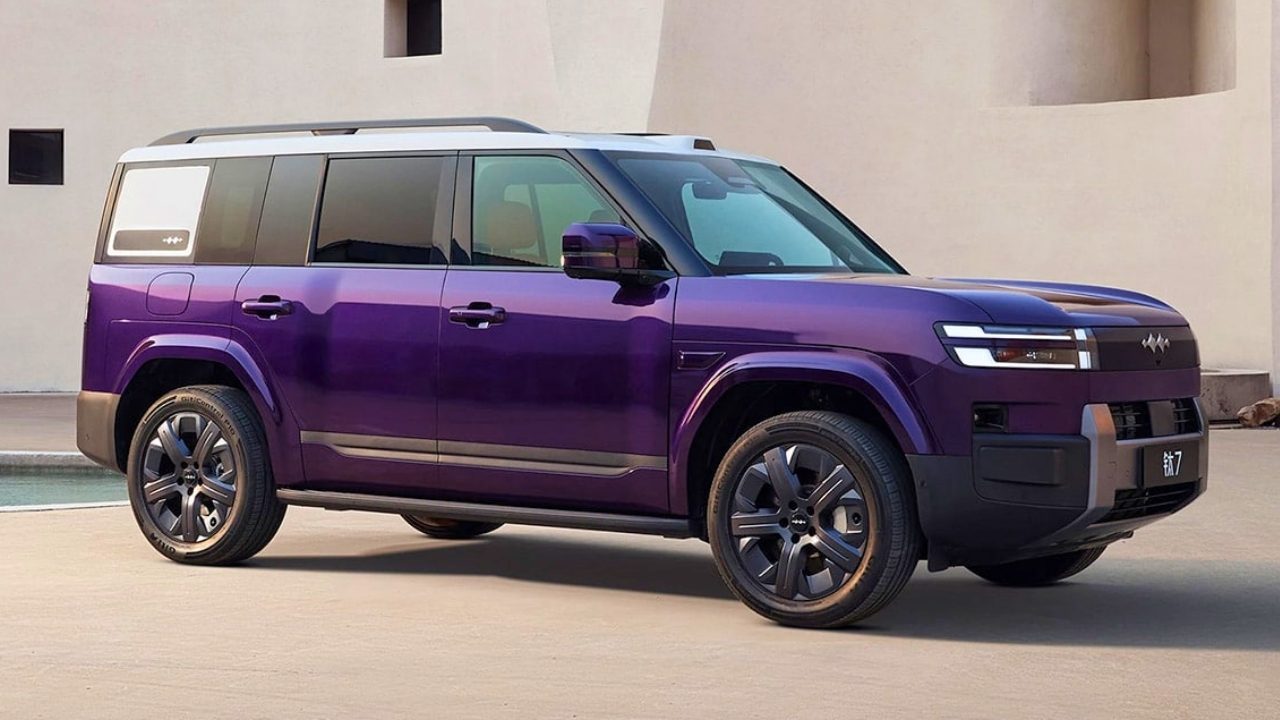
The Tai 7 EV’s flash charging edition comes with a single motor on the rear axle featuring a RWD drivetrain that has a power output of 402 hp (300 KW); and a double motor, one on the front axle and another on the rear axle, featuring an AWD drivetrain that generates the power of 288 hp (215 KW) and 402 hp (300 KW), respectively. The combined power output is 690 hp (515 kW).
The acceleration timing for 0 to 100 km/h (0-60 mph) for the vehicle that comes with a single motor is 7.3 seconds and with a double motor is 4.5 seconds. The top speeds for both variants are also revealed officially: it is 200 km/h (125 mph) for the vehicle that comes with the RWD drivetrain and 240 km/h (150 mph) for the AWD version.
Interior & Features
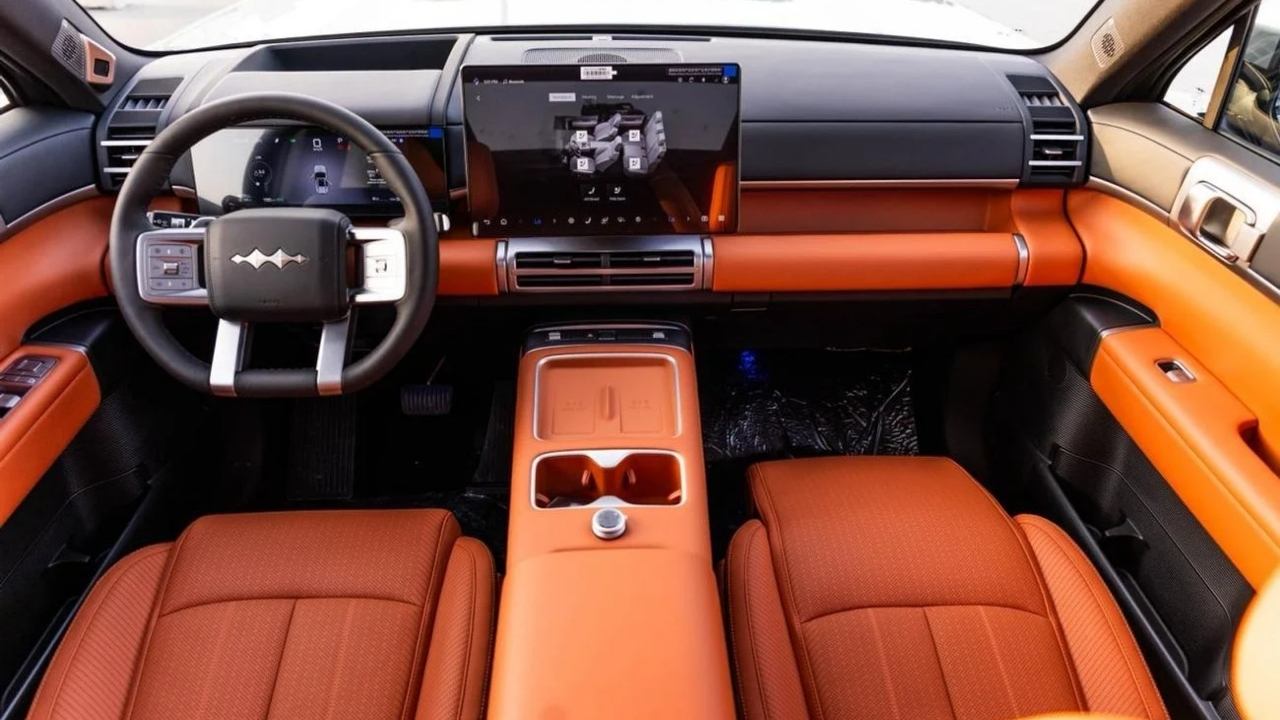
The flash charging edition of the Tai 7 EV comes with a seating capacity of 5 people in a layout of 2 and 3 with a boot space of 970 liters, which helps with carrying multiple big pieces of luggage. The cabin is equipped with a 15.6-inch central touchscreen, a 12.3-inch digital instrument cluster, a 26-inch AR Head-Up Display, an AC knob screen, a rear AC control display, and two 13-inch rear entertainment screens.
The vehicle gets a 20-speaker premium Devialet sound system, which ensures an immersive sound experience. Both the driver and front passenger seats come with ventilation, heating, and massage functions, and rear seats are electronically adjustable. Other notable features are Wireless phone charging pad and a 4.5-liter built-in refrigerator for heating and cooling the foods and beverages.
Dimensions & Exterior
The flash charging edition of the Tai 7 EV measures 4,999 mm in length, 1,995 mm in width, and 1,865 mm in height, giving it a bold road presence. The wheelbase is 2,920 mm, which gives ample legroom for all occupants seated in the rear seats. Up front, it features Matrix LED headlights, a bold and wide grille, and a chunky bumper.
On the side, the vehicle has wide wheel arches, large alloy wheels for better road grip, a straight beltline, and tall proportions to improve road presence, and traditional door handles for better practicality. At the rear, it features a swing-out tailgate and a vertical and rugged taillamp design, which gives it a strong off-road SUV identity.
