
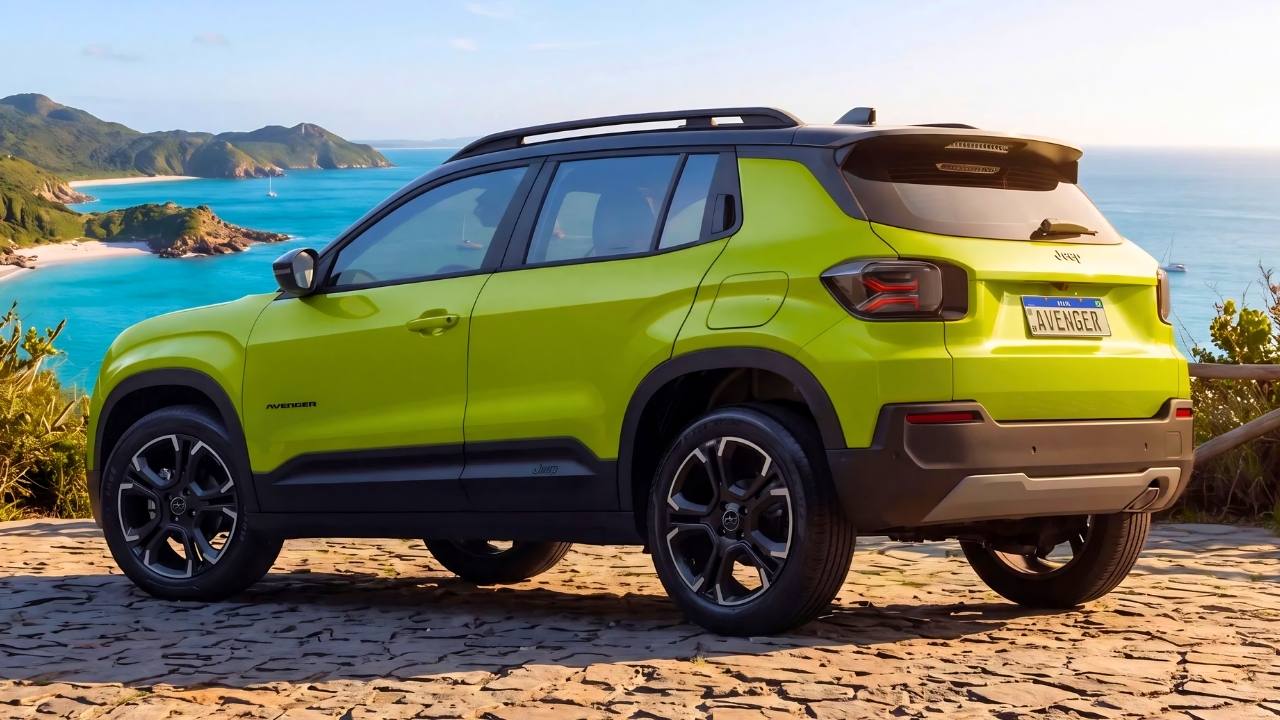
Jeep, a subsidiary of American automaker Stellantis, showcased the facelift of the Avenger at Rio de Janeiro, Brazil, on April 30, 2026, The 2026 Avenger is set to debut in the European market first. Interestingly, it will face a tough challenge from the recently unveiled Volkswagen ID Polo, which also targets the compact EV audience. Following its European debut, the manufacturer plans to launch this all-electric subcompact crossover SUV in other global markets.
Dimensionally, it remains the same, its wheelbase is 2,560 mm, and its length, width, and height are 4,084 mm, 1,776 mm, and 1,528 mm, respectively. The most expected date for the launch is the middle of 2026. Reportedly, it will be available with the price ranging from £30,000 to £38,000 ($38,000 to $48,000).
It is set to come with exterior design and interior feature changes, the powertrain to remain the same. The revealing of the facelift is all about the exterior, but the details for the interior are yet to be made public.
How’s its exterior?
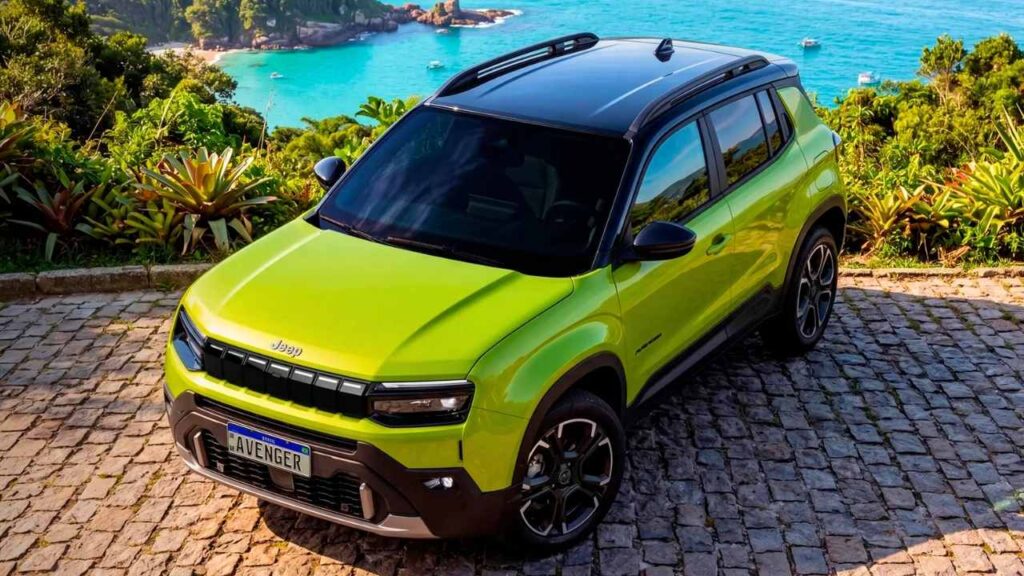
The front fascia gets a new illuminated seven-slot grille with LED segments on each slot, giving it a clean look. The bumper at the front is also tweaked; now it comes with more muscular and rugged styling with the larger air dam for cooling. It gets square-shaped LED headlights above which the LED DRLs are placed, which align with grill lighting.
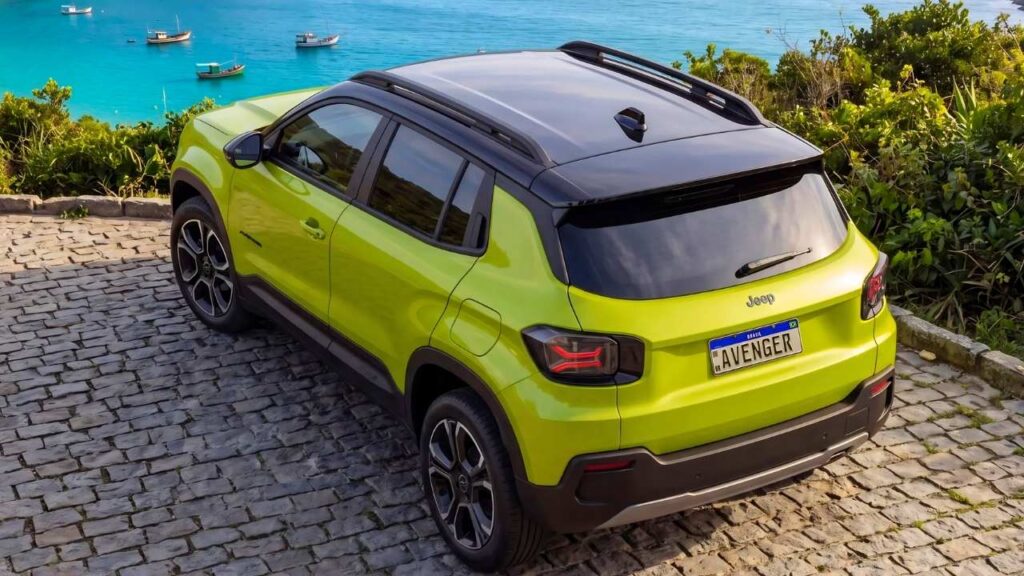
On the sides, its silhouette remains the same as the outgoing model; the main highlight in profile features chunky wheel arch cladding, blacked-out ORVMs (outside rear-view mirrors) and pillars, and roof rails for SUV appeal. Notably, the wheel arches and blacked out elements are slightly tweaked for the sportier look.
At the back, the vehicle gets the Jeep’s signature X-pattern LED taillamps to reflect the brand identity. The tailgate design is also improved to enhance the clean look, and the badging of the Jeep is retained. The rear bumper is also tweaked a little for a more rugged and sculpted look, and the faux skid plate enhances its off-roading appeal.
Interior Expectation
Set to come with a seating capacity of 5 people in a layout of 2 and 3. As there’s no change in its size, the boot space remains 355 liters. The interior is expected to be equipped with two 10.25-inch touchscreen screens, one at the center of the dashboard as an infotainment system and another under the steering wheel as a driver display for the instrument cluster.
The screens may come with an improved user interface and are likely to have feature additions such as connected car technology, a wireless phone charging pad, and front seats with heating and massage functions being electrically adjustable. The rear seats are expected to be more comfortable to ensure that the passengers don’t feel uncomfortable during the long journey.
Powertrain Details
There’s no change in its powertrain, still available with Stellantis’ e-CMP platform; its electrical architecture is 400V. It comes with a single electric motor that is mounted with the front axle, meaning it comes with the front-wheel drive configuration. Its transmission is single-speed automatic.
The power output is 156 hp (115 kW), and peak torque is 260 Nm (192 lb-ft). The acceleration timing for 0 to 100 km/h (0 to 60 mph) is 7 seconds, and the maximum possible speed is 150 km/h (94 mph), considered ideal in the segment for city driving and occasional highway cruising.
It gets a 54 kWh lithium-ion battery that is mounted under the floor for better balance; in case of a full charge, it can run up to 400 km (249 miles) on the WLTP cycle. The real-world range depends on the driving style, road condition, and weather.
It Supports a 100 KW DC charger, which takes 30 minutes for 10-80% charging, adding the range of 300 km (186 miles), and with an 11 kW AC charger, comes with the vehicle for home charging, takes up to 6 hours for full charging.
