
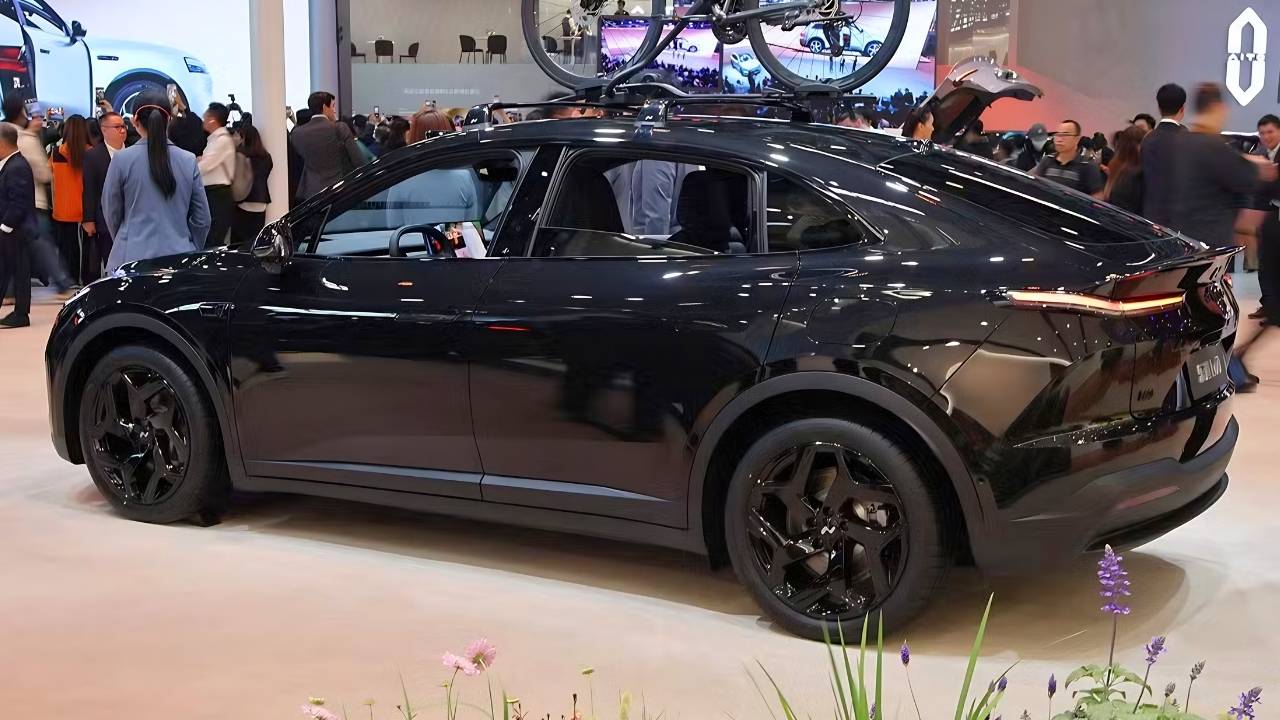
The Chinese automaker Nio’s Onvo is all set to start the pre-sale for the 2026 Onvo L60 by late May 2026, and then the launch will happen in June 2026 in China. The confirmation comes from William Li, founder, chairman, and CEO of the Nio.
Pricing is yet to be revealed, but it is expected to be between 220,000 and 270,000 CNY, which translates to 30,400 to 34,500 USD. Once launched, it will compete with the Zeekr 7X, XPeng G6, and Tesla Model Y L.
While the Nio ES9 remains the brand’s flagship premium offering, the Onvo L60 aims to capture the mass-market SUV segment.
It features a roof-mounted LiDAR unit and an in-house built Shenji NX9031 chip. The LiDAR acts as the primary sensor, while the chip serves as the ‘brain’ for the Level 2 ADAS (Advanced Driver Assistance System), enabling highly advanced driving capabilities
The 2026 Onvo L60 was showcased on April 24 at the Beijing Auto Show, revealing its exterior and design. At the rear of the car gets a split lighting setup. LED headlights are placed lower, and above that, boomerang-style LED DRLs are visible, featuring unique styling.
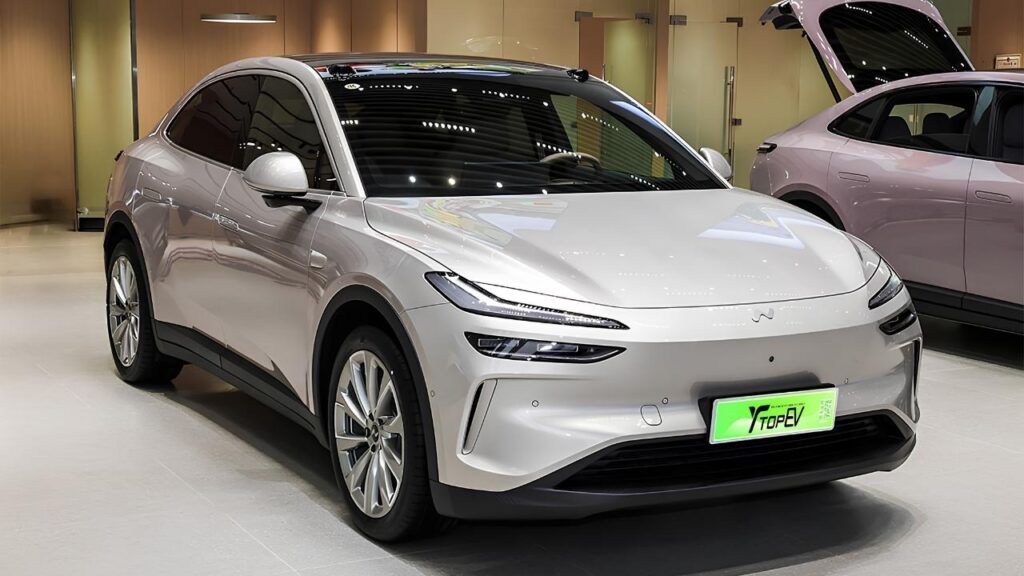
The side has a sloping roofline, the same as the outgoing model, but with more detailing to get a sportier appearance and improve aerodynamics. Flush-type door handles are retained, which adds the premium touch, and redesigned alloy wheels are added to improve its road presence and better grip.
The full-width LED taillights are visible at the back of the car; it gives a wide stance and makes it eye-catching. The roof-mounted spoiler visible from the rear helps in high-speed stability, and the layered bumper adds SUV toughness.
Dimensionally, it is 4,828 mm long, 1,930 mm wide, and 1,616 mm in height, the same as the outgoing model. As there is no change reported in its length, the 2026 model car is also going to have the wheelbase of 2950 mm, giving ample legroom for rear-seat passengers.
Set to be introduced with a seating layout of 5 people in a configuration of 2-3 with a cargo capacity of 495 liters that helps in carrying three pieces of big luggage, the rear seats are foldable, doing so increases the boot space to 1,505 liters.
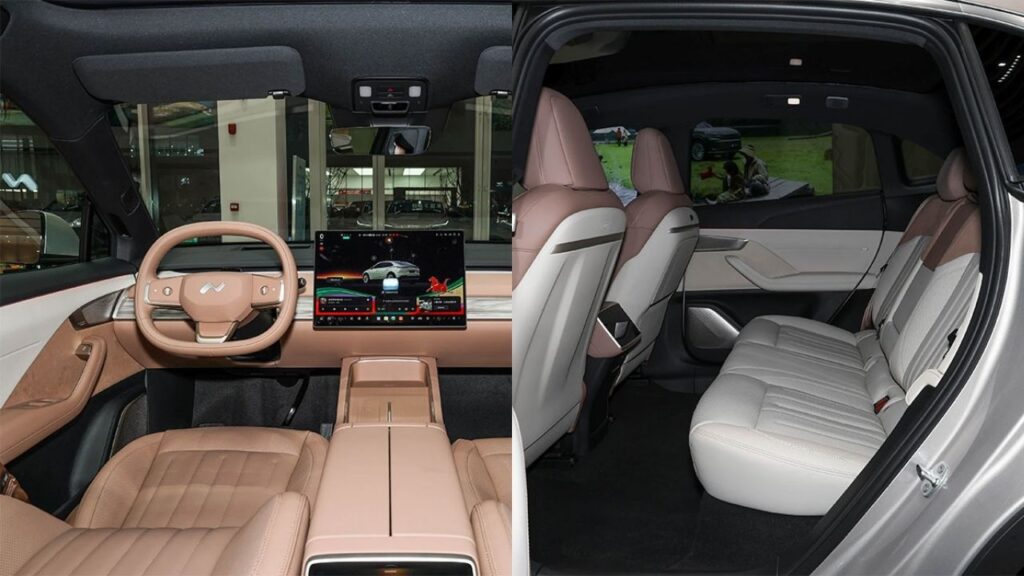
Both front seats are expected to be electronically adjustable with a memory function and may also get heating, ventilation, and massage functions as standard. It is more likely that the rear seat will also feature ventilation and heating functions.
The interior is yet to be revealed but is highly expected to remain the same as the old model, which gets a 17.2-inch horizontal touchscreen 3K Retina-quality resolution and infotainment system. It is placed in the center of the dashboard, which runs on Nio SkyOS.
There’s no drive display but a 13-inch Head-Up Display, which projects speed, navigation, ADAS alerts, and driving information on the windshield so the driver stays focused on driving and drives the car safely.
There’s also an 8-inch control screen for rear-seating passengers for vehicle settings. Other notable features are the panoramic glass roof and ambient lighting; they add a premium touch to the interior. The 18-speaker Dolby Atmos system may also be retained with better output for the better sound experience.
The 2026 model will come with some of the powertrain and performance that is offered with the outgoing model. Built on the NT 3.0 platform and uses 900V high-voltage architecture. Offered with both single-motor RWD and double-motor AWD drivetrains with single-speed automatic transmissions.
The RWD’s power output is 240 kW, peak torque is 305 Nm, top speed is 200 km/h, and 0-100 km/h acceleration is 5.9 seconds; and the AWD’s combined power output and peak torque are 340 kW and 440 Nm, respectively, takes 4.6 seconds to sprint from 0-100 km/h, and goes up to 203 km/h.
Two battery pack options are available: a 60.6 kWh LFP pack delivering a range of 550 km, and an 85 kWh NMC pack that offers up to 730 km on a full charge. Both support DC fast charging, capable of a 10-80% top-up in just 20 to 25 minutes