
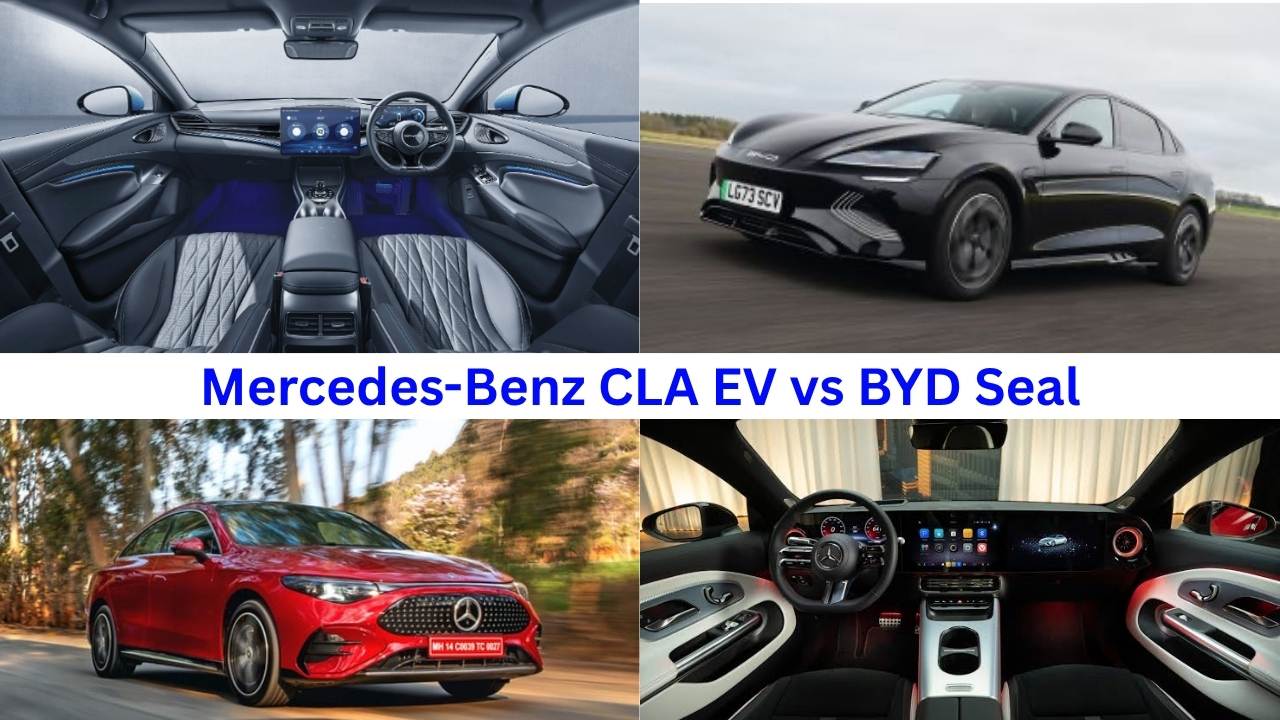
The CLA EV from the German automaker Mercedes-Benz and the Seal from the Chinese automaker BYD are the all-electric four-door sedans. Both are available in three variants; the former is available with the ex-showroom price ranging from ₹55.00 lakh to ₹64.00 lakh, and the latter costs ex-showroom between ₹41.00 lakh and ₹53.15 lakh. Let’s have a closer look at the comparison between them.
Space & Dimensions
The CLA EV and Seal both come with the seating capacity of five people in a layout of 2-3. Behind the rear seats, there’s a boot space for each; the Mercedes-Benz’s car has a cargo capacity of 405 litres, but the BYD’s has only 400. Even though the difference is only 5 litres, both are capable of carrying 2 pieces of big luggage easily.
Notably, both have a frunk (front storage trunk); the CLA Electric’s has 101 litres, while the Seal’s has only 53 litres. Dimensionally, Mercedes-Benz’s car measures 4,723 mm in length, 1,855 mm in width and 1,468 mm in height; BYD’s vehicle length is 4,800 mm, width is 1,870 mm, and height is 1,460 mm. It is clearly visible that the latter one is a large car.
The Seal’s wheelbase is 130 mm longer than the CLA Electric’s, meaning the BYD car has a more spacious cabin with better legroom. The Mercedes-Benz’s and BYD’s cars have a wheelbase of 2,790 mm and 2,920 mm, respectively. Both EVs come with a similar wheel size; it is important to note that only their top-end variant has 19-inch wheels.
Powertrain & Performance
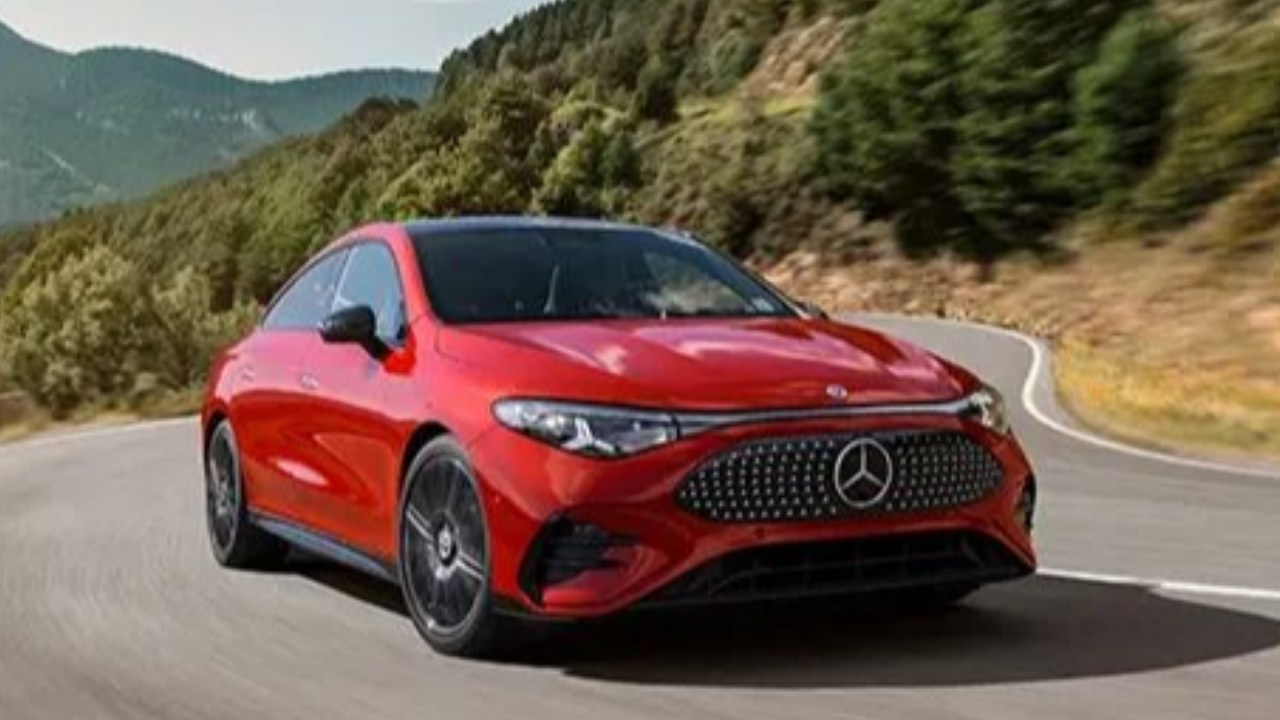
The CLA Electric and Seal, they both come with two battery packs; the first one is offered with 58 kWh and 85 kWh and the second one with 61.44 kWh and 82.56 kWh. Notably, the Mercedes-Benz car is available with single-motor RWD, but the BYD is available with a dual-tone AWD drivetrain.
The CLA Electric has a power output of 224 hp and 272 hp with the standard and large battery pack, respectively, and the torque is 335 Nm for both; the Seal RWD variants generate the power and torque of 204 hp and 310 Nm with the standard and 313 hp and 360 Nm with the larger battery packs. It is also notable that it has only one AWD variant, and it generates the power of 530 hp and 670 Nm.
The Mercedes-Benz’s car acceleration 0-100 km/h is 7.5 seconds and 6.7 seconds for the standard and long-range battery packs, respectively, and BYD’s car with RWD drivetrain accelerates from 0-100 km/h in 7.5 seconds with the standard and 5.9 with the larger battery; the only AWD takes only 3.8 seconds to accelerates from 0-100 km/h.
The CLA Electric with the battery pack of 58 kWh gives a range of 543 km; with 85 kWh, it runs up to 792 km. The Seal RWD variant has a range of 460 km and 570 km with battery packs of 61.44 kWh and 82.56 kWh, respectively, and AWD is equipped with an 82.56 kWh battery, giving a range of 520 km. These are WLTP-claimed; the real one may be a little shorter.
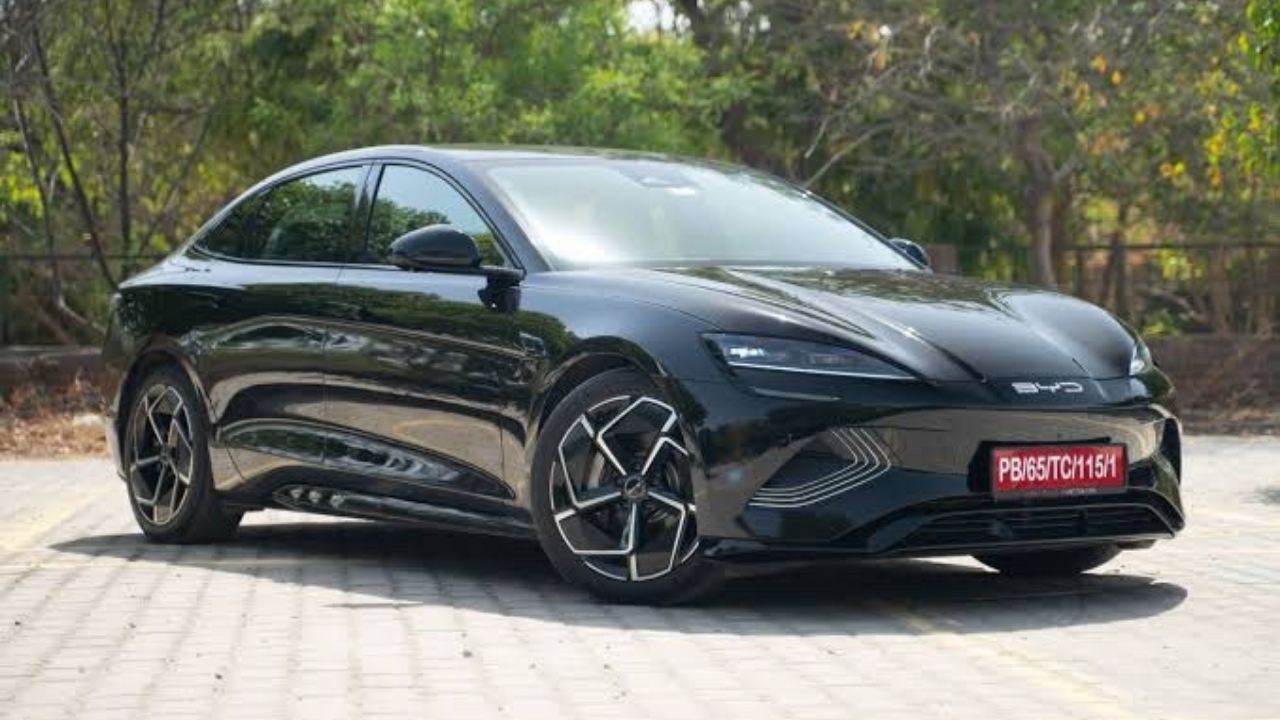
The Mercedes-Benz’s electric vehicle support DC charger is up to 200 kW and 320 kW for standard and large battery packs, respectively, taking 20-22 minutes for 10-80% charging; and the BYD’s EV support 110 kW DC charger for standard and 150 kW for large battery pack takes 45 minutes from 10-80% charging.
Features & Technology
The CLA Electric front seats feature only heating and massage functions, but the Seal comes with both heating and ventilation functions, although it doesn’t have a massage function. Mercedes-Benz’s car has only one wireless phone charging pad, but BYD offers two in its car. Notably, the V2L (vehicle-to-load) feature is exclusively offered by the Chinese automaker.
As for the infotainment system, the German carmaker offers a 14-inch HD fixed touchscreen, and the Chinese one provides a 15.6-inch rotating touchscreen. Both come with 10.25-inch digital instrument clusters, but the Mercedes-Benz even offers a rear screen for the entertainment of passengers. The sound system in the CLA Electric features 16 speakers, but the Seal only has 12 speakers.
