
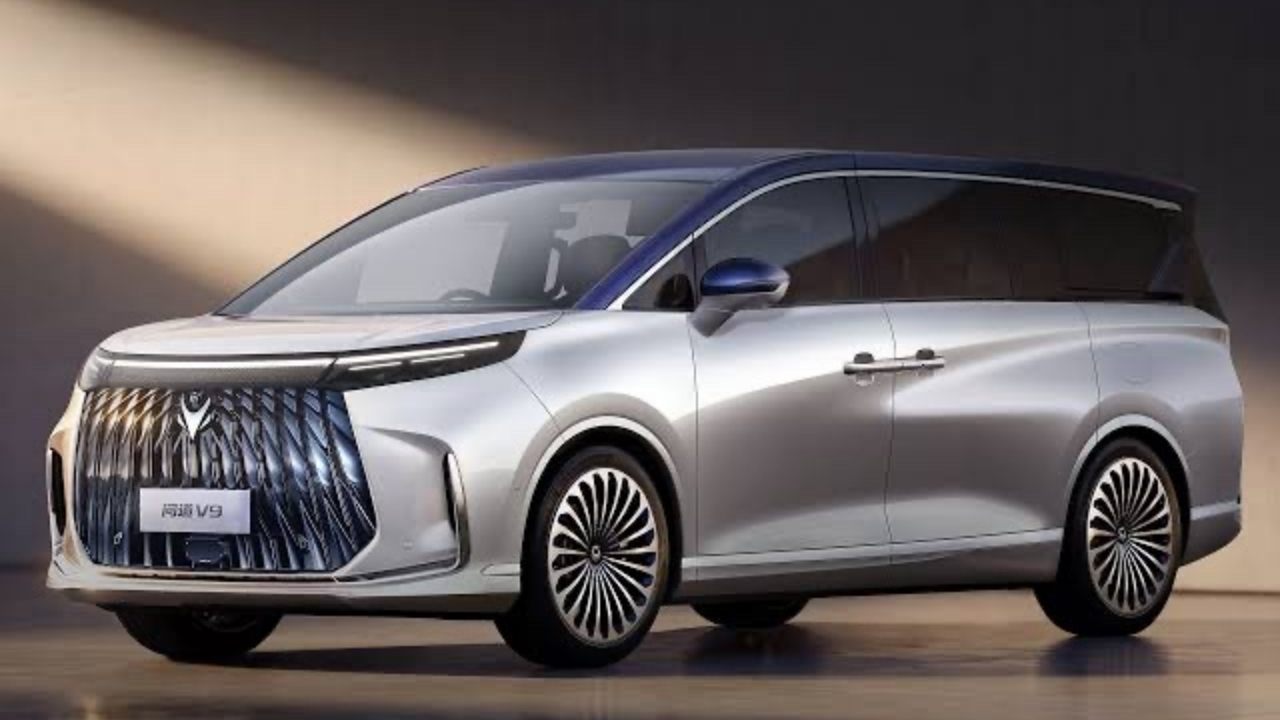
Beijing Automotive Group’s Arcfox started the pre-sale for the extended-range electric full-size minivan Arcfox WenDao V9 on April 28, 2026, with the price ranging from 219,900 to 286,900 CNY, which translates to 25.4 lakh to 33.2 lakh INR. The booking is still taking place with the amount of 5,000 CNY (71,050 INR). Now, the Chinese automaker has announced that they will launch it in the domestic market on May 27, 2026; the sale price is all set to be lower than the cost revealed for the pre-order.
Its length, width and height are 5,300 mm, 1,980 mm and 1,850 mm, respectively. The wheelbase is 3,200 mm; compared to the recently launched Zeekr 009, it is 5 mm shorter but 90 mm longer than the Denza D9. Upfront, it gets a waterfall grille with the brand’s logo, adding a modern touch, and a split LED headlight setup. The star-ring daylight running lights are placed at the edge of the hood, and the main headlights are placed below that for better visibility during nighttime driving.
In profile, black-outed A, B, C and D pillars are clearly visible, giving a premium side look. Other notable features at the sides are body-coloured ORVMs that are electron-adjusted, and the design is the way that improves aerodynamics. It also features turbine-style aero-optimised multi-spoke alloy wheels that enhance the road presence and grip and flush-type door handles, which not only reduces drag but also adds modernity.
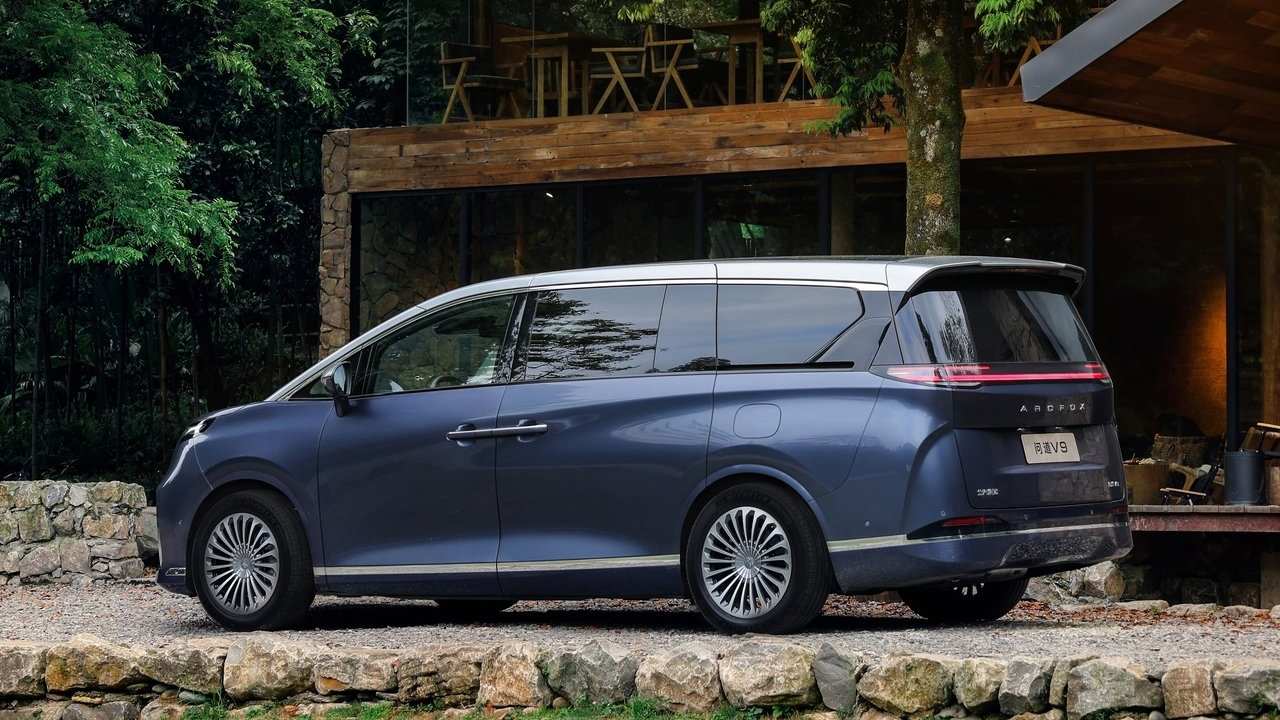
The rear gets full-width LED taillights that expand across the tailgate and end at the outer edge; it creates a wide stance and also improves nighttime visibility. Above the window, there is an integrated spoiler keeping the car stable even at high speed. It comes with a seating capacity of 7 people in a 2-2-3 layout; behind the third-row seat, there is a cargo space of 360 litres, which can be used to carry two pieces of full luggage. Notably, the rear seats are foldable; doing so helps in carrying more luggage when 2 or 4 people are travelling.
Inside the cabin, it gets an 8.8-inch digital instrument cluster under the steering wheel showing all driving data and a 15.6-inch infotainment touchscreen at the centre of the dashboard which acts as the control panel of the cabin, as most of the settings are touch-based. For entertainment of rear-seating passengers, a ceiling-mounted 21.4-inch screen is available optionally, which supports both gaming and video streaming. The cabin’s tech is powered by a Qualcomm Snapdragon 8775/8155 chip, depending on the variant.
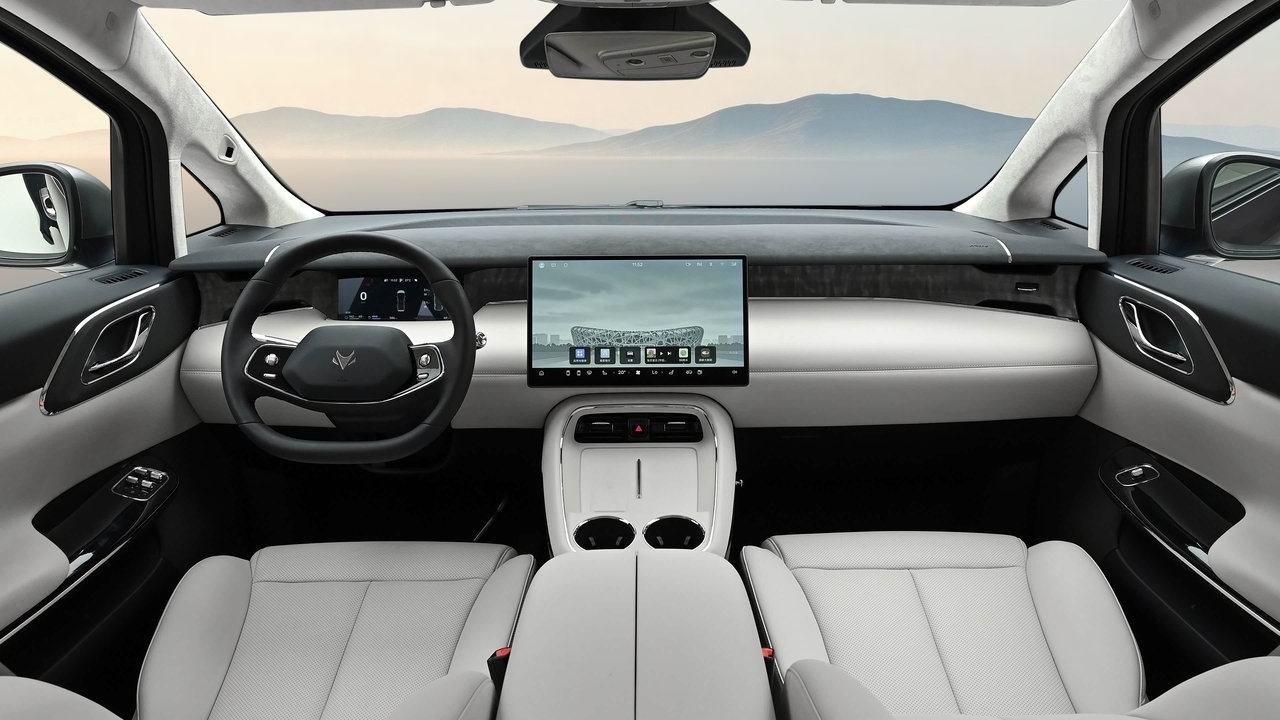
Notably, the second-row seats are caption-type; it features 124° reclining seats, a 16-point massage function, and also ventilation and heating to keep the occupants warm and cool in extreme cold and heat, respectively. The second row also has a built-in refrigerator of 11 litres that supports both heating and cooling, ideal for keeping food and beverages. It comes with the Yuanjing intelligent driving assistant, which supports urban and highway navigation autopilot, making the driving stress-free.
Under the hood, it gets a 1.5-litre four-cylinder turbocharged petrol engine that works a generator, whose maximum power output is 118 kW. An electric motor is mounted with the rear axle, meaning it features a rear-wheel drive drivetrain. Uses single-speed automatic transmission. The power output of the motor is 227 kW, which helps it accelerate from 0 to 100 km/h in 7.9 and 8.4 seconds with the LPF and NMC battery pack, respectively; the maximum speed for both is 190 km/h.
The offered battery packs are 37 kWh LFP and 53.4 kWh ternary NMC, whose only-electric CLTC range is 216 km and 315 km, respectively. Notably, the combined range is 1,250 km with the LFP battery pack and 1,330 km with the NMC battery pack. Both are built on 800-volt electrical architecture, which supports fast charging and charges the vehicle from 10 to 80 per cent in 15 minutes. The fuel efficiency for the LFP and NMC variants is 6.85 litres and 6.88 litres, respectively, per 100 km driving.