
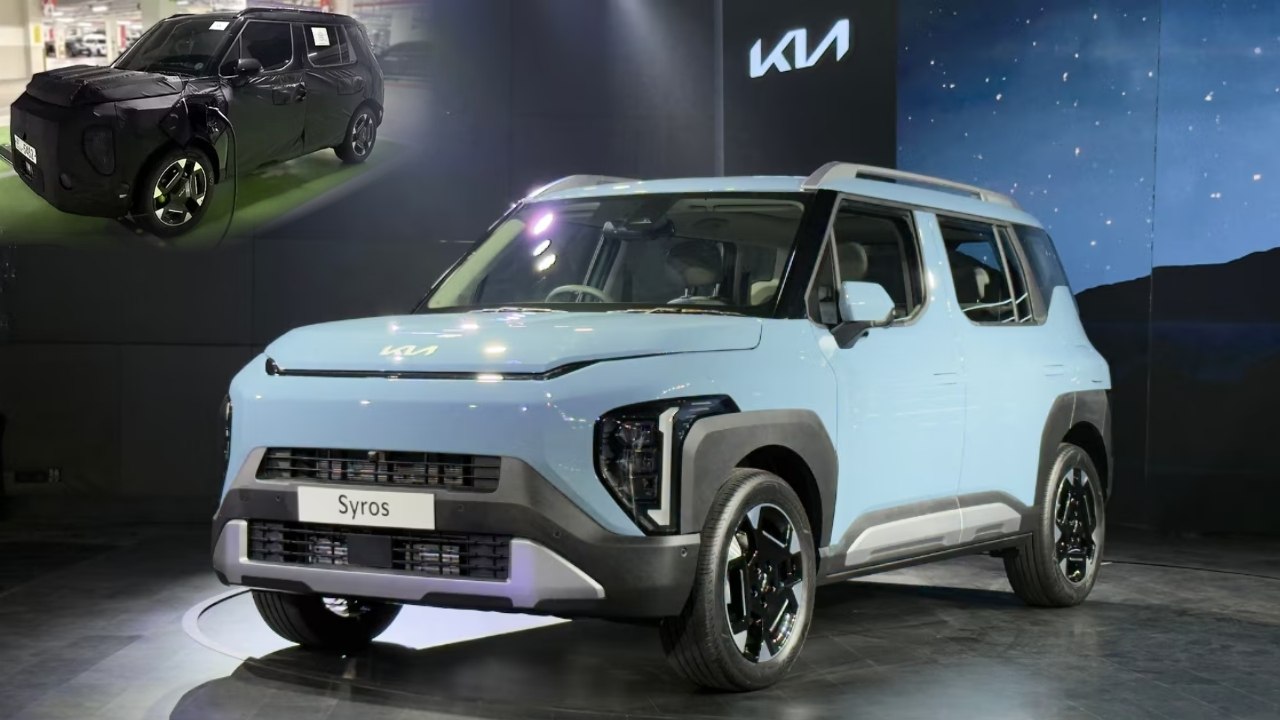
Kia India, the Indian subsidiary of South Korean automobile manufacturer Kia, is gearing up to launch the smallest and most affordable SUV for the domestic market; it is the Kia Syros. Back in April 2025, they confirmed the development plan, and recently, on April 12, 2026, during Kia’s investor presentation, the carmaker made a public announcement that they may showcase it in July 2026 with the beginning of the pre-order.
Following its unveiling, Kia India is expected to launch and start the sale of the Syros EV in August 2026; September 2026 is the most anticipated date for its delivery to start. One thing that EV lovers and enthusiasts are searching for is its price; notably, there’s no word from the carmaker regarding it. Some reports suggest that it will be available for sale with a starting ex-showroom price of 15 lakh for the base one; the top trim may cost more.
The upcoming four-wheeler EV from Kia India is a subcompact all-electric sport utility vehicle, which will compete in the Indian market with the other EVs of the segment, such as the Tata Nexon EV, MG Windsor EV, and Mahindra XUV 3XO EV. They are already available for sale in India with ex-showroom prices of ₹12.04 lakh to ₹14.00 lakh, ₹12.49 lakh to ₹17.49 lakh, and ₹13.89 lakh to ₹14.96 lakh, respectively.
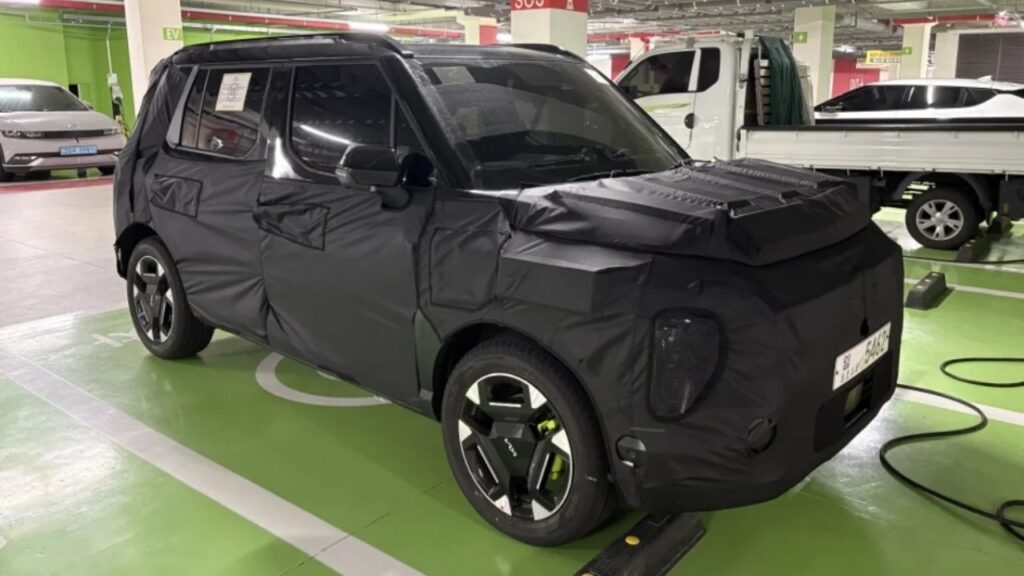
Notably, the Kia Syros EV isn’t born electric; it is derived from its ICE (internal combustion engine) counterpart, meaning in terms of exterior and interior design and features, the Syros is most likely to be similar to its ICE sister. However, it is certain that it will get some changes in exterior; the one change that is confirmed and has already been seen in the spy shots of the testing mule is that it will come with a closed-off grille, giving EV styling.
The exterior elements that the Syros EV is expected to borrow from its ICE counterpart include vertical ‘I’-pattern LED daytime running lights and a 3-pod vertically stacked LED headlight design, flush-type door handles, 17-inch dual-tone crystal-cut alloy wheels, roof rails, powered ORVMs, an integrated rear spoiler, L-shape LED taillights, a large rear windshield, vertical tail lamps on the fender, and Kia lettering on the tailgate.
Like the exterior, the cabin of the upcoming Kia EV is also expected to be similar to the ICE car’s, with upgrades in the dashboard. Reportedly, the interior will get a two-spoke steering wheel with physical buttons for shortcuts and controls. The dashboard will feature a large connected 30-inch screen that starts from the right-hand side and ends at the center.
The 30-inch connected LED screen includes a 12.3-inch digital instrument cluster showing driving data, a 5-inch HVAC (Heating, Ventilation, and Air Conditioning) screen to control AC, and a 12.3-inch infotainment system that supports wireless connectivity via Android Auto and Apple CarPlay and even via Bluetooth.
Other features expected are the 6 airbags, level 2 ADAS, ventilated seats, powered driver seat, eight-speaker Harman Kardon sound system, wireless charging pad at the front row and USB charging ports at both rows, double-pane panoramic sunroof with heat protection, multiple storage compartments, and large boot space compared to the ICE counterpart, as it is set to feature a flat floor.
Nothing about the powertrain and performance is confirmed; reports say that it will get the same battery pack that we see in the Hyundai Inster EV. So, it may be introduced with the 42 kWh and 49 kWh LFP batteries, whose ranges are 355 km and 370 km, respectively, on the WLTP cycle. Like getting a permanent magnet synchronous motor at the front axle, whose output with a standard battery pack is 97 PS but with a larger one is 115 PS and peak torque of 147 Nm with both battery packs.