
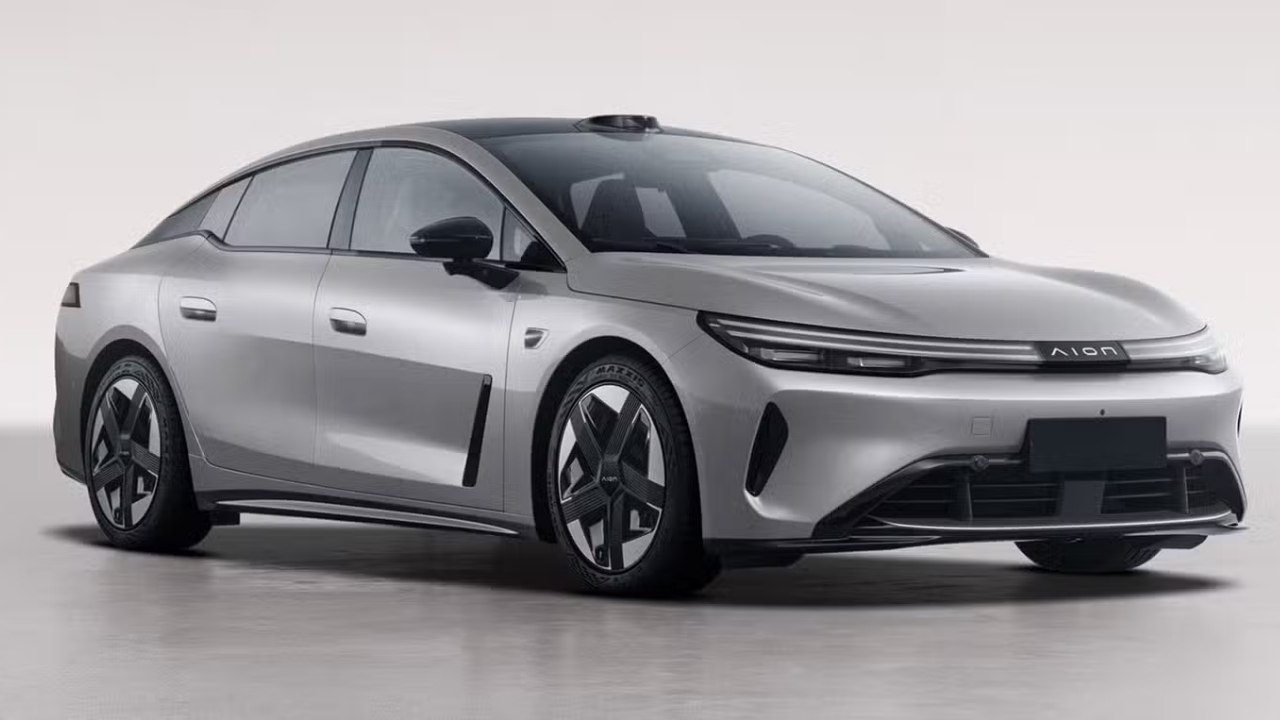
The Ministry of Industry and Information Technology, People’s Republic of China’s 410th batch of the ‘Announcement of Road Motor Vehicle Manufacturers and Products’ has revealed the core specifications of the GAC Aion Ray 7, an upcoming five-seater battery electric fastback sedan, prior to the market launch in China.
The GAC Aion, a subsidiary of GAC Group, which makes EVs, is set to introduce it to the Chinese market by late 2026. On July 28, 2026, they revealed the Ray series by teasing the GAC Aion Ray 7 pure-electric smart sedan, which revealed the front-end and rear lighting signatures.
From the GAC Group, the GAC Aion Ray 7 electrified sedan is set to be the first vehicle that gets the ‘Aion’ badge, and it also marks the beginning of the youth-focused Ray series. As a battery electric vehicle, it features a Huawei Digital Power Technology Co., Ltd.-supplied permanent magnet synchronous motor that is mounted on the rear axle with a one-speed automatic gearbox.
The maximum power output of PMSM is 180 kW, which translates to 241 hp. The carmaker has filed for use of two different lithium-ion battery packs; however, the capacity of either of them isn’t revealed. Of the two, one is sourced from CATL and another from Yinpai Battery. Depending on the battery pack, the kerb weight varies.
The one with a standard battery pack has a kerb weight of 1,720 kg, but the same larger one is 1,855 kg. Filing shows the maximum speed of 180 km/h; we expect it to be the same for both battery packs. Its 0 to 100 km/h sprinting timing is still pending; it is certain that models equipped with large battery packs will accelerate faster.
The GAC Aion Ray 7 is a five-seater sedan with a seating arrangement of 2-3 with ample legroom, headroom, and shoulder room for the driver, co-passenger, and rear-seat occupants. Its length is 4,960 mm (195.3 inches), width is 1,900 mm (74.8 inches), and height is 1,455 mm (57.3 inches). The wheelbase of this upcoming sedan measures 2,920 mm (115.0 inches), 80 mm (3.15 inches) less than its main rival in China, the Xiaomi SU7.
It is equipped with the world’s first chip-level integrated drive-and-control (fusion) architecture, which enhances handling, stability, and braking response, and it is all set to be available for sale with the roof-mounted LiDAR as optional, which is part of ADAS for the advanced environmental mapping and obstacle detection to make the driving autonomous, featuring Level 4 autonomous driving technology.
Outside, it gets a double-layer LED daylight running light below the bonnet with the Aion logo for branding and a fresher look and double-toned alloy wheels with flared wheel arches. It boasts an outside rearview mirror on the front door integrating side LED indicators, and handles for the door are semi-hidden flush types to reduce drag.
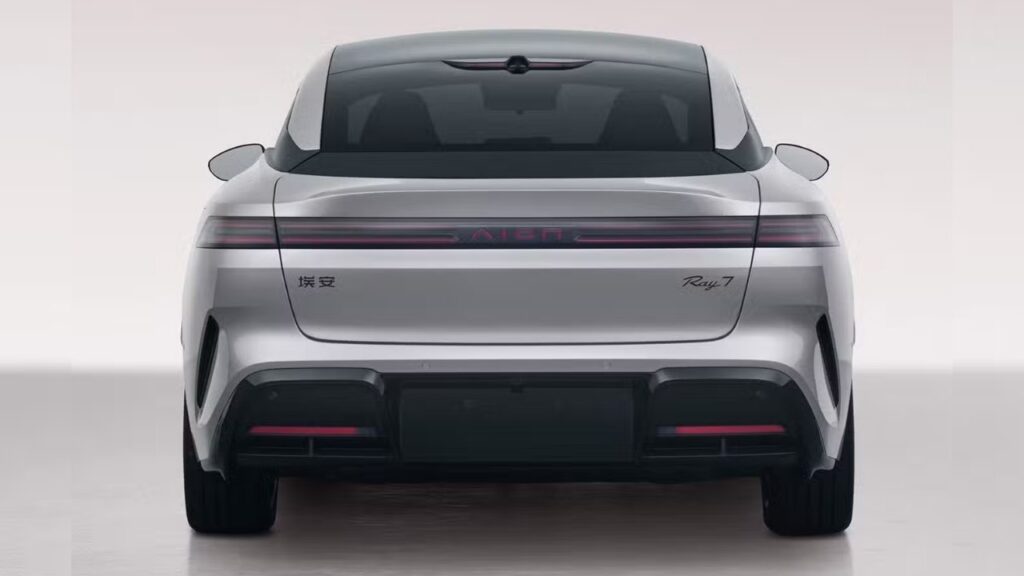
Other notable elements on the exterior are side air curtains and lower air intakes at the front end; a floating roof with blacked-out pillars on the sides; a full-width LED taillight; a roof-integrated windshield with a camera on the top; a minimalist tailgate with “Ray 7” lettering on the right side and the same in Chinese on the left side; and a horizontal-shaped reflector on the black bumper on the rear.
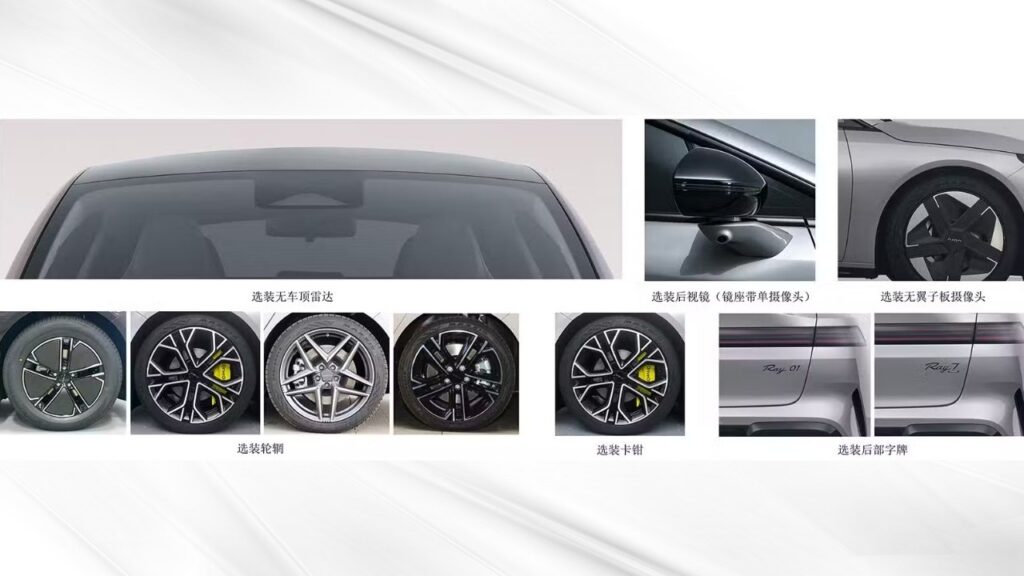
As of now, there’s no update on its market launch in China. We are expecting that they will start the pre-sale in the last quarter of 2026. Notably, within a month after the pre-sale start, the market launch is expected, followed by delivery. As the GAC Aion Ray 7 will compete with the Xiaomi SU7, it may cost 200,000 to 250,000 yuan (29,640 to 37,050 USD).
