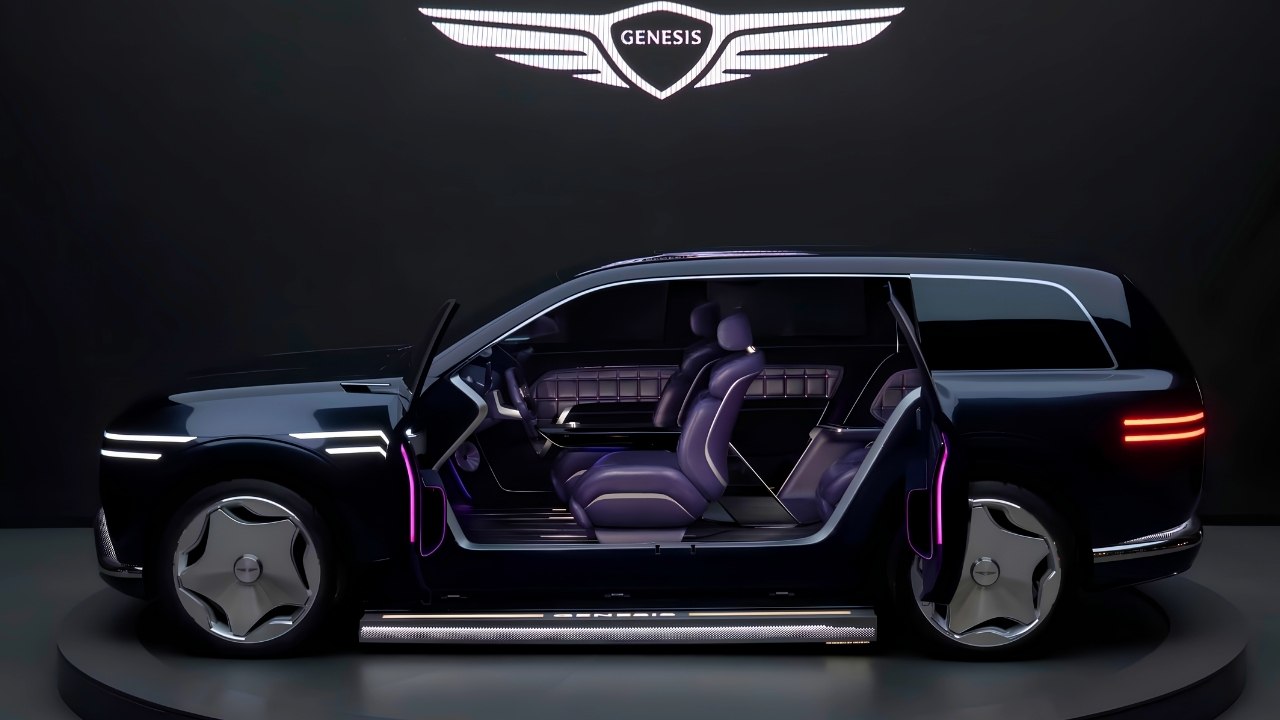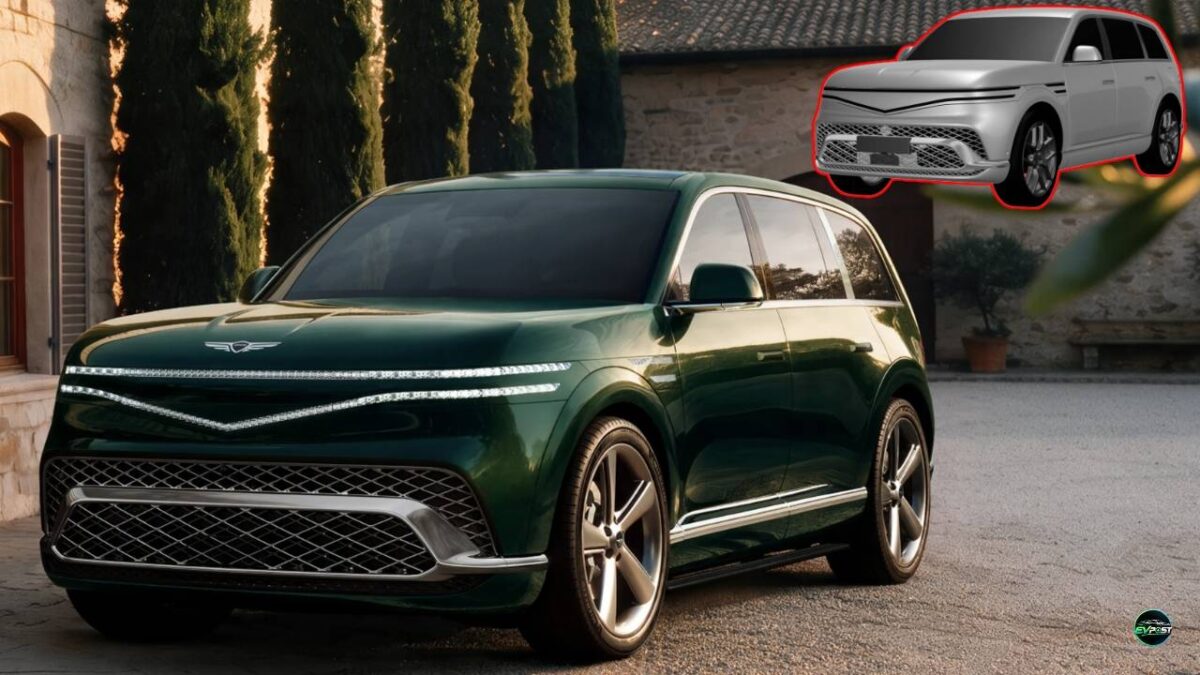
Genesis, the luxury subbrand of Hyundai Motors Group, has recently patented the Genesis GV90 in India, hinting at its launch here. In the Indian market, the brand doesn’t sell any models. The recently patented one is going to be the first vehicle from the carmaker in India. The launch of this vehicle will mark the entry of the brand.
The GV90 patent images floating online reveal that its design of the Indian-spec model is going to be similar to the one that was showcased this August as the standard version. It means the one Genesis has patented in India features a conventional door. From the sides, it seems to have a three-row seating layout.
The design is familiar to the international-spec standard variant.
In the patent images, we can see a two-line full-width LED daylight running light giving it a distinctive lighting identity. The lower DRL has a V-shape at the centre which further enhances front-end lighting details. Other visible details are a clamshell-style bonnet with a sculpted surface and large gloss-black air inlets.
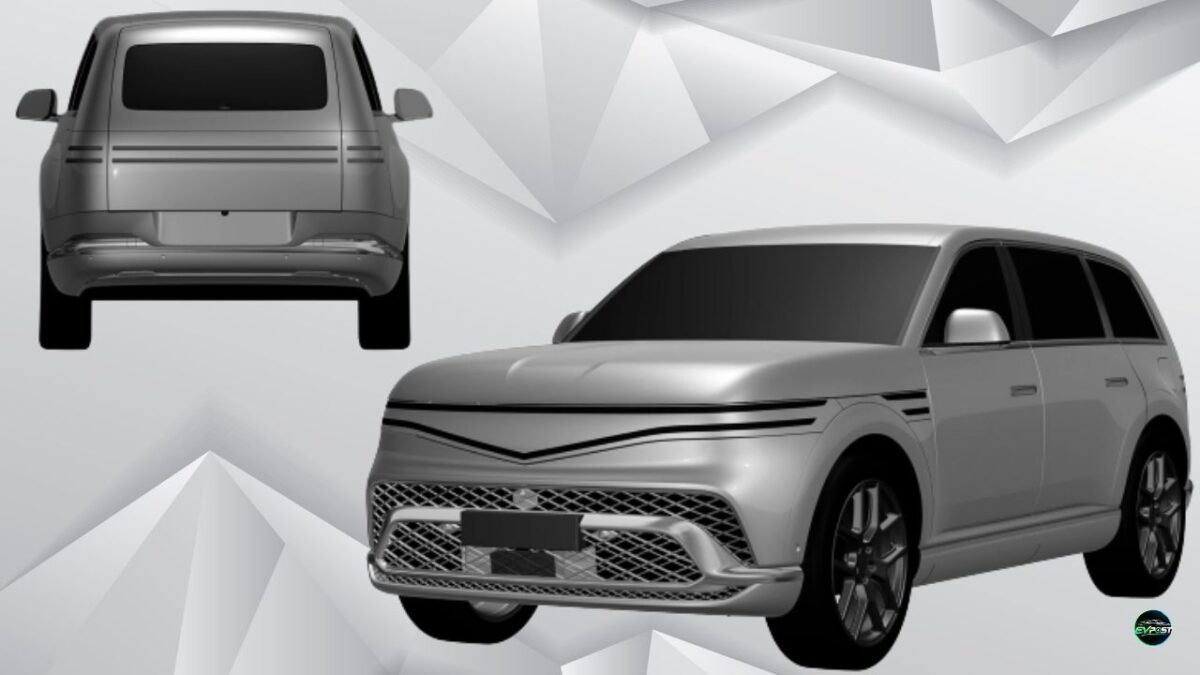
The sides can be seen with flush-type door handles for enhanced aerodynamics and improved efficiency. Outside-rear view mirrors are available on A-pillars that seem to integrate side indicators, and pronounced wheel arches bracket large two-spoke alloy wheels. Its silhouette gives the feel of a full-size SUV.
Patent images show the rear portion reveals a large windscreen to ensure a clear view of the back on the IRVMs and through-type LED full-width taillamps. The lighting signature at the back will play a crucial role in creating a wide stance; it seems to also make this vehicle recognisable from the back.
Same specifications and features are anticipated for the Indian-spec model.
Since the design for the recently patented Genesis GV90 in India is familiar to the international-spec version, we expect that the rest will also be identical. Notably, the international-spec GV90 measures 5,285 mm longer, 2,030 mm wider, and 1,825 mm taller, with a wheelbase of 3,245 mm and ground clearance of 224 mm.
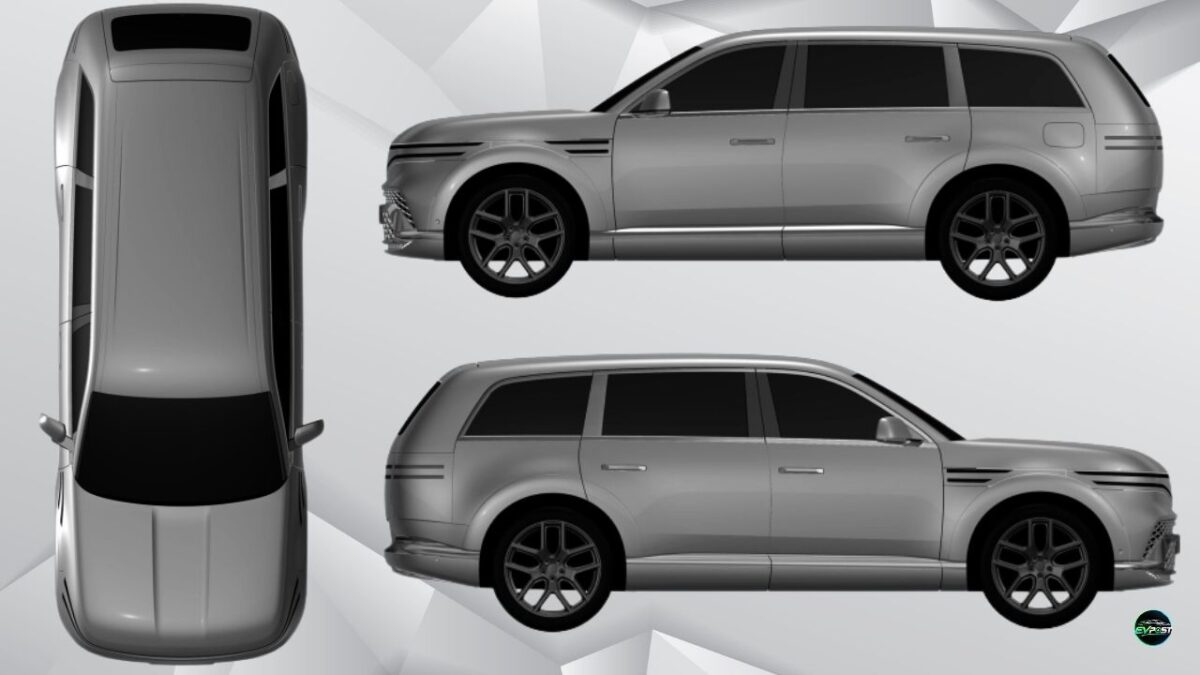
This model sits on 22-inch alloy wheels. Underpins a build on the eMP (Electric Mobility Prime) platform, which has multi-chamber air suspension with adjustable air springs. This car also features electronic damping control, adaptive ride-height adjustment, and active RWS rear-wheel steering with up to 5 degrees.
Genesis says disc brakes are available on all wheels with a 4-piston monoblock on the fronts; things regarding the rear are still unconfirmed. Inside the cabin, this car gets a 23.6-inch OLED Cinematic Display at the centre of the dashboard while driving, which extends to 24.6 inches when parked.
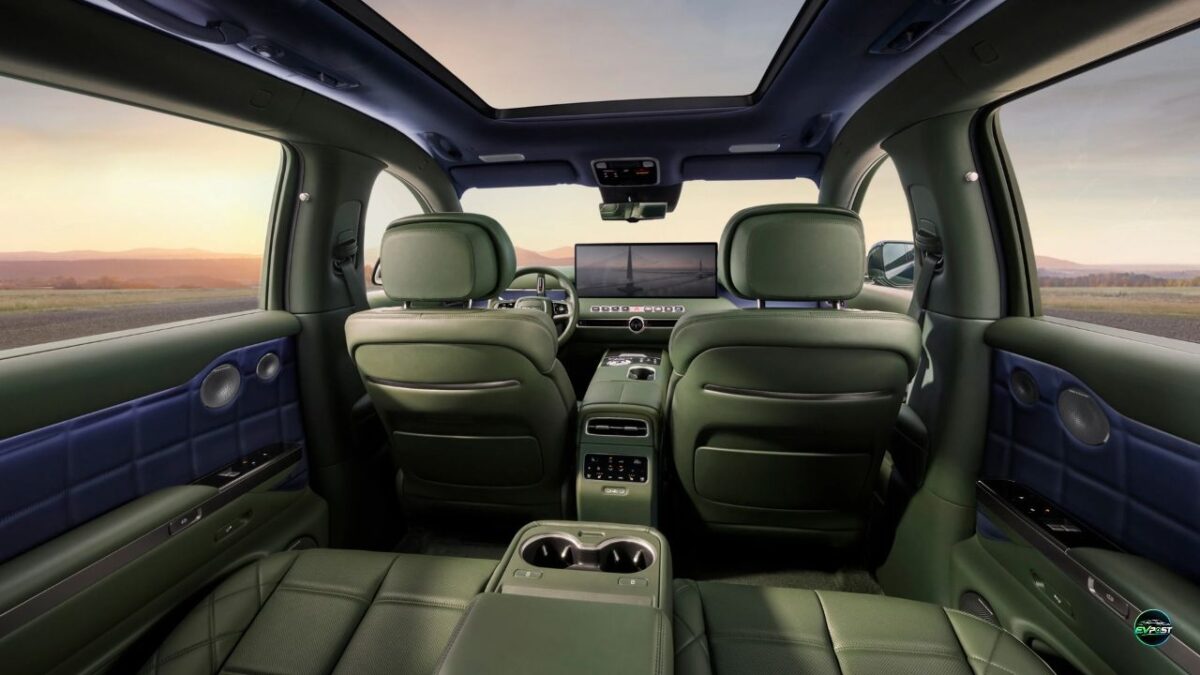
There’s no digital instrument cluster; instead, it gets a 25-inch head-up. Display that projects driving data on the windscreen. Seats come with heating, ventilation, and massage functions. Following an immersive audio experience, the 25-speaker Bang & Olufsen Premier 3D audio system is available.
Moving the wheels are electric motors, which are present on the front and rear axles. The power output and peak torque for the front one are 240 kW and 350 Nm, respectively, and the rear one delivers 250 kW and 450 Nm. Combinedly, these motors put out 490 kW and 800 Nm.
Two electric motors enable all-wheel drivetrain, and with the 123.5 kWh lithium-ion battery pack beneath the floor, it gives a 500-kilometre claimed range. It has been officially revealed that it supports up to a 350 kW DC charger, which takes 12 minutes for 10 to 80 per cent charging.
India’s launch is expected in 2027.
Patenting the Genesis GV90, Hyundai has confirmed that its luxury subbrand will soon make its debut in the Indian market. Genesis or its parent company hasn’t yet revealed any date for its launch here, but reports suggest that its launch in India is anticipated in 2027, most likely in the first half of the year.
In the South Korean market, this model is already on sale with the price of KRW 139.5 million, which is equivalent to Rs 97.97 lakh. In SK, it is also sold as a Neolun variant with couch-style doors, the price for the same being KRW 189.9 million, equivalent to Rs 1.33 crore; its Indian price won’t be revealed before its launch.