
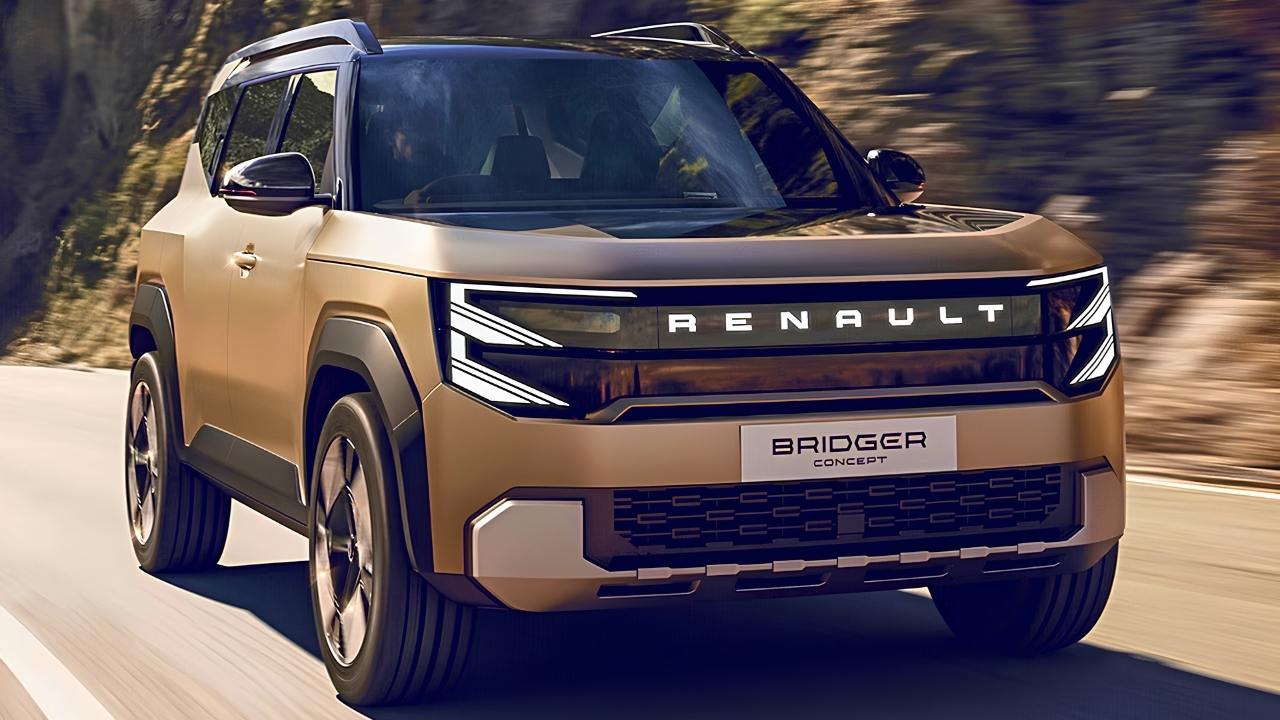
The French automobile manufacturer Renault and Japanese carmaker Nissan will soon launch the first electric vehicle for the Indian market; both are set to be under the sub-4-metre segment. Renault’s first EV for India is set to be based on the Bridger, which may be named the Bridger EV.
After the launch of the first electric vehicle from Renault, Nissan will introduce its first EV for the Indian market on the same platform. They both are set to be built on Renault’s R-GMP architecture; following the launch, they will compete with electrified SUVs in the segment.
As of now, there’s no word for the launch of Renault’s and Nissan’s first EV for India; the French carmaker is highly expected to introduce it in India in early 2028, and then the Japanese automobile manufacturer may introduce it in late 2028.
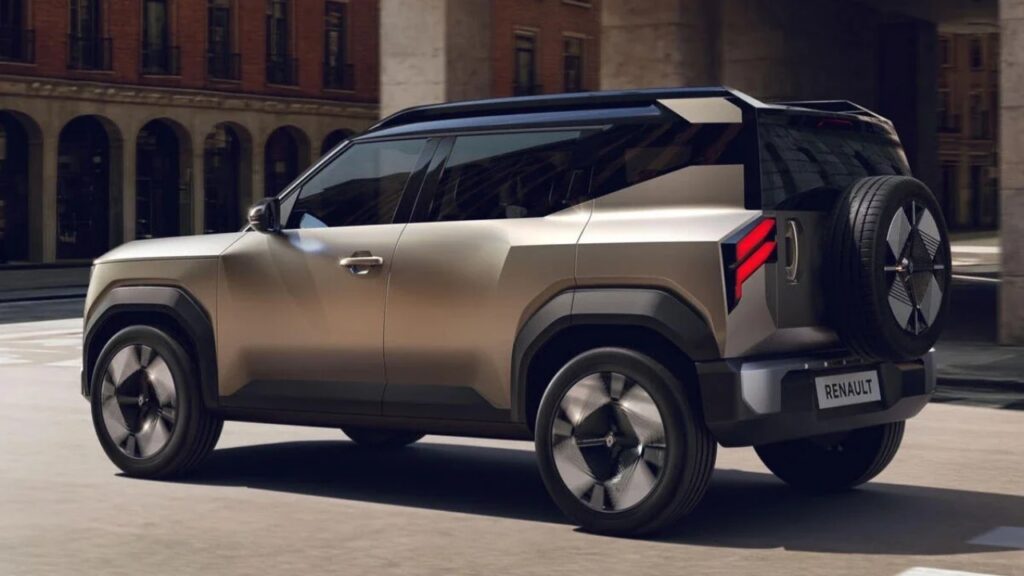
Notably, both are set to measure the same as the Renault Bridger with the internal combustion engine that will debut in India in 2027. Dimensions are still pending but highly expected to measure around 3.95 metres with a wheelbase of around 2.6 metres.
The pure-electric version of the Bridger from Renault and Nissan will feature a seating capacity of 5 people in a 2-3 layout with a flat floor to ensure ample legroom for all occupants; behind the second row, they will have a decent boot space to carry luggage.
The ICE version of the Bridger from Renault and Nissan is most likely to cost ex-showroom between 7 and 11 lakh rupees, and the pure electric is expected to cost 28% more, meaning the EVs may retail at a price between 9 and 14 lakh rupees.
Inside, it will feature soft-touch upholstery for the seat and premium-like trims for the dashboard and doors. The centre of the dashboard is all set to a digital instrument cluster of 10 inches, which will run on an Android-based operating system.
The infotainment system is highly expected to support over-the-air software updates and wireless connectivity via Android Auto, Apple CarPlay and Bluetooth for video and audio streaming. The centre console may get a wireless phone charging pad.
The steering wheel-column will feature a gear selector, under which a digital instrument cluster is expected that will show all the driving data, such as battery charging percentage, running speed, and others.
The front row will get dashboard-integrated air conditioning vents, but for the rear seats, it is expected to get them on the ceiling. It may also get automatic climate control, six airbags, a 360-degree camera, and parking sensors.
Suspension details are still pending but likely to use MacPherson struts and torsion beams. Highly anticipated to get discs on front wheels, and the rear may come with drums. To ensure safe braking, it is set to get an anti-locking braking system and electronic brake force distribution.
All set to get a permanent magnet synchronous motor with a single-speed automatic transmission on the front axle. Since the electric motor is going to be available on the front end, it will feature a front-wheel drive drivetrain.
They will reveal the power output, torque, acceleration timing, and top speed at the launch event. Under the floor, it will get a lithium-ion battery pack. They are likely to offer two options for it, which may be 35 kWh and 55 kWh.
With the larger battery pack, the upcoming EVs from Renault and Nissan will run up to 400 km in real-world use. Most likely to come with 400-volt electrical architecture and maybe up to an 80-100 kW DC charger, which will take around 30 minutes for 10-80% charging.
