
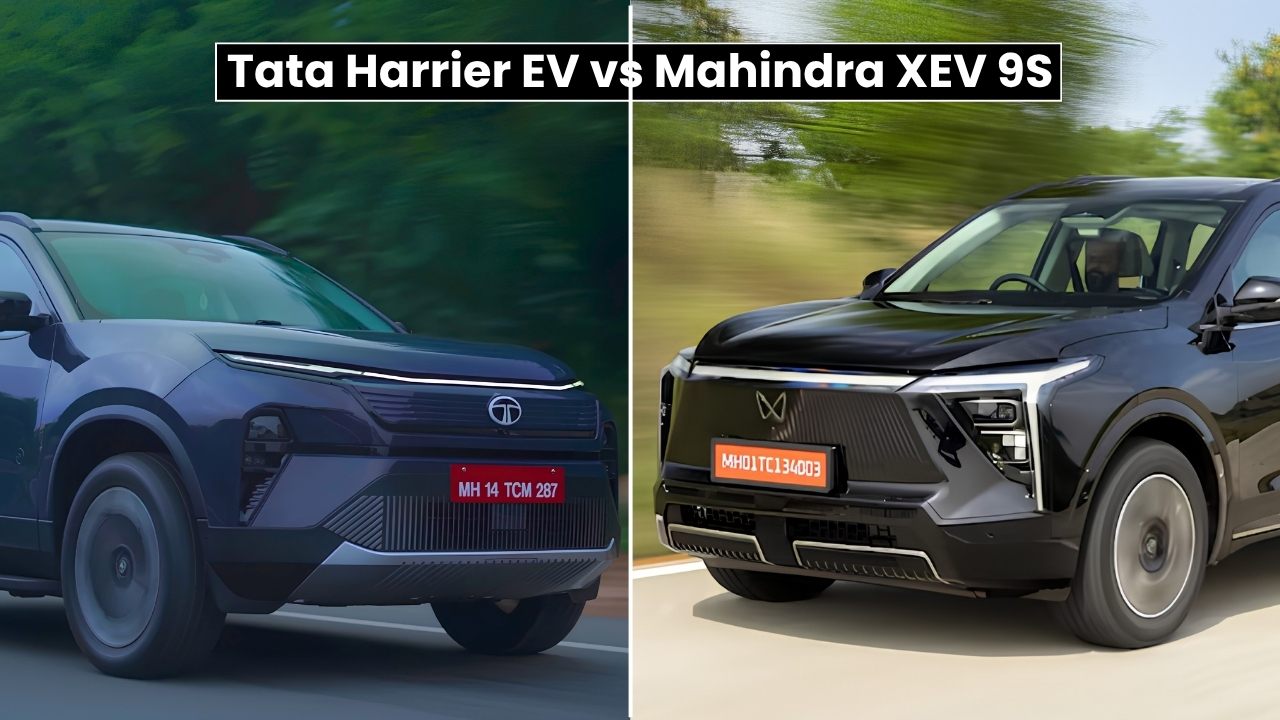
The Tata Harrier EV is a five-seater SUV, and the Mahindra XEV 9S is a seven-seater; both are available for sale in multiple variants. Here, we have come with the side-by-side comparison for the top-end variants of each. The Harrier EV’s Empowered QWD 75 Stealth ACFC is available with the ex-showroom price of ₹30.23 lakh and the XEV 9S’ Pack Three Above 79 kWh with the ₹29.45 lakh.
Dimensions
In terms of length, width and height, the Harrier EV measures 4,607 mm, 1,922 mm and 1,740 mm, respectively, and the XEV 9S’s length is 4,737 mm, width is 1,900 mm and height is 1,747 mm. Comparatively, the Mahindra’s EV is 130 mm longer and 7 mm taller, and the Tata’s is 22 mm wider. The wheelbase difference is only 21 mm; the XEV 9S has 2,762 mm, but the Harrier EV has only 2,741 mm.
The Harrier EV comes with a cargo space of 502 litres, but the XEV 9S features a boot space of 527 litres when the third-row seats are folded down. Interestingly, both are capable of carrying 3 to 4 pieces of luggage easily. Now move to its ground clearance, also referred to as ride height; it is 205 mm, even when laden. Even laden, it decreases by just a few mm but remains ideal for the Indian road conditions.
Powertrain
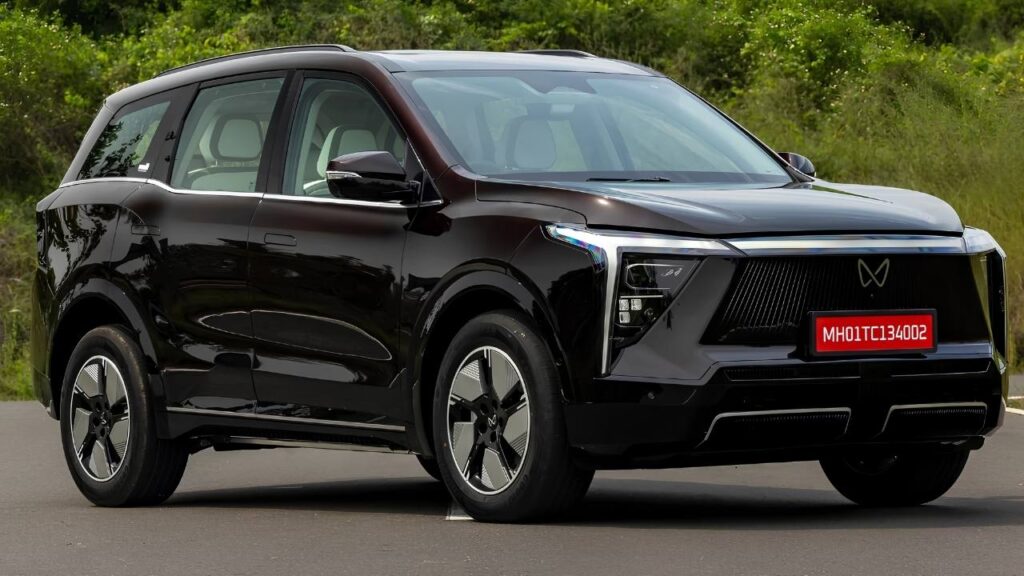
The XEV 9S comes with a permanent magnet synchronous motor on the rear axle, featuring a rear-wheel drive drivetrain, but the Harrier EV gets two motors, an induction motor on the front axle and a permanent magnet on the rear axle, featuring an all-wheel drive configuration. But both use the single-speed automatic transmission.
The maximum power and peak torque for the Mahindra EV are 286 hp and 380 Nm, but the Tatas has the maximum power of 390 hp and peak torque of 504 Nm. The XEV 9S is offered with a 79 kWh LFP battery pack, giving the ARAI-certified range of 679 km, but the Harrier EV gets a 75 kWh LFP battery that runs up to 622 km.
To accelerate from 0 to 100 km/h, the Tata EV and Mahindra EV take 6.3 seconds and 7.3 seconds, respectively, and the top speed for the Harrier EV is only 180 km/h, but the XEV 9S goes up to 202 km/h, which means the Harrier EV can accelerate fast, but the XEV 9S is the one which features maximum speed.
Both are built on 400-volt electrical architecture. The XEV 9S supports a DC charger up to 180 kW, which takes 20 minutes for 10-80% charging, and with the AC charger up to 11.2 kW, it takes 8 hours for a full charge. The Harrier EV supports a DC charger up to 120 kW, which takes 25 minutes for 10-80% charging, and with a 7.2 kW AC charger, it takes 10.7 hours for the 0-100% charging.
Features
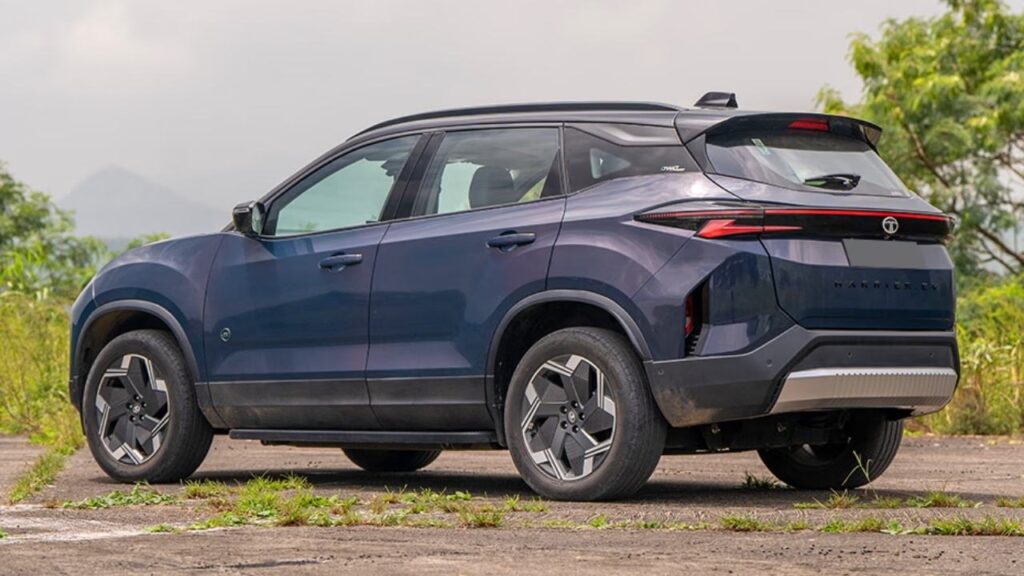
The XEV 9S gets three 12.3-inch screens in the front row, one as an infotainment system at the centre of the dashboard and as a control panel, and one for each driver and passenger as a driver display and entertainment screen, respectively; but the Harrier EV has only two, one 14.5 inch as an infotainment system and another 10.25 as a digital instrument cluster.
The Mahindra EV comes with a 16-speaker Harman Kardon system, 1st and 2nd row outboard ventilated seats, a powered front passenger seat with 6-way adjustment, and a 360-degree camera; the Tata features only a 10-speaker JBL Black with Dolby Atmos, 1st row ventilated seats, a 6-way electronic adjustable front passenger seat but with boss mode, and a 540-degree camera.
The Tata Harrier EV is an ideal option for the driver who wants better performance with off-roading capabilities, and the Mahindra XEV 9S is ideal for families looking for an option with a long range and spacious cabin.
