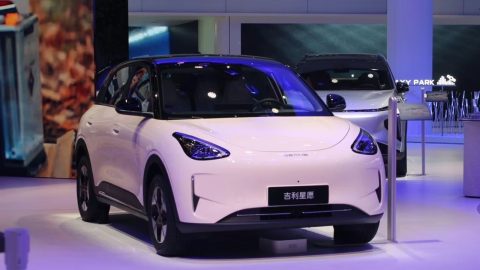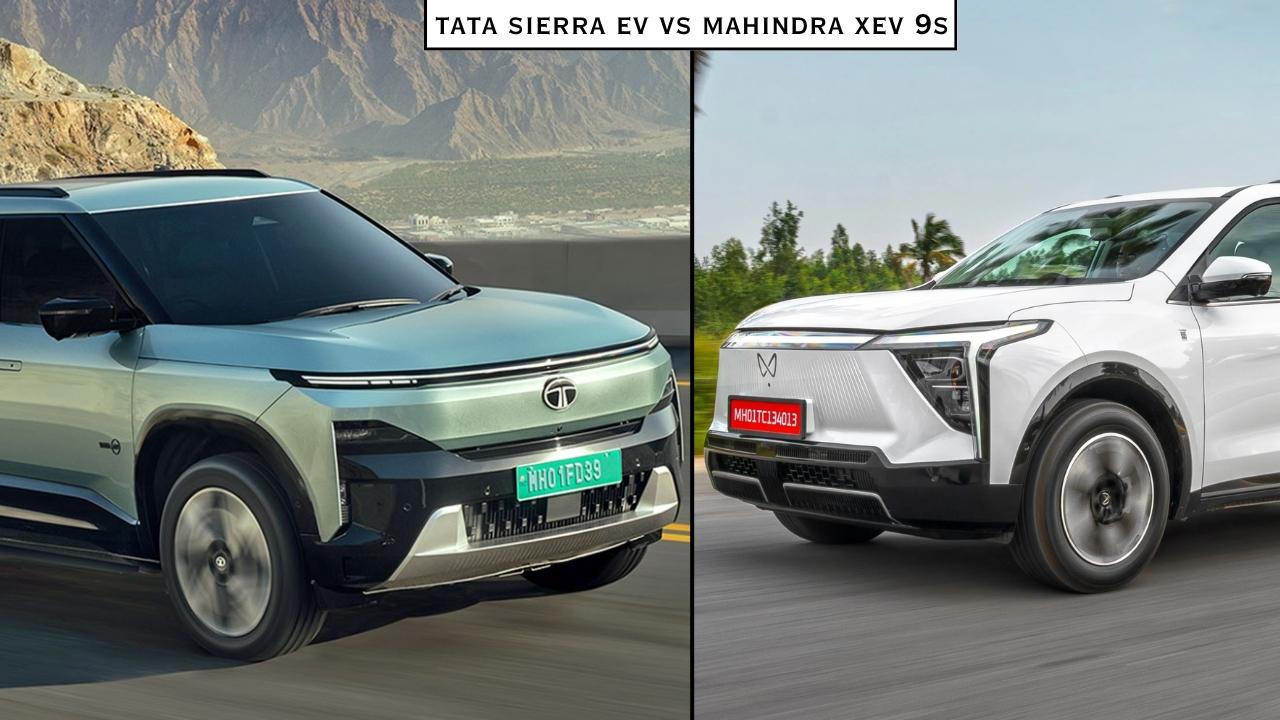
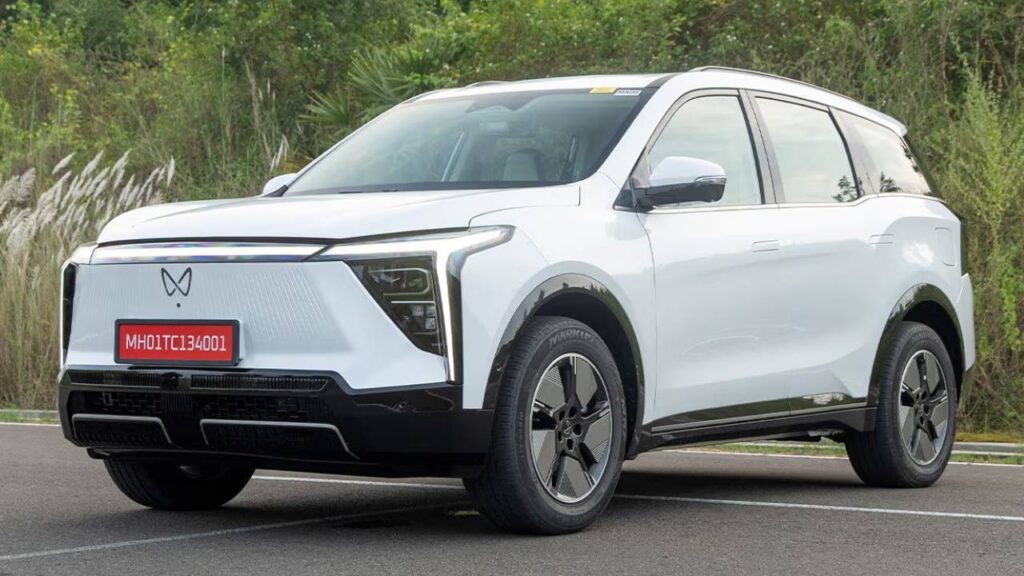
On June 30, 2026, Tata Motors launched the Sierra EV, a five-seater pure-electric SUV. One of its main rivals in the Indian market is the Mahindra XEV 9S, a seven-seater all-electric car. Here, we have come up with a comparison between them in different terms, including price, dimensions, performance, and much more. Let’s have a closer look.
Ex-Showroom Price
The Sierra EV is available for sale with the ex-showroom price between ₹18.79 lakh and ₹25.99 lakh, and the XEV 9S costs ex-showroom between ₹19.95 lakh and ₹29.45 lakh. The Tata Car base variant is affordable by ₹1.16 lakh and the top variant by ₹3.46 lakh.
Battery pack and range
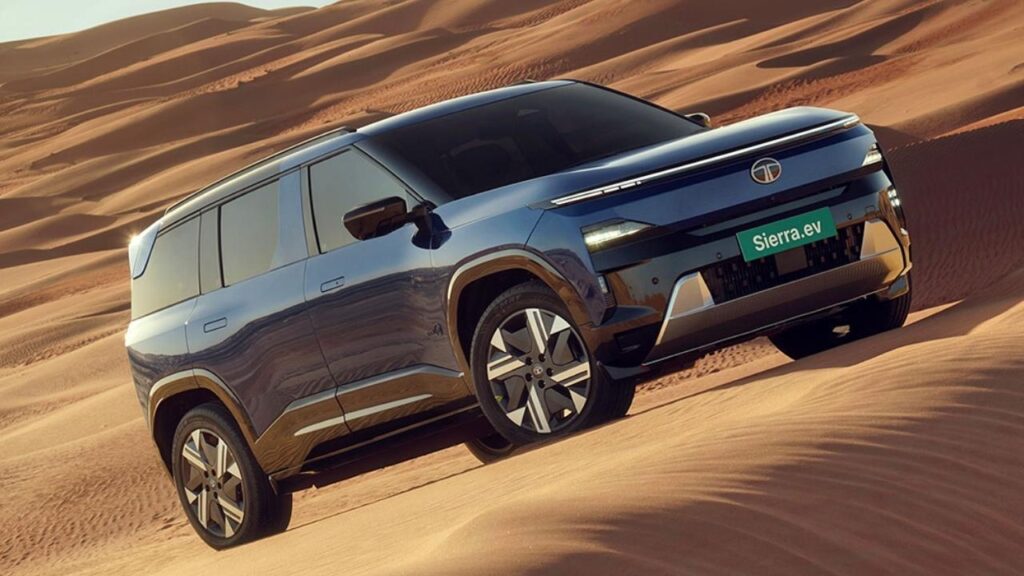
The Sierra EV is available with two battery packs that are 63 kWh and 75 kWh, and the Mahindra XEV 9S comes with three battery packs, including 59 kWh, 70 kWh, and 70 kWh. Notably, the Tata car comes with both single-motor RWD and double-motor AWD, but the Mahindra car is available only with single-motor RWD.
The Tata vehicle’s RWD variant with a 63 kWh battery pack runs up to 535 km, and with 75 kWh, it gives a range of 665 km; the AWD variant comes with only 75 kWh, which runs up to 624 km. The Mahindra car gives a range of 521 km, 600 km, and 679 km with the 59 kWh, 70 kWh, and 79 kWh batteries, respectively.
The standard variant of the Sierra EV has 34 km more claimed range, and its top rear-wheel-drive variant has 14 km less range. The AWD variant of the Tata car, compared to the top-end variant of the Mahindra SUV, runs 44 km less in ARAI conditions.
Motor setup and power output
The Sierra EV’s RWD variant gets a permanent magnet synchronous motor with single-speed automatic transmission, which generates the power of 209 hp and 238 hp with 63 kWh and 75 kWh battery packs, and torque with both battery packs is 315 Nm. AWD comes with only 75 kWh; it gets all of it from the RWD and induction motor, whose combined power output is 313 hp and 504 Nm.
On the other hand, the XEV 9S that is only available with a RWD drivetrain is getting a PMSM with a one-speed automatic transmission that generates 228 hp, 241 hp, and 282 hp with 59 kWh, 70 kWh, and 79 kWh, respectively. Comparatively, the Sierra’s RWD base variant delivers 19 hp less, and the RWD top-end variant delivers 3 hp and 44 hp less with the variants with 70 kWh and 79 kWh battery packs, respectively. But the AWD generates 31 hp more power.
Acceleration timing and top speed
The Sierra EV’s RWD variants with 75 kWh and 63 kWh take 7.5 seconds and 8.2 seconds to accelerate from 0 to 100 km/h, but the AWD variant takes only 5.8 seconds, and all variants can reach the maximum speed of 170 km/h. And the XEV 9S’ 0 to 100 km/h acceleration timing is 7.9 seconds, 7.6 seconds, and 7.0 seconds for the 59 kWh, 70 kWh, and 70 kWh battery packs, respectively, and its top speed is 202 km/h.
The Tata car’s standard variant takes 0.3 seconds more time to accelerate from 0 to 100 km/h, and the top-trim rear-wheel-drive variant takes 0.5 seconds more, but the all-wheel-drive drivetrain option takes 1.2 seconds less. Notably, all variants of the Mahindra car are faster by 32 kmph.
Dimensions and size
The Sierra EV’s length, width, height, wheelbase, and ground clearance are 4340 mm, 1841 mm, 1750 mm, 2730 mm, and 205 mm. It has a boot space of 622 liters and a trunk of 55 liters. On the other hand, the length, width, height, wheelbase, and ground clearance of the XEV 9S are 4737 mm, 1900 mm, 1747 mm, 2762 mm, and 201 mm, respectively, and it has a boot space of 500 liters and front trunk storage of 150 liters.
The Sierra EV is 397 mm shorter, 59 mm narrower, and 33 mm taller. Even its wheelbase is 33 mm shorter, and its frunk is 95 liters smaller. But its ground clearance is 4 mm higher, and boot space is 122 liters large.