
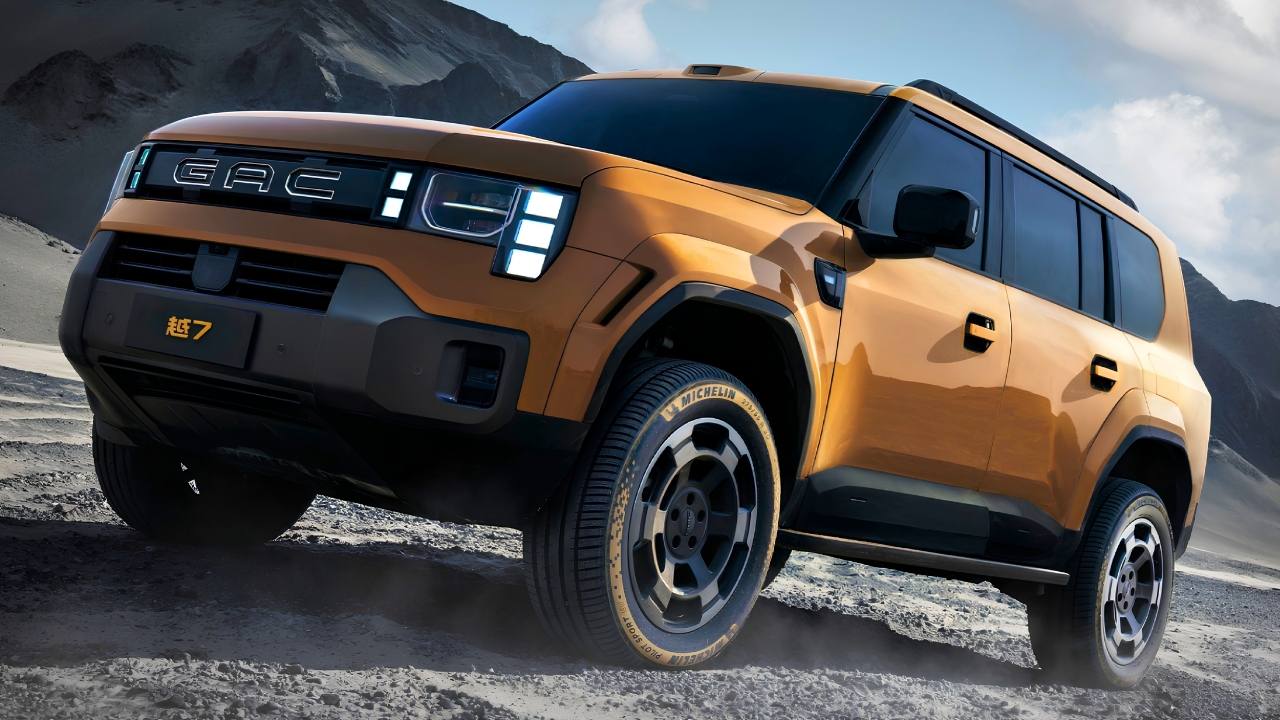
After the Auto China (Beijing Auto Show) 2026 unveiling, the GAC Trumpchi Yue 7, full-size plug-in hybrid off-road sport utility vehicle, is all set to make its global debut on August 7, 2026. Media reports suggest on the very same date the pre-sale will begin with the tentative price, and a month after that is expected to mark the market launch.
As of now, there’s no confirmation regarding the launch from Trumpchi, a subsidiary of GAC Motor. It’s tough to say anything about its price. Many reports are suggesting that it will cost between 250,000 yuan and 350,000 yuan, which translates to ₹29.9 lakh and ₹41.9 lakh. Following the launch, it is set to compete with the Fangchengbao Bao 5, the Tank 500 Hi4-T, and the Jetour Zongheng G700.
The release of the 407th batch of the MIIT new vehicle catalog reveals that it is built on the GAC Xingyuan Plug-in Hybrid GMC 3.0 Thunder Edition, which gets a 1.5-liter turbocharged four-cylinder petrol-powered internal combustion engine, which generates the maximum power of 125 kW (168 hp) and peak torque of 245 Nm (181 lb-ft). On the front axle, there’s a permanent magnet synchronous motor, which delivers 205 kW (275 hp).
The ICE and PMSM under the hood are bolted with the highly integrated P4 electric drive unit. The rear axle features a P4 electric motor. Since the electric motor is mounted on each axle, it features an all-wheel drive drivetrain. Its combined power output is 400 kW (536 hp), and maximum wheel-end torque is 10,000 Nm. The top speed is 200 kmph, but the 0 to 100 kmph acceleration timing is still pending.
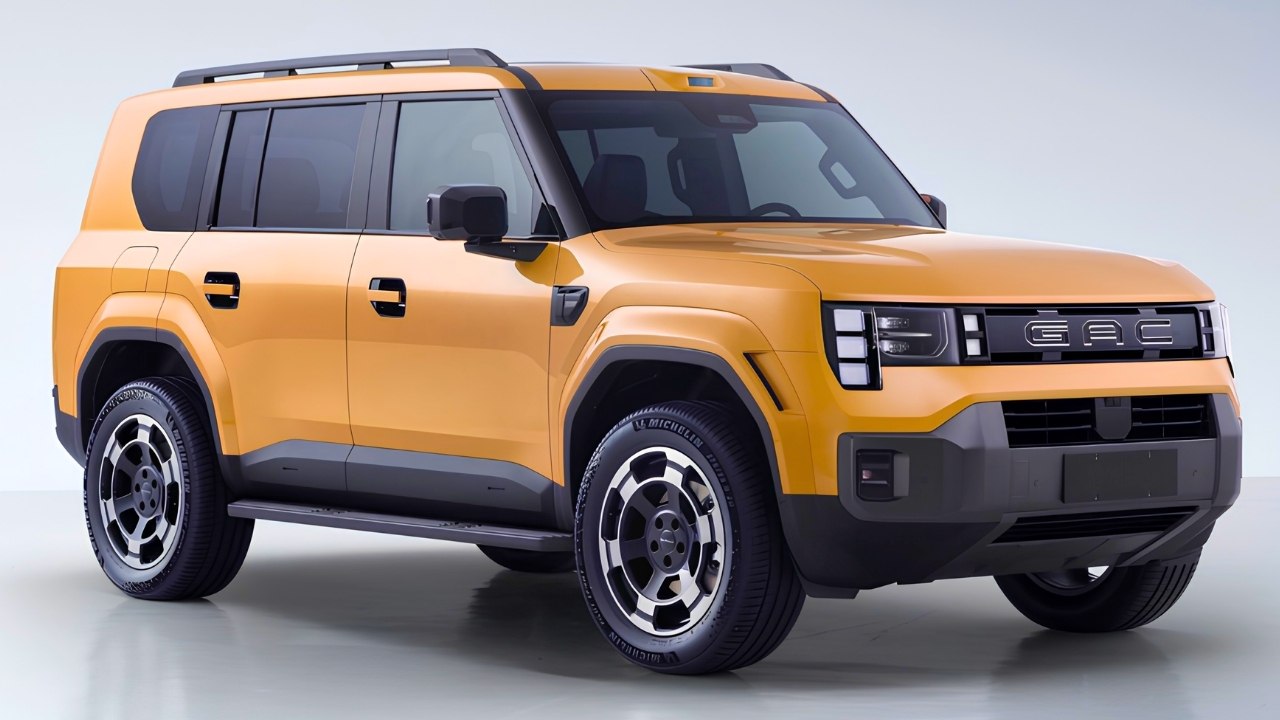
Available with two different battery packs, which are 28.3 kWh LFP and 46.0 kWh LFP NMC, giving the emission-free range of 116 km and 188 km, respectively, for the China Light-Duty Vehicle Test Cycle. Built on the GMC Thunder 3.0 platform, featuring air suspension, continuously variable damping, adaptive shock absorbers, and three differential locks, including front, mid, and rear.
Inside, it has a largely touchscreen infotainment system at the center of the dashboard, which runs on the latest intelligent cockpit operating system, getting powered by the Qualcomm Snapdragon 8838 flagship cockpit chip with 300K DMIPS computing power. The infotainment spread from the center of the dashboard to the end on the right. It also features a voice assistant with AI interaction, over-the-air (OTA) software updates, and smartphone connectivity with Huawei HiCar.
Before the driving seat, it has a four-spoke steering wheel with physical buttons. Under the same, it has a full-width digital instrument cluster showing driving data at the base of the windshield. Its center console gets two wireless phone charging pads for phone charging convenience for the co-passenger and driver. It also has two cup holders for ease. Other notable features inside the cabin are ventilated, heated, and powered front seats. The driver’s seat also comes with a memory function.
The length is 4,999 mm with a wheelbase of 2,900 mm. Its width is 1,933 mm, and its height is 2,004 mm. Notably, an additional option is available in terms of size, which is 5,045 mm longer, 2,030 mm wider, and 1,916 mm taller. It comes with a seating capacity of 5 people in a 2-3 layout with decent cargo capacity behind the second two-row seats. Notably, the boot space for both is still pending.
Outside, it has a rugged and boxy design with an upright stance and rectangular LED headlamps for better visibility on nighttime driving. The large front bumper with a silver skid plate reflects SUV characteristics. Other notable features on the exterior are wheel arch cladding, lower body cladding, flush-type door handles, roof rails, a braking light on the top end of the rear windshield, and horizontal-shaped taillamps.
