
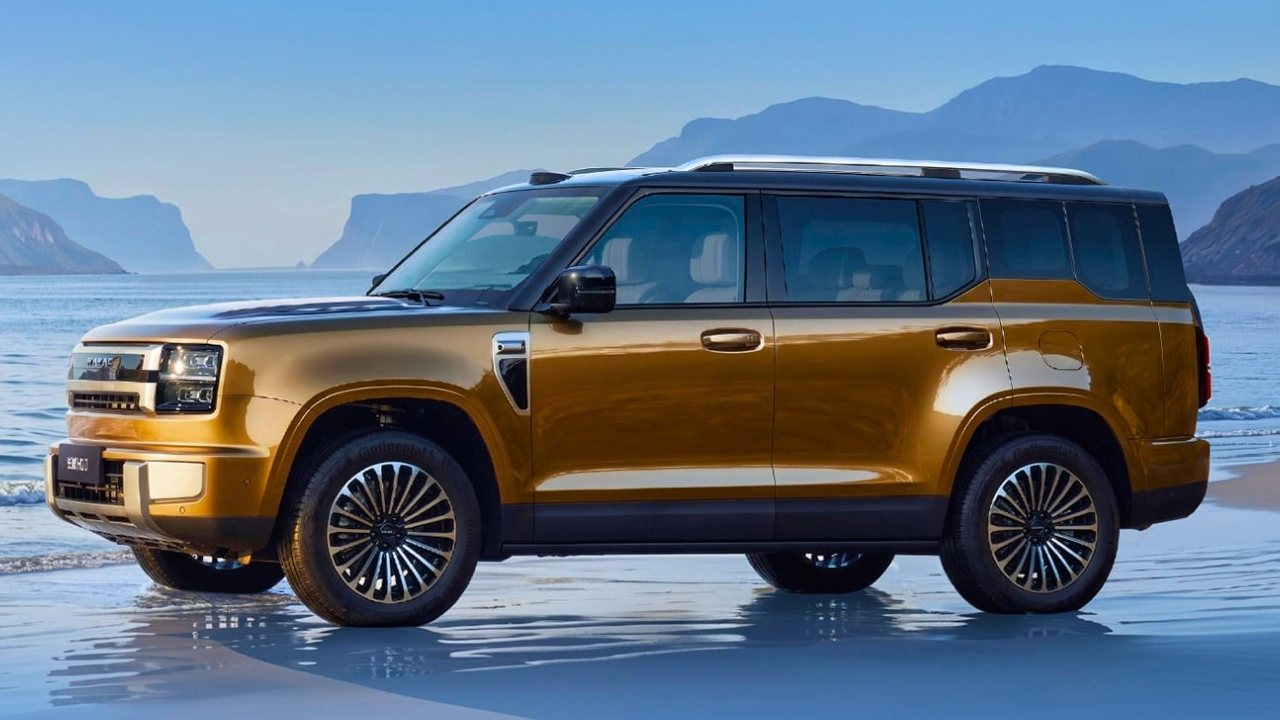
Great Wall Motor’s Haval has unveiled the Haval H10, a plug-in hybrid electric full-width sport utility vehicle, on June 26, 2026, by releasing official images of the vehicle. In the SUV lineup, this PHEV sits above the Haval H9. Following its launch, it will compete with the Aito M9, the Li Auto L9, and the Denza N9.
The carmaker is expected to introduce the H10 under the banner of Haval to the Chinese market in the second half of 2026. They haven’t yet revealed its price, but it is highly expected to be available for sale with the price between 350,000 and 400,000 yuan, which translates to 49 to 56 lakh rupees.
They will launch in China with both a seating capacity of 5 people in a 2-3 layout and 6 people in a 2-2-2 layout. Notably, the dimensions for each one are different from one another. The five seats measure 5,138 mm in length, but the six-seater’s length is 5,299 mm. The width, height, and wheelbase are the same for both seating layouts.
They are 2,050 mm wider, 1,970 mm taller, and their wheelbase measures 3,000 mm. As of now, they haven’t revealed the boot space, but it is certain that the five-seater cargo capacity will be bigger than the six-seater. Inside, it features premium seat upholstery and a panoramic sunroof.

Cabins get a circular three-spoke steering wheel with physical buttons, under which a slim digital instrument cluster is clearly visible in the image shared online, which will show the driving data. The center of the dashboard gets a horizontal touchscreen infotainment system that will act as the control panel of the cabin in most settings as touch-based.
On the center console, you can see a wireless phone charging pad and two cup holders for the convenience of the driver and co-passenger. Other notable features are a ceiling-mounted rear passenger entertainment screen, a built-in refrigerator, ambient lighting, and powered front seats.
Outside, it has an upright and boxy stance, giving it a tough SUV look, LED taillights in a rectangular shape, a roof-mounted LIDAR unit, rugged front and rear bumpers, multi-spoke alloy wheels, wheel arch cladding, mechanical door handles, high ground clearance, large front door-mounted ORVMs with integrated blinkers, roof rails, vertical LED taillights, and a side-opening tailgate.
Under the hood, it gets a 1.5-liter turbocharged petrol-powered internal combustion engine delivering a power output up to 123 kW (165 hp) and two electric motors, one on each axle, featuring an all-wheel-drive drivetrain. It will use a 4-speed DHT hybrid transmission.
Equipped with a 42.8 kWh lithium-ion battery pack, which gives the emissions-free range of 175 km for a 5-seater and 180 km for a 6-seater under CLTC conditions. The carmaker will unveil the undisclosed details for the powertrain and performance in the very near future.
It gets the Coffee Pilot 3 advanced driving assistant system featuring NOA (Navigation on Autopilot) for highway cruising and also features Crab Walk to help the vehicle move diagonally like a crab. It is made on 800-volt electrical architecture, meaning this upcoming PHEV will support fast DC charging.
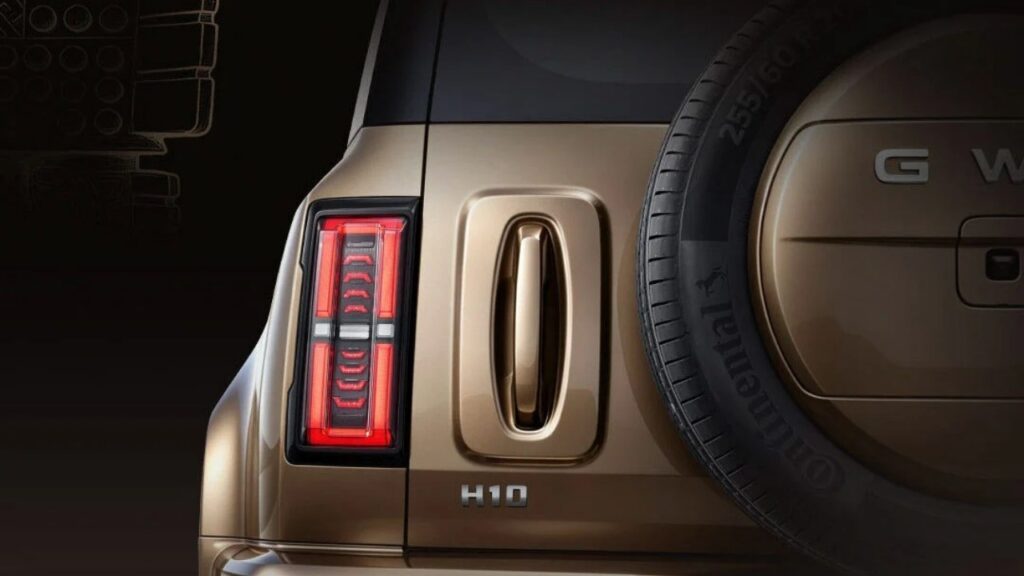
The H10 from Haval is built on the Global One platform, the same used for the Wey V9X. Notably, Wey is also a sub-brand of GMW. They introduced the Wey V9X on May 18, 2026; it is available for sale with the starting price of 349,800 yuan, which translates to 48.97 lakh rupees.
It is also a plug-in hybrid electric vehicle, which gets a 2.0-liter turbocharged petrol-powered internal combustion engine and two electric motors. Its pure electric CLTC range with an 80 kWh lithium-ion NMC battery pack is 470 km, but the combined range is 1,700 km.
