
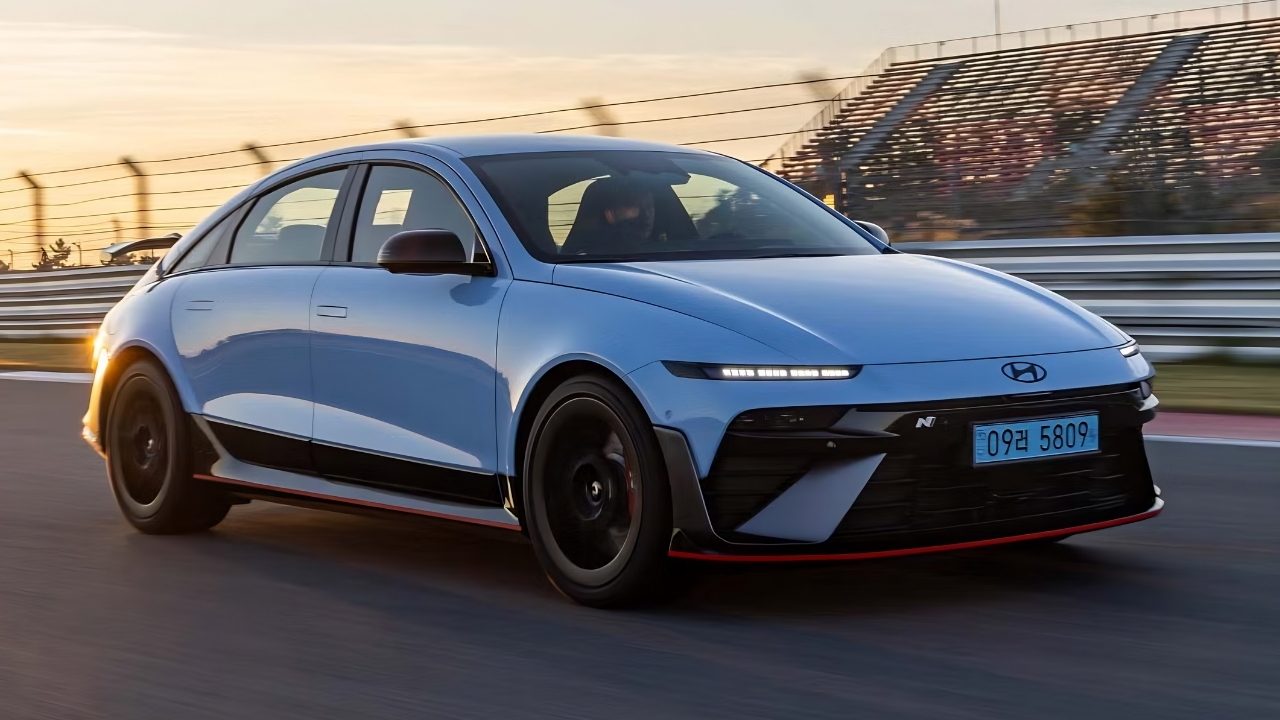
Hyundai, a South Korean automaker, introduced the IONIQ 6 N, a four-door all-electric fastback sedan, to the Australian market on May 4, 2026. The single model costs AU$115,000, or US$82,400. The Porsche Taycan 4S, Kia EV6 GT, and Tesla Model 3 are its principal rivals.
The IONIQ 6 N comes with a dual-motor setup, one on each axle, featuring an all-wheel drive configuration. Its transmission is single-speed automatic, the same as its competitors’. Powered by an 84 kWh lithium-ion battery pack, it generates 601 hp (448 kW) and 740 Nm of torque (545.7 lb-ft).
When N Grin Boost is activated, output increases to 641 hp (478 kW), and 770 Nm. To accelerate from 0 to 100 km/h, it takes 3.2 seconds, reaching a top speed of 260 km/h (161 mph). It offers a range of 487 km (301 miles) at the Worldwide Harmonized Light Vehicles Test Procedure cycle on a full charge, the real-world range is 400 km.
It is based on the 800-volt electrical architecture, which supports ultra-fast DC chargers up to 350 kW. To charge the vehicle from 10 to 80 percent, it takes 18 minutes. Features an internal 11 kW On-Board Charger, which takes 7 hours and 20 minutes with the 240-volt AC home charger.
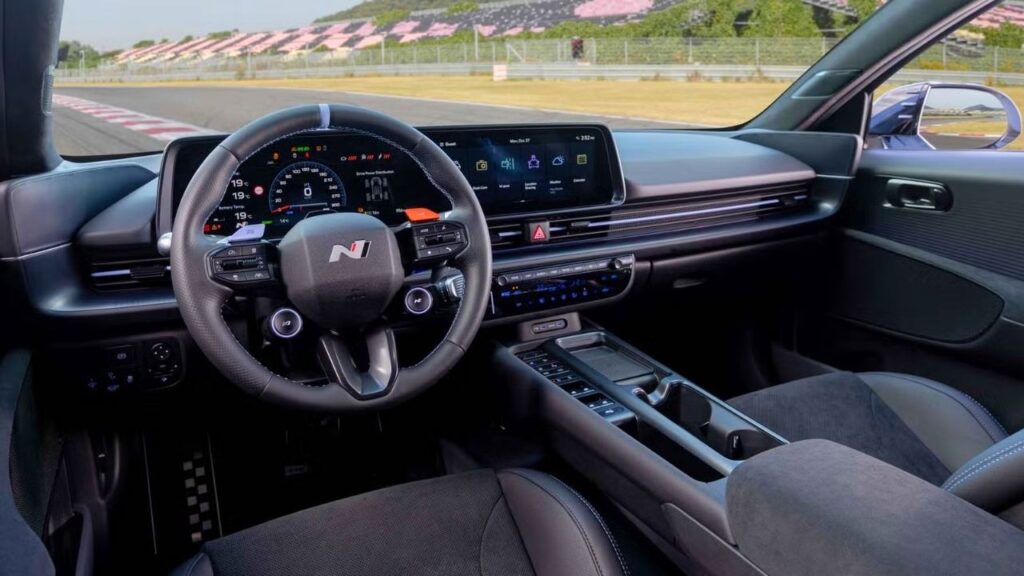
It comes with a seating capacity of 5 people in a configuration of 2 and 3; the seats are made up of Alcantara and leather to ensure better comfort with the three-stage heating and ventilation. Get an N Alcantara Steering Wheel with the N1, N2, and N Grin Boost buttons. The dashboard has two touchscreens, the infotainment system and digital instrument cluster, each of 12.3 inches.
It also has an augmented reality head-up display, which projects the primary driving data, battery charge percentage, running speed, navigation, and others on the windshield so drivers stay focused on driving and drive safely. To ensure an immersive sound experience inside the cabin, it features an 8-speaker BOSE sound system, external amplifier, and subwoofer.
To give the feel of a traditional performance car, it generates artificial sound using 8 internal and 2 external speakers. For connectivity, it comes with wireless Android Auto & Apple CarPlay. Other features highlighted are a wireless charging pad and five USB-C ports with a maximum power output of 100 kW for the fast charging of the phone.
It also has some performance features, which include N e-shift that simulates the jolt and sound of an 8-speed dual-clutch transmission; N Track Manager, which tracks lap times, circuit maps, and accelerator inputs; and N Ambient Shift Lighting with 64 color options that sync with the simulated shift points.
In terms of safety and driving, it has some smart features that include 7 airbags across the cabin that save lives in case of an accident and Hyundai SmartSense, i.e., advanced driving assistant system (ADAS) 2.0, which includes Highway Driving Assist 2, Forward Collision-Avoidance Assist 2, Blind-Spot View Monitor, and 360° Surround View Monitor.
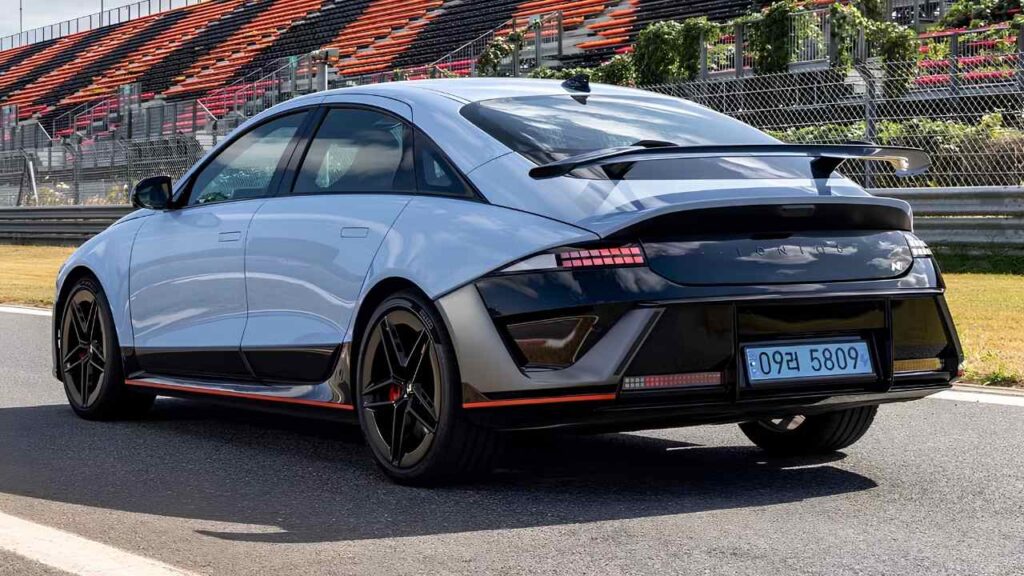
Dimensionally, it measures 4,935 mm in length, 1,940 mm in width, and 1,495 mm in height. Its wheelbase, the distance between the front and rear wheel, is 2,965 mm. It is available with the standard color of Serenity White Pearl, but the options for others are available that include Gravity Gold Matte, Nocturne Grey Matte, Nocturne Grey Metallic, Abyss Black Pearl, and Performance Blue Pearl.
Up front, it gets an N-specific bumper, giving it an aggressive look; wing-type air curtains to ensure better airflow that helps in reducing the turbulence; and slim ‘parametric pixel’ LED headlights for modern styling. Flush door handles, slim digital mirrors, and 20-inch forged wheels are visible on the sides. The rear features a fixed rear wing, a triangular third brake light, and a wing-inspired rear bumper.
