
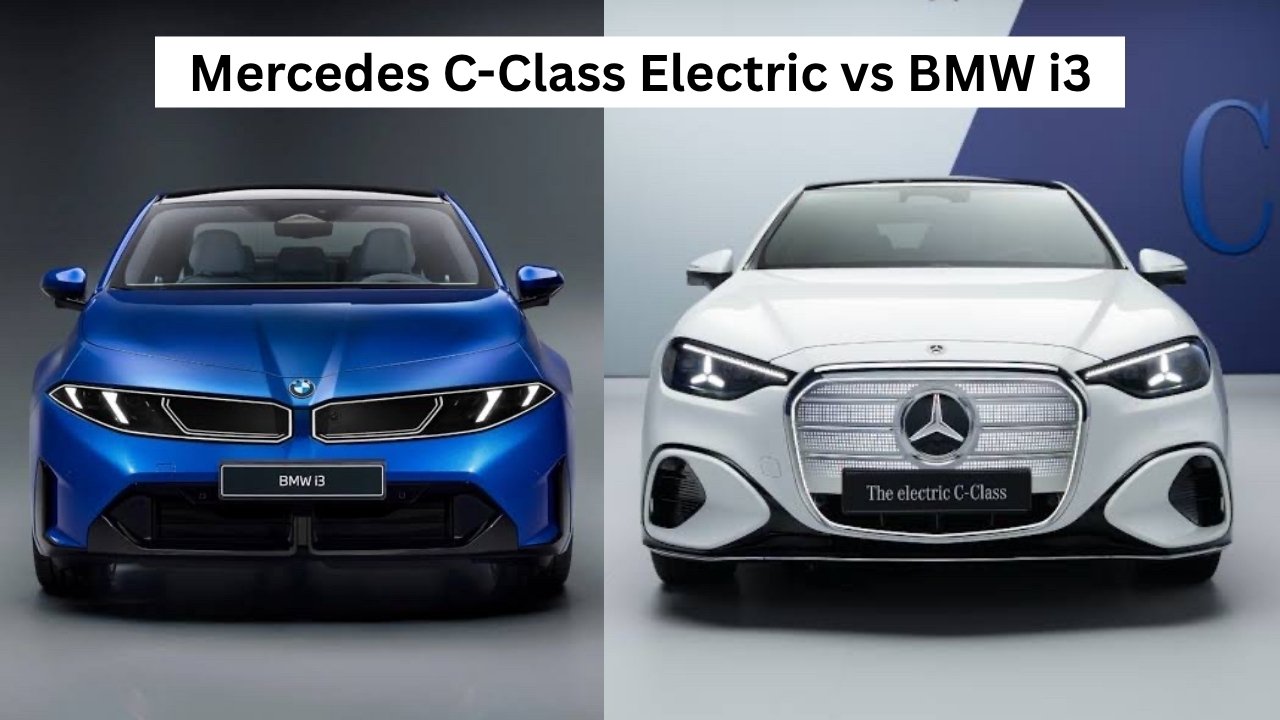
The Mercedes C-Class Electric and BMW i3 are both luxury all-electric sedans with a seating capacity of 5 people in a 2-3 layout. The C-Class Electric debuted on April 20, 2026, and the i3 was revealed on April 18, 2026, whose launch is expected in early 2027 with a price around $50K and in the first half of 2027 with a starting price of $55K, respectively.
The C-Class Electric’s dimensions in terms of length, width, height and wheelbase are 4,882 mm, 1,893 mm, 1,450 mm and 2,963 mm, respectively, while the i3’s length is 4,760 mm, width is 1,865 mm, height is 1,480 mm and wheelbase is 2,897 mm, which means the C-Class Electric is a large sedan compared to the i3.
Interior & Features
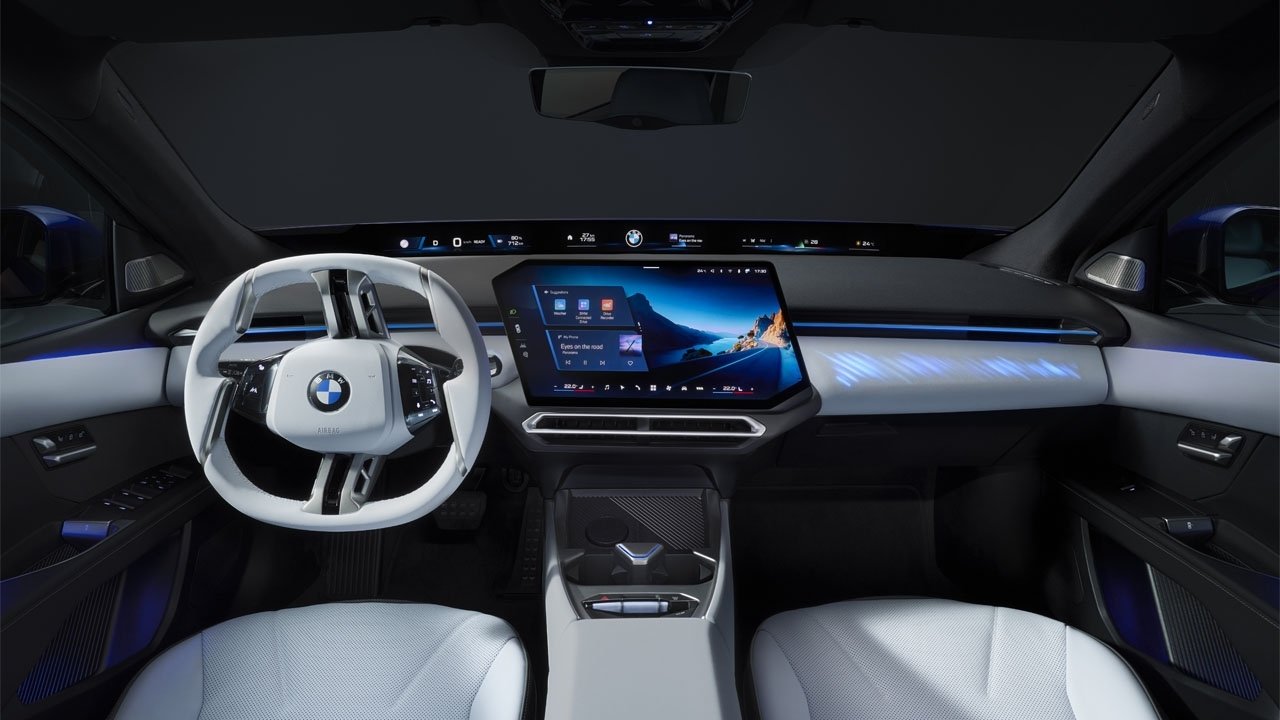
The i3 has driver-focused cockpit signs with a clean and minimalist dashboard. It features a panoramic display across the windscreen, which projects speed, navigation and alerts horizontally to ensure that the driver keeps eyes closer to the road. The cabin is equivalent to a 17.9-inch central touchscreen for occupant infotainment and has a multifunction steering wheel with “Shy Tech” buttons which focus on driver interaction.
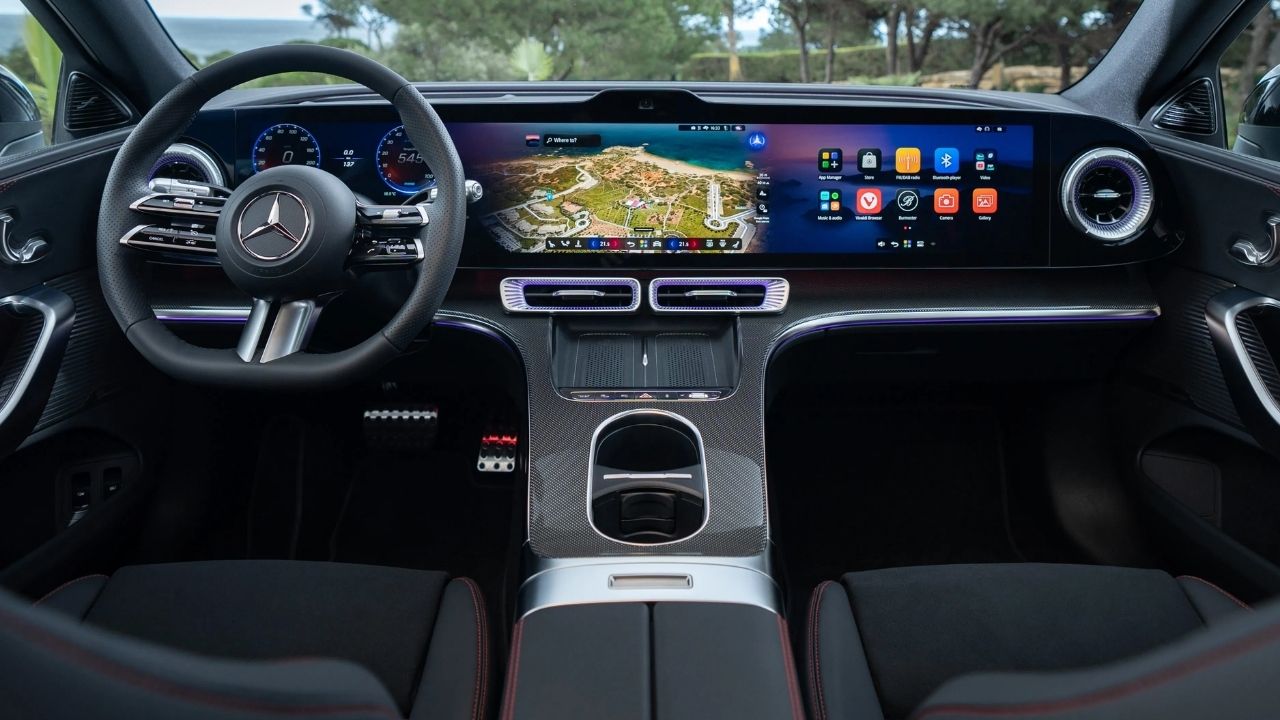
On the other hand, the C-Class Electric has a luxurious and screen-dominated cabin. It features a 39.1-inch MBUX Hyperscreen across the dashboard, which includes a driver display for the instrument cluster, a central touchscreen for infotainment and a front-seating passenger display. Seats come with massage, ventilation and lumbar support; ambient lighting is present across the cabin, and for a theatre-like sound experience it gets a Burmester 3D/4D sound system.
Exterior & Design
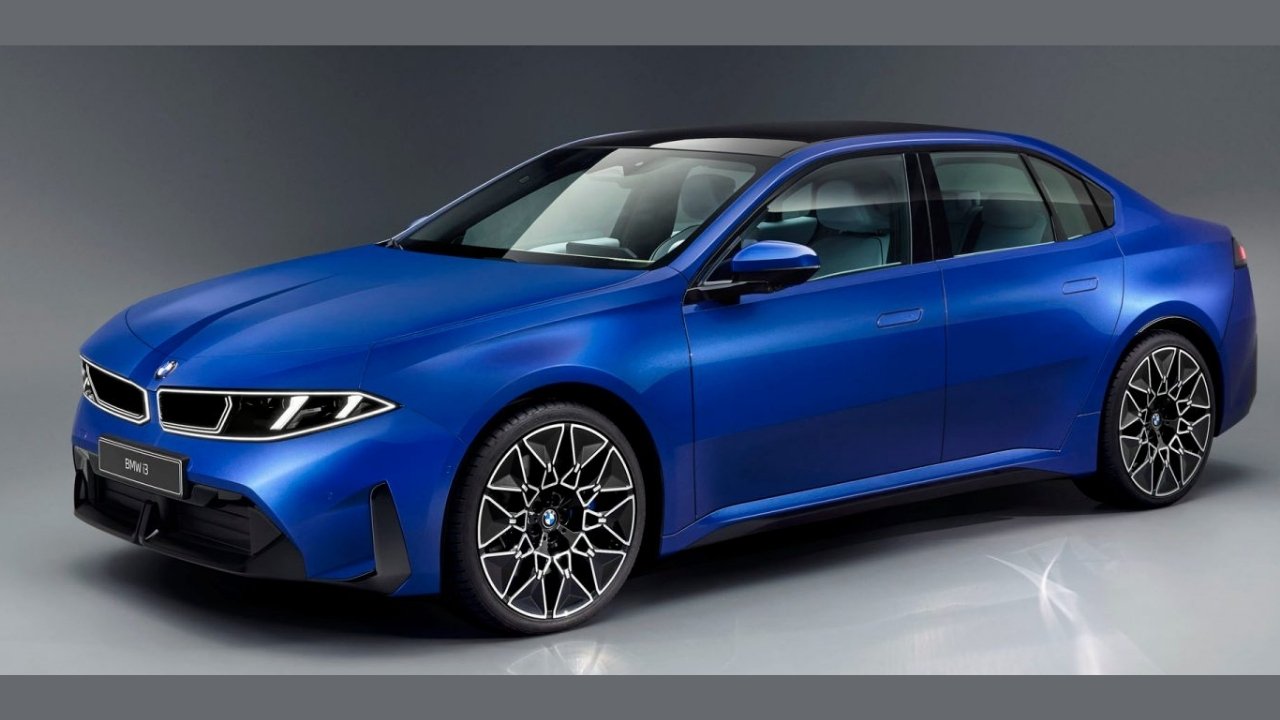
The i3 is based on Neue Klasse philosophy, which focuses on clean surfaces, sharp edges and minimalistic styling. Up front, it gets a twin kidney grille, a shark-nose front and futuristic lighting elements; on the side, it features a long wheelbase with short overhangs, strong character lines and a sporty and low stance; and in the rear, it has sleek and stretched taillights, and less traditional L-shape featuring a clean and uncluttered look.
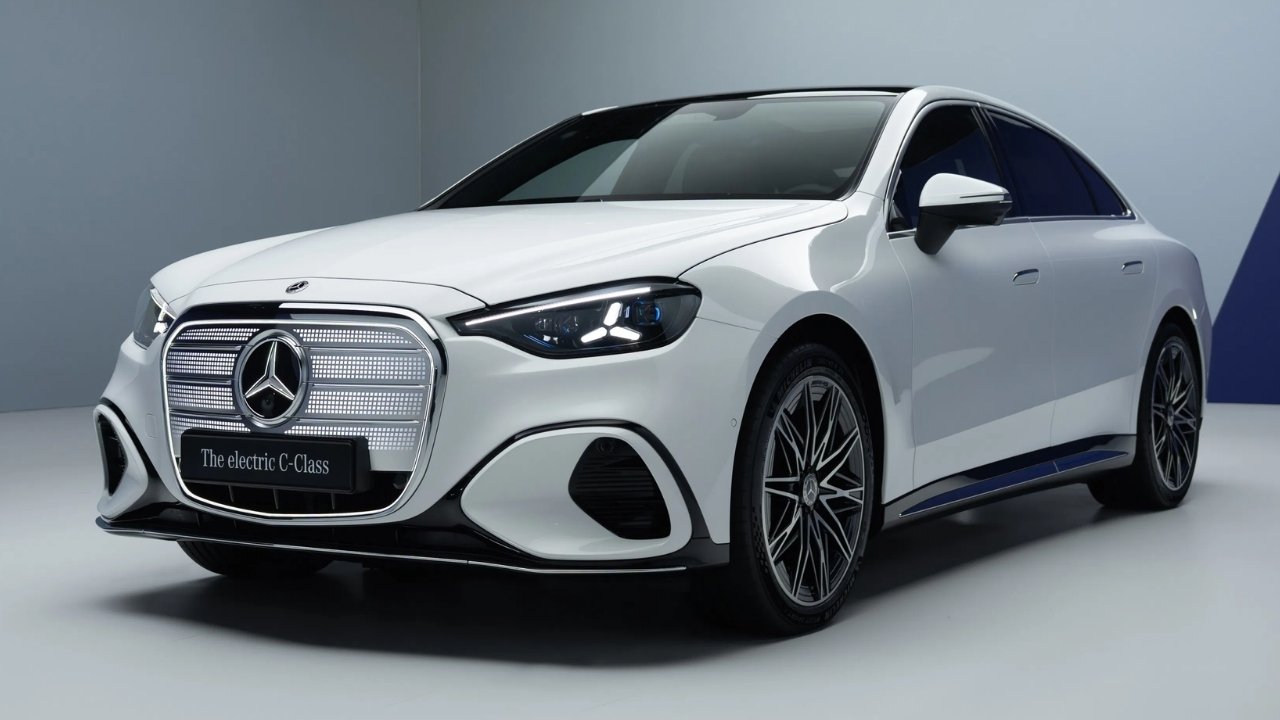
And the C-Class Electric features more traditional and elegant styling with the coupe-like silhouette. The front-end features an illuminated grille with 1,050 LED elements, a Mercedes star logo, and LED headlights with star DRLs; in profile, it gets a coupe-like roofline, aerodynamic shape, and flowing lines which enhance its efficiency and elegance; at the back, it gets star-inspired LED taillights and a clean look like AMG GT concept styling.
Powertrain & Performance
The i3 and C-Class Electric button get two electric motors; one is mounted with the front axle and the other with the rear. The setup makes it an all-wheel drive (AWD) vehicle. The transmission for both is single-speed automatic, but the BMW’s vehicle is built on the Neue Klasse EV platform and the Mercedes-Benz’s car on MMA (Mercedes Modular Architecture).
The power output and peak torque for the i3 are 462 bhp and 475 lb-ft, but the same for the C-Class Electric are 482 bhp and 590 lb-ft. The acceleration timing of 0-60 mph for the Mercedes-Benz car is 3.9 seconds; the details for the BMW’s are yet to be made public but are likely to be around 4 seconds. The top speed for both sedans is yet to be revealed but is anticipated to be around 130 mph.
The C-Class Electric comes with a 94.5 kWh battery whose WLTP range is 762 km, equivalent to 472 miles; the i3 features a battery pack of 113 kWh whose range on the WLTP cycle is 900 km, equivalent to 483 miles. The BMW car supports a DC charger up to 400 kW, and the Mercedes-Benz car only 220 kW; with 10 minutes of charge, it can add a range of 198 miles (318 km) and 248 miles (399 km).
