
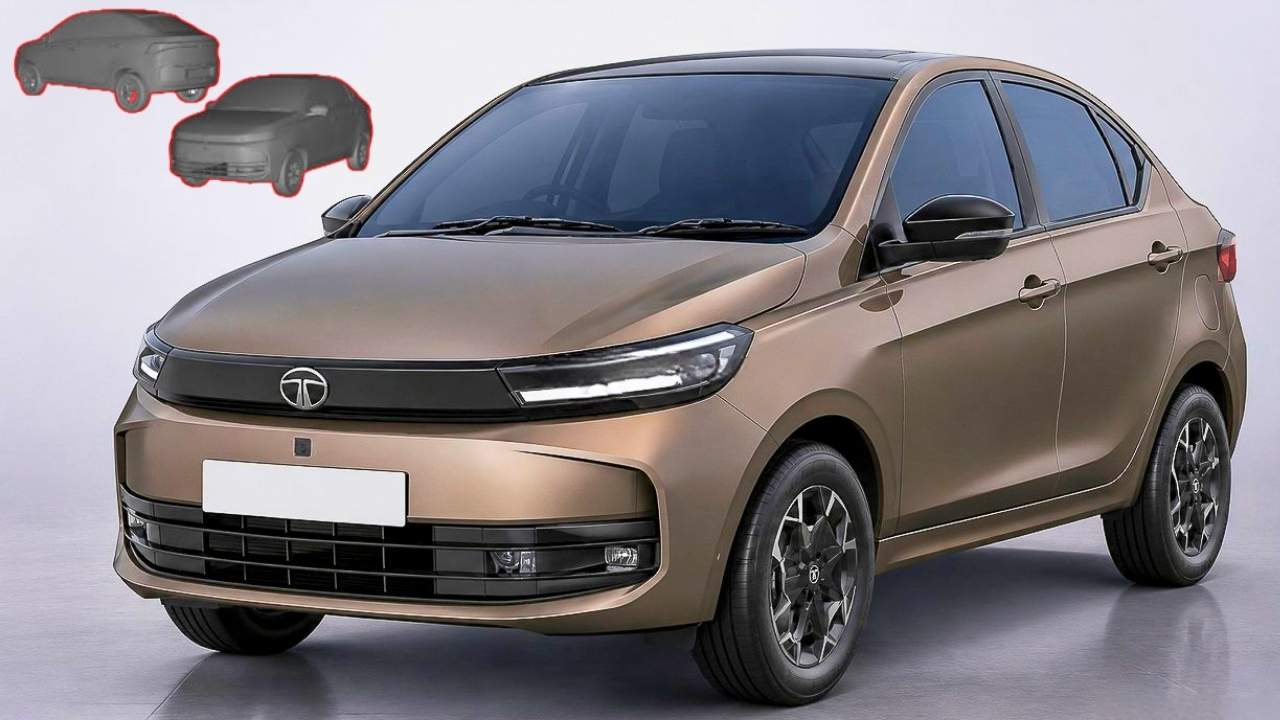
After launching the Tata Sierra EV, Tata Motors will introduce the facelift of the Tata Tigor EV. Recently, the patent image of the Tata Tigor facelift, which runs on a petrol-powered ICE, was leaked online showing the design. They won’t only introduce the refreshed version of ICE but also the electric one.
In 2026, the carmaker has already launched two facelifts of two electric motor models: the first one is the Tata Punch EV, and the second is the Tata Tiago EV. They introduced the first one on February 20, 2026, and the second on May 28, 2026; now the third one is expected to make its debut in India in August 2026.
The manufacturer will introduce the Tata Tigor EV with many exterior and interior upgrades, and the powertrain and performance are highly expected to remain the same as the outgoing. Even no change is expected in suspension, braking, dimensions, and size. Let’s have a closer look at this upcoming EV facelift.
Exterior and design
The Tata Tigor EV will get refreshed main LED headlights and daylight running lights that will be more modern, a more aero-optimized closed-off grille so efficiency grows, and a tweaked bumper to add more SUV characteristics. The side and rear are also the same as the patent image of the Tata Tigor facelift.
On the sides, it will get mechanical door handles to ensure better practicality, wheel arch cladding to add ruggedness, a new alloy wheel design to enhance the road presence, a front door-integrated outside rear-view mirror for clearer visibility of traffic behind, and an ORVM-mounted blinker to hint to the vehicle ahead about the next move.
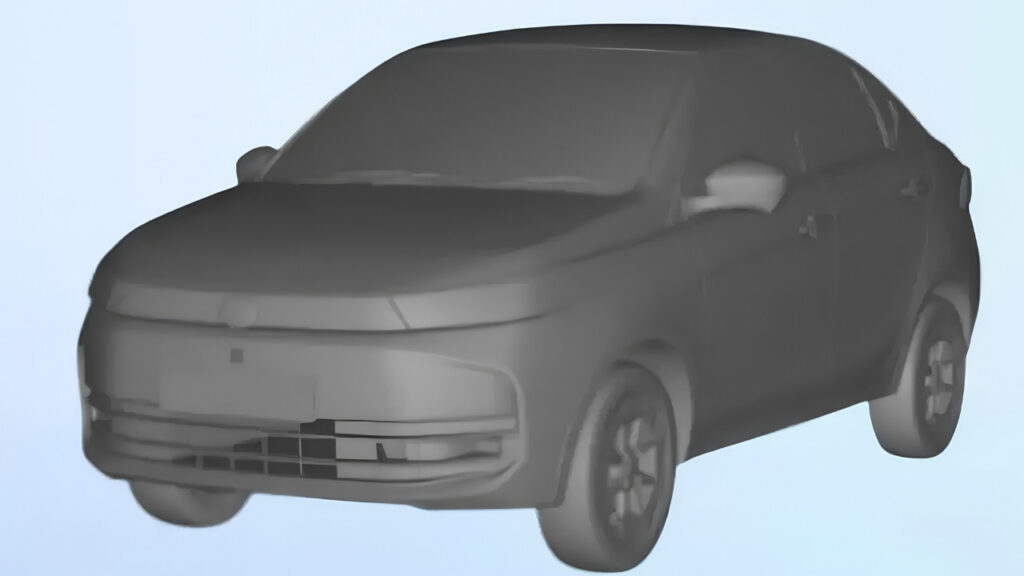
At the rear, it is highly anticipated to get a full-width LED taillight with the Tata logo in the center to create a wide stance and make it recognizable even from the back, a roof-mounted spoiler above the windshield for better aerodynamics, and a bumper-integrated side reflector so the vehicle may be visible to others even if the taillight is off.
Interior and features
Inside, the trims for the window and dashboard for the Tata Tigor EV facelift are expected to be upgraded; the carmaker may also introduce more soft-touch upholstery. Currently, it has a 7-inch infotainment system at the center of the dashboard with wireless connectivity, but they are likely to replace it with a larger one with a smoother user interface.
The outgoing model is equipped with an 8-speaker sound system, and the upcoming model may retain the same; even the fully digital instrument cluster is expected to be enhanced to ensure that it shows the driving data more clearly. If they introduce the touchscreen infotainment system, its connected car technology will have more than 50 remote features.
Dimensions and size
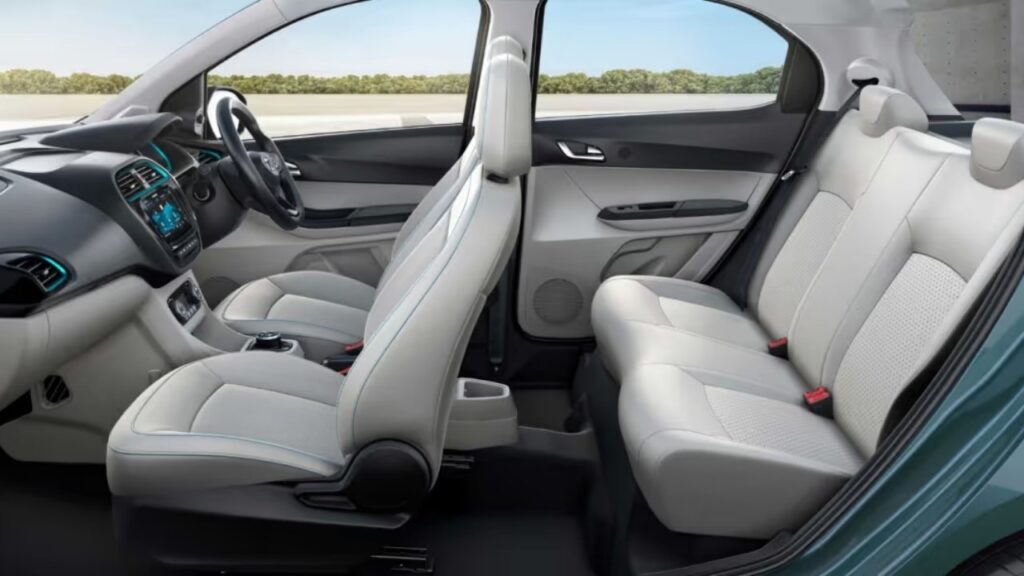
The Tata Tigor EV facelift will measure 3,993 mm in length, 1,677 mm in width, and 1,532 mm in height. It will have a seating capacity of 5 people in a 2-3 layout, meaning two seats in the front row and three in the second row in a bench-like structure, and the wheelbase will remain 2,450 mm, providing ample legroom for all rear-seating passengers.
Even the boot space remaining 316 liters helps in carrying luggage, and the ground clearance of 172 mm is set to be retained, making it ideal for Indian road conditions so it can pass the potholes and speed breakers.
Suspension and braking
The front and rear suspension of the Tata Tigor EV facelift are set to be MacPherson strut and twist beam, respectively, and a disc will manage the braking for the front wheel and a drum for the rear, the same setup of suspension and braking as the outgoing model. It may also remain CSC, ABS, and EBD.
Powertrain and performance
The Tata Tigor EV facelift will get a permanent magnet synchronous motor on the front axle with a one-speed automatic transmission featuring a front-wheel drive drivetrain. The electric motor will generate the maximum power of 75 bhp and peak torque of 170 Nm. It takes 5.7 seconds to accelerate from 0 to 60 kmph and reach the maximum speed of 120 kmph.
Set to retain a 26 kWh lithium-ion battery pack under the floor featuring a liquid-cooled system. When the battery pack is fully charged, it gives the ARAI-certified range of 315 km. It supports DC chargers up to 25 kW, which take 59 minutes for 10 to 80 percent charging.
