
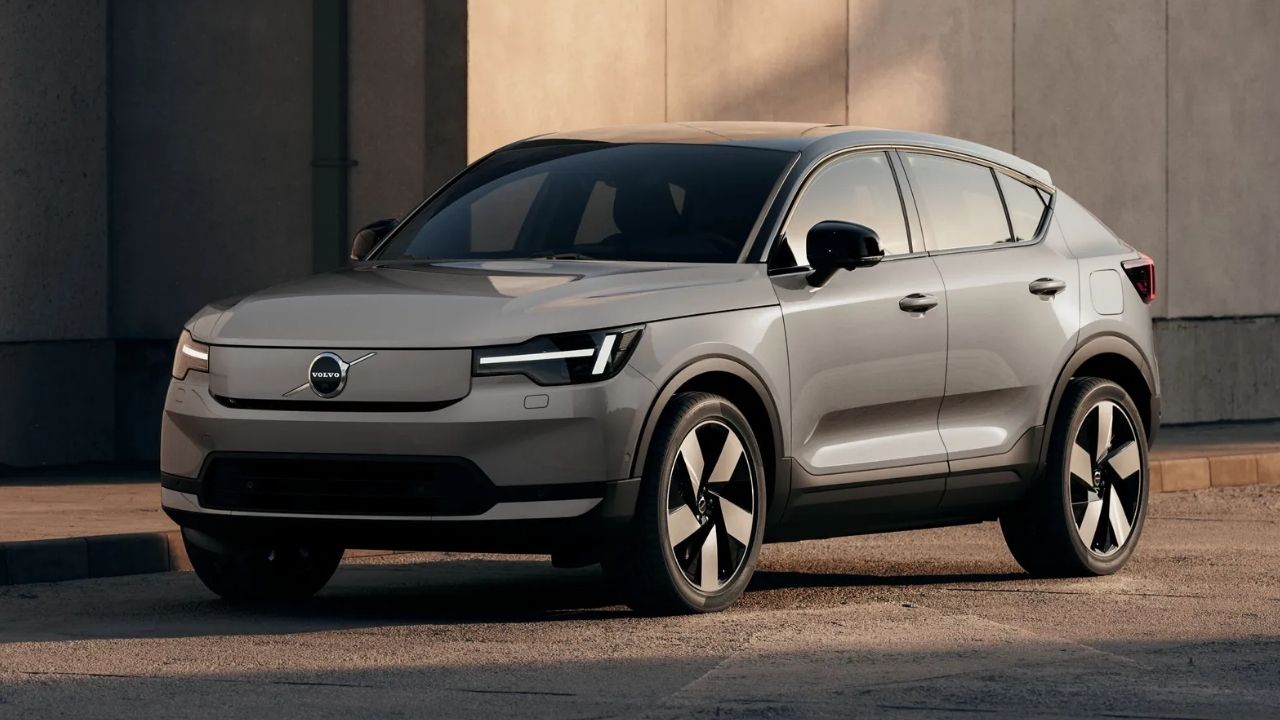
The Volvo EC40, a compact electric sport utility vehicle, is available for sale in the Indian market from September 3, 2023. Volvo, a Swedish automotive brand, has recently revealed the facelift of the same globally on September 10, 2026. The facelift of this car is known as the 2027-year model; the same has been listed on Volvo Cars’ official website for India with the ex-showroom price of ₹59 lakh.
Compared to the outgoing model, its upfront has received many upgrades. At the front end, this car gets new Thor’s Hammer Matrix LED headlights with a refined light signature to reduce glare to other road users, a clean and modern grille reducing the aerodynamic drag, a revised bonnet to give it a distinct look from the outgoing model, and a tweaked front fender creating new front-end proportions.
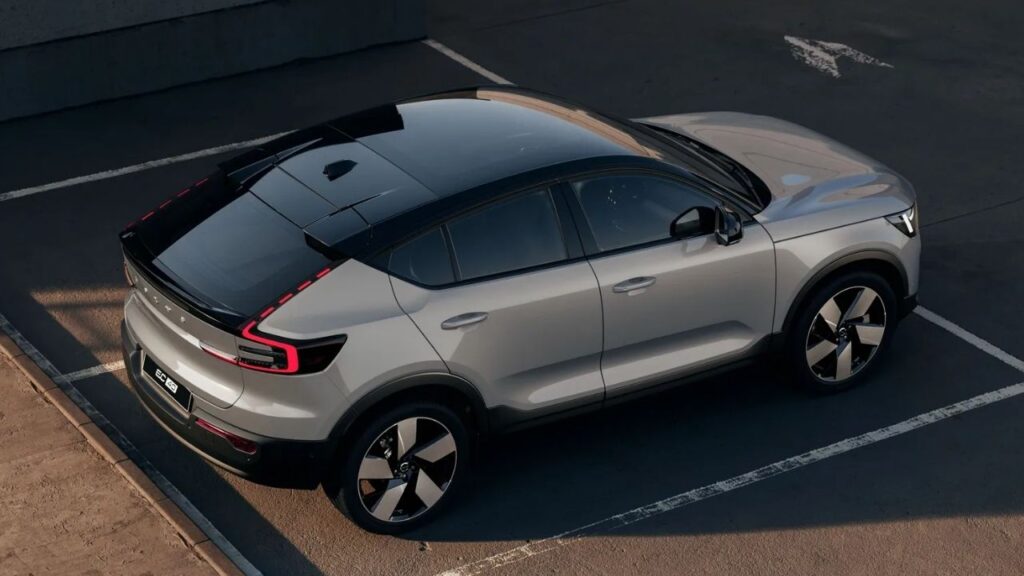
The sides are almost the same as earlier, with a coupe-like fastback roofline, a front door mounted outside the rearview mirror integrating the side indicator, flared wheel arches, and pull-type conventional handles. Its rear also looks retained with the tall and vertically orientated C-shaped tail lamps, two spoilers, and an integrated lower diffuser. The dimensions are also retained; they are:
- Length: 4,440 mm
- Width: 1,873 mm (excluding mirrors), 2,034 mm (including mirrors)
- Height: 1,591 mm
- Wheelbase: 2,702 mm
- Ground clearance: 171 mm
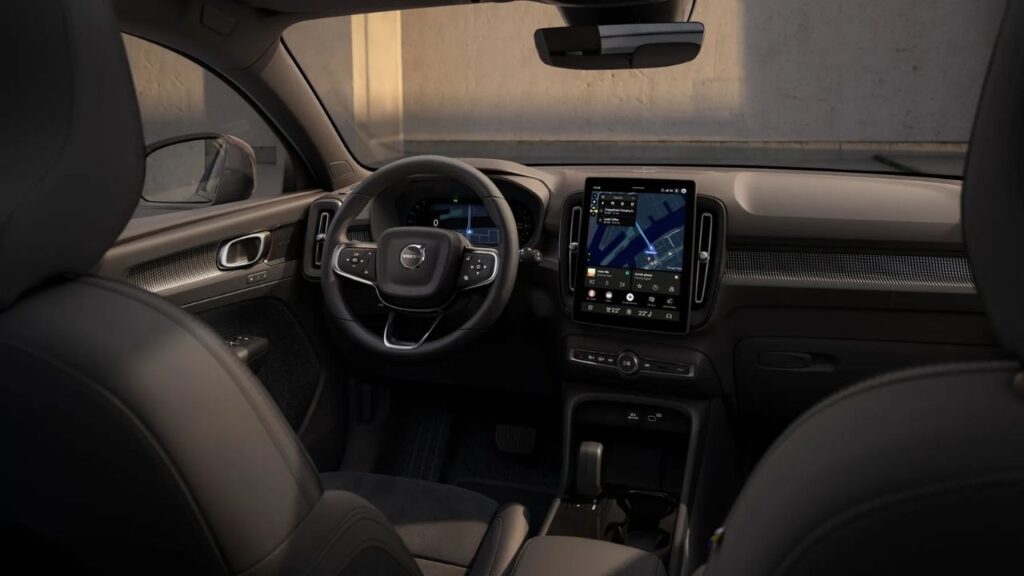
The 5 seats are available in the same 2-3 layout with the cargo capacity of 419 litres, which is expandable up to 1,280 litres, enhancing practicality in luggage carrying. This facelift doesn’t only receive exterior updates, but interior too. Replacing the old 9-inch touchscreen infotainment system, it received an 11.2-inch unit with the next-generation AI assistant, Google Gemini.
Other interior feature upgrades include a new-generation Volvo Car UX enhancing user experience, an updated wireless phone charging pad to ensure smoother charging, premium upholstery to add more seating comfort, updated safe hardware ensuring enhanced safety of occupants, a 360-degree camera for surround view to make parking easy, and lane-change assistance in addition to the Pilot Assist.
Features that remain the same as the earlier include a 12.3-inch screen behind the three-spoke steering wheel, the main screen still has the Google-based infotainment ecosystem, a fixed panoramic glass sunroof, two-zone climate control, and an air purifier and air quality system. Apart from the interior and exterior upgrades, all remain the same model that is already on sale in the Indian market.
The electric car still underpins Volvo CMA (Compact Modular Architecture), whose front and rear suspensions are MacPherson struts and multi-link, respectively. Get electric power-assisted steering. Sits on up to 20-inch alloy wheels, whose front brake is a ventilated disc and the rear is a solid disc. It also features ABS and EBD, an electric parking brake, and brake assist.
In India, it is on sale as an all-wheel-drive vehicle getting an induction motor on the front axle and a permanent magnet synchronous motor on the rear axle with a single-speed automatic transmission that delivers the 408 hp (300 kW) power and 670 Nm torque, which make 0 to 100 kmph acceleration possible in just 7 seconds, and the top speed is up to 180 kmph.
Beneath the floor, it has an 82 kWh lithium-ion battery pack, whose usable capacity is 79 kWh; when it is fully charged, it helps to run the vehicle up to 551 km on WLTP (Worldwide Harmonised Light Vehicles Test Procedure) conditions. This car is built on an 800-volt electrical architecture supporting DC charger up to 200 kW, which takes the time of 28 minutes for 10 to 80 per cent charging.