
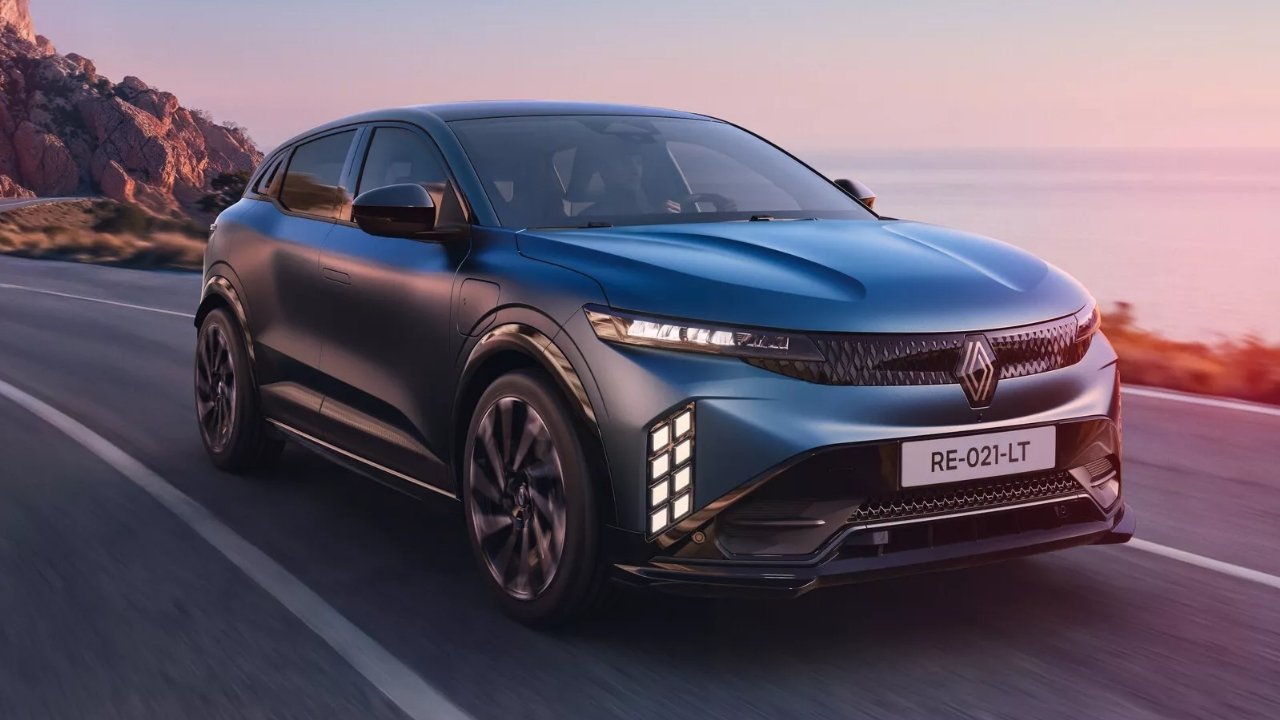
Back in February 2022, the French automobile manufacturer Renault introduced the Renault Megane E-Tech, an all-electric crossover-styled hatchback; now they have come up with the facelifted version of the same. On June 22, 2026, the carmaker officially released the image revealing its exterior; they also shared the details regarding upgrades.
The length, width and height are 4,200 mm, 1,782 mm, and 1,522 mm, respectively. Its wheelbase is 2,685 mm and ground clearance is 124 mm when unladen, but occupants sitting in it reduce it by 19 mm. Notably, compared to the outgoing model, all dimensions are the same, except height; they have increased by 20 mm.
Upfront, it gets slim, horizontal-shaped LED headlights below the hood on the corner that connects through the closed-off grille; a Renault logo at the centre of the grille; and eight square-shaped daylight running light units on the outer edge of the bumper, forming a vertical shape, and lower air intakes.
On the sides, it boasts flush-type handles for the entry door for better aerodynamics; black wheel arch cladding to add ruggedness; front-door-mounted outside rear-view mirrors with integrated side indicators for a clearer view of the rear section; and 19-inch and 20-inch alloy wheels, depending on the variants that are the Techno and Esprit Alpine, respectively.
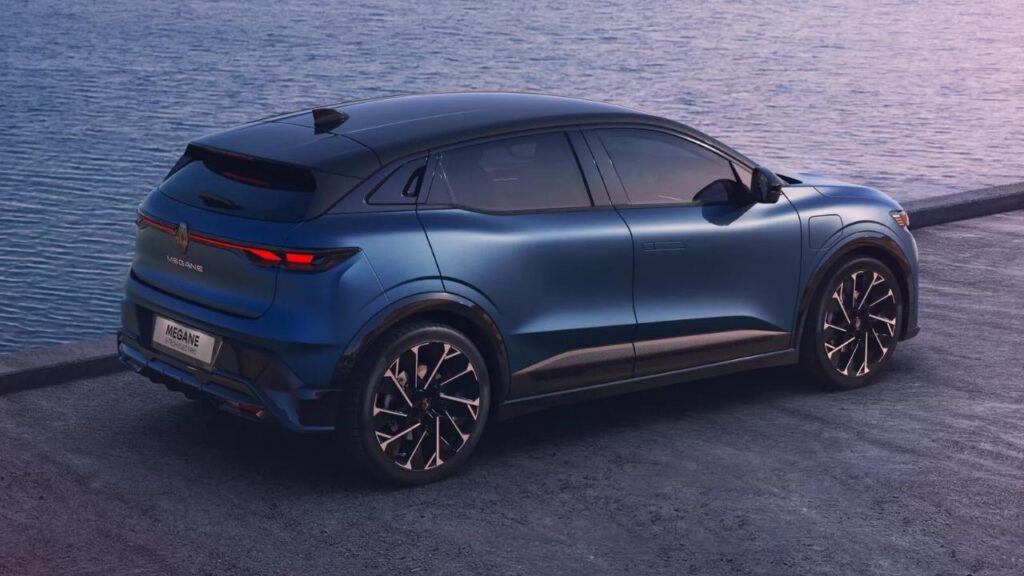
At the rear, it features full-width LED taillights on the tailgate with a Renault logo at the centre, creating a wide stance, and 3D LED taillamps on the outer edges of the rear act as braking lights and also side indicators, with a roof-mounted spoiler just above the rear windscreen and a bumper-integrated diffuser.
It comes with a seating capacity of 5 people in a layout of 2-3; the first row gets two separate seats for the driver and co-passenger, and the second row gets a bench-like structure seat for three adults. Behind the second-row seats, there is a boot space of 440 litres that is expandable up to 1,332 litres by folding second-row seats.
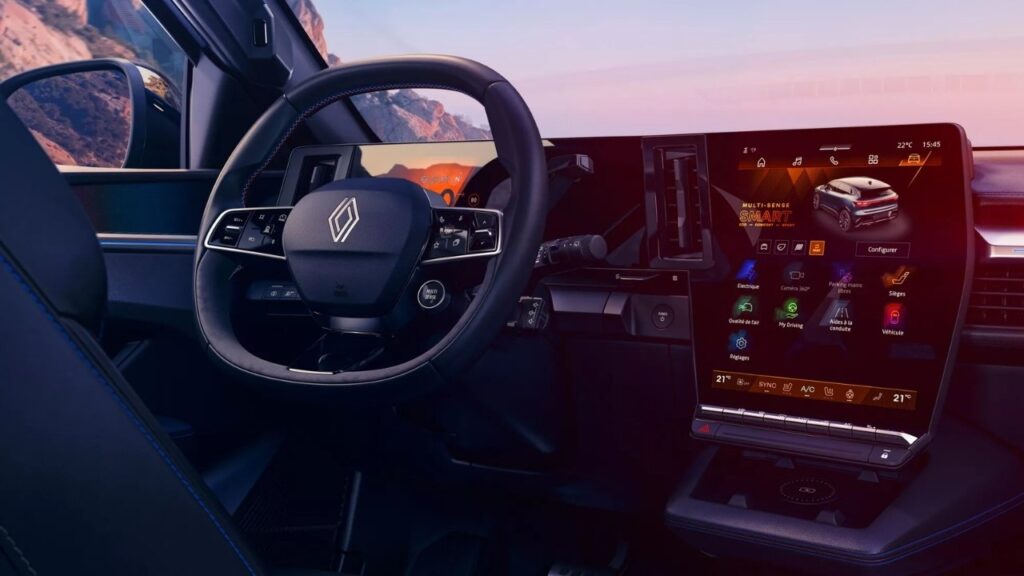
The dashboard is equipped with an OpenR twin-screen cockpit, including a 12-inch touchscreen infotainment system at the centre with Google built-in integration featuring maps, Play Store with more than 100 applications and Gemini AI, and a 12.3-inch digital instrument cluster under the steering wheel; together, they form an inverted L-shape.
Available with two TEP upholstery theme options that are light-grey or titanium-black, a power-adjustable seat, and a three-spoke steering wheel with physical buttons for the controls. They confirmed that the Esprit Alpine, the top-end variant, will get a massage seat and a Harman Kardon premium sound system for a better infotainment experience.
The central console gets a wireless phone charging pad for the convenience of the driver and co-passenger, USB ports for rear-seating passenger phone charging, and a storage area to keep essentials. Other notable features are multi-colour customisable LED ambient lighting and four driving modes that are Eco, Comfort, Sport, and Smart.
Built on the RGEV Medium 1.0 platform featuring a front-wheel drive drivetrain. It gets a wound-rotor synchronous motor on the front axle that is mated with a single-speed automatic transmission. It generates the maximum power of 220 hp and peak torque of 300 Nm, which helps it to accelerate from 0 to 100 km/h in 7.6 seconds.
Equipped with a 67 kWh lithium iron phosphate battery pack under the floor, giving the WLTP-rated range of 500 kilometres. Supports a DC charger up to 165 kW, which charges this vehicle from 15 to 80 per cent in 24 minutes. Buyers are set to get an 11 kW AC charger as standard, but the 22 kW will be optional.
The facelift has a 7 kWh LFP large battery pack, adding 46km more WLTP range, and even the DC charger output has been increased by 35 kW, which significantly lowers the charging time. The carmaker is anticipated to start the pre-order in July 2026, and delivery may take place in the following month.
