
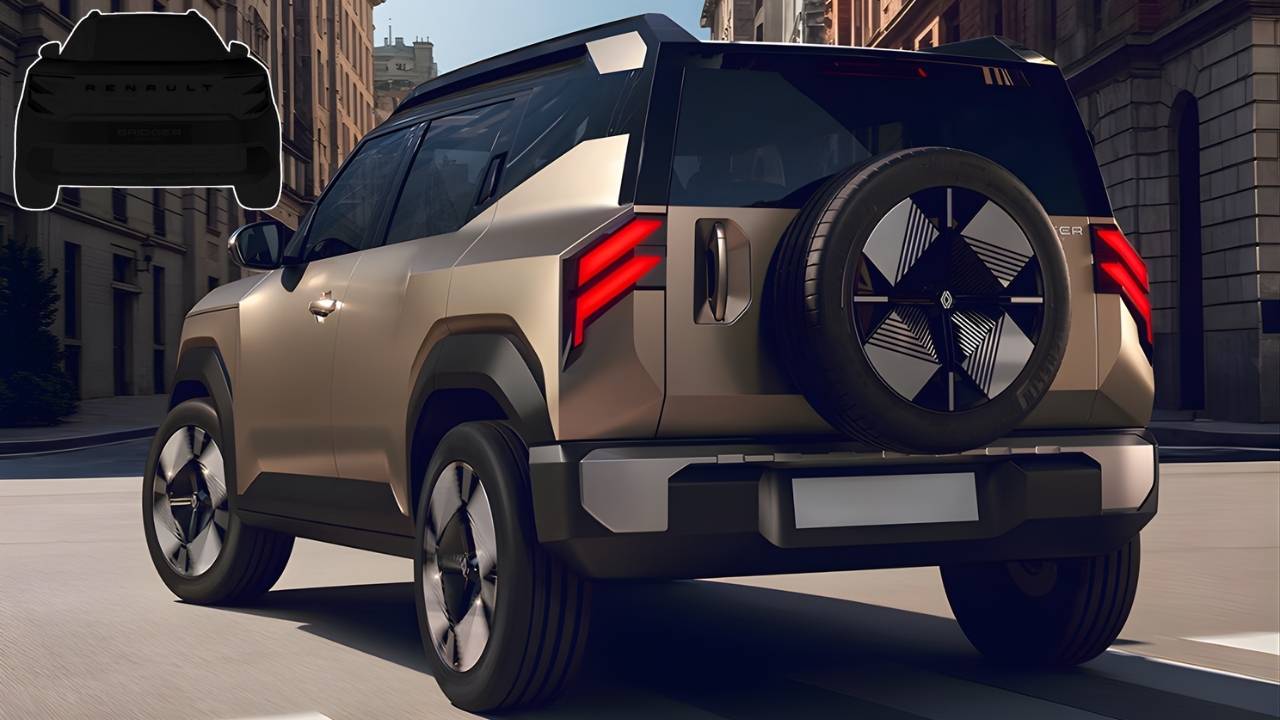
Renault, a French automaker, and Nissan, a Japanese automaker, are all set to launch their first EVs in India, which will be based on the Bridger concept. The launch from Renault will be followed by the Nissan with a few cosmetic changes. The platform on which they will be based is the small RGMP (Renault Global Modular Platform).
The Bridger concept was unveiled in March 2026 as a sub-4-metre SUV that grabbed attention, many because of its exterior and design. The Indian market will firstly see its launch with an ICE powertrain, then with a hybrid and after that with an electric. The launch of the EV trim is expected by early 2028 from Renault and mid-2028 by Nissan.
What about their powertrain?
The Bridger EV from Renault and Nissan will get a permanent magnet synchronous motor on the front axle, meaning it will come with a FWD drivetrain, and the transmission is expected to be single-speed automatic. Two battery packs are expected to be offered, which are 35 kWh and 55 kWh; its real-world range may be between 300 km and 450 km.
The electrical architecture is most likely to be 400-volt, which supports fast DC charging up to 250 kW, but it may be around 120 kW, because mass-market EVs in India are available with the same charging capacity. The DC charger of 120 kW is expected to take 30 minutes for 20-80% charging for the long-range battery pack.
Is there anything known about its exterior?
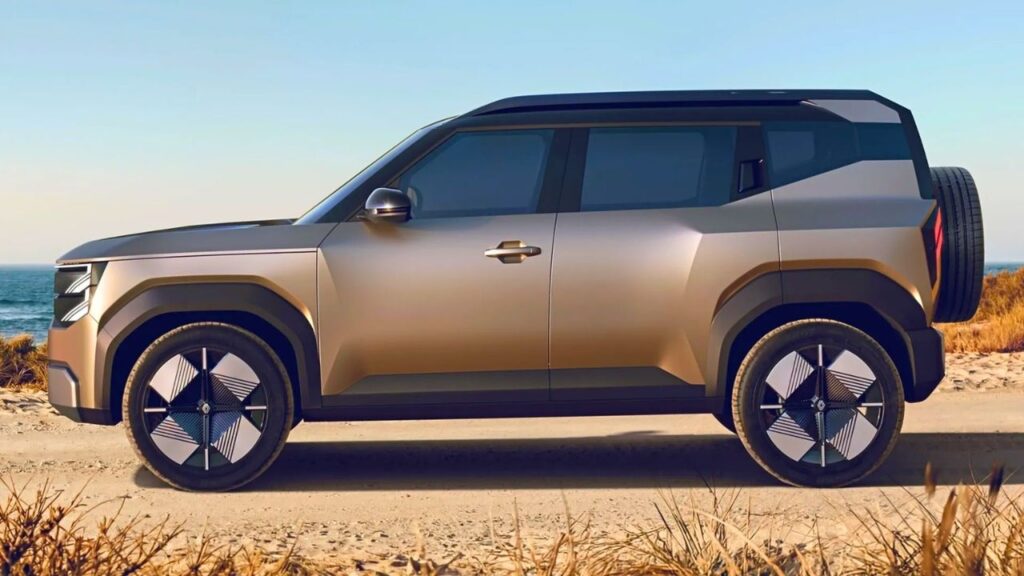
Nothing besides the concept of Bridger is showcased, but one thing is certain: that the EV will come with the exterior but with many changes to ensure better aerodynamics. Renault and Nissan both will introduce it in the Indian market with their badging, but in terms of design their models are likely to be different from one another.
Few things are expected to be the same as the show in the concept: they are a chunky bumper with a skid plate and squared LED headlamps with DRLs on the front; flared wheel arches with cladding, large alloy wheels and hidden door handles on the arches on the sides; and a rugged bumper, a flat upright tailgate and vertical LED tail lamps at the back.
How would its interior be?
The interior is yet to be revealed. The EV version will have the same cabin which we are expecting for the ICE trim. A large-screen infotainment system as central control of the cabin is expected with wireless connectivity and voice control; a driver display, i.e., a digital instrument cluster, is likely, which will show all driving data and navigation.
The front row may be powered and come with ventilation and massage functions, and the rear may get separate AC vents for better cooling. A Panasonic sunroof will be available as an option, which makes the cabin airy. The wireless charging pad is likely for fast charging of the phone. It will also get automatic climate control and a big boot space for convenience.
What do current reports say about its dimensions?
The dimensions are yet to be disclosed. One thing is confirmed: its length is under 4 metres, as its concept is shown as a sub-4-metre SUV. The wheelbase is expected to be around 2650 mm so all rear-seating passengers get ample legroom, and group clearance is around 200 mm to ensure that the vehicle runs more smoothly on rough terrain and can pass the potholes and speed breakers easily.
