
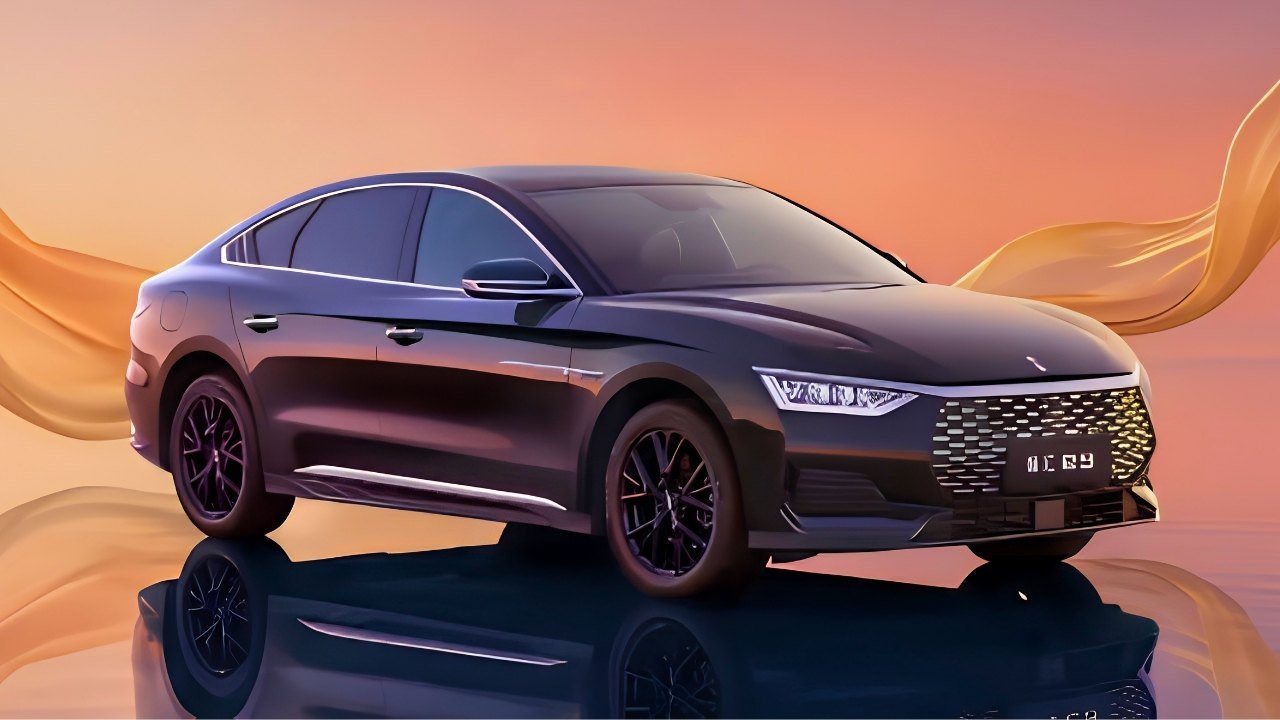
The Chinese automaker BYD’s sub-brand Linghui has officially confirmed that they are going to launch the Linghui e9, a C-segment sedan, on May 9, 2026. The price is yet to be revealed, but it is expected to cost 139,800 to 159,800 Chinese yuan, which translates to 19,300 to 22,100 American dollars.
The car is a pure all-electric sedan that is made for the commercial mobility services sector, whose dimensions in terms of length, width, and height are 4,995 mm, 1,910 mm, and 1,495 mm, respectively. Its wheelbase is 2,920 mm, and ground clearance isn’t revealed but is expected to be 150 mm when unladen.
Built on BYD’s e-Platform 3.0, It feature a MacPherson independent and rear is multi-link independent. The front wheel braking is managed by the ventilated discs, and the rears with solid discs. Also features an electronic parking brake with the auto-hold function, ABS with EBD, and hydraulic brake assist.
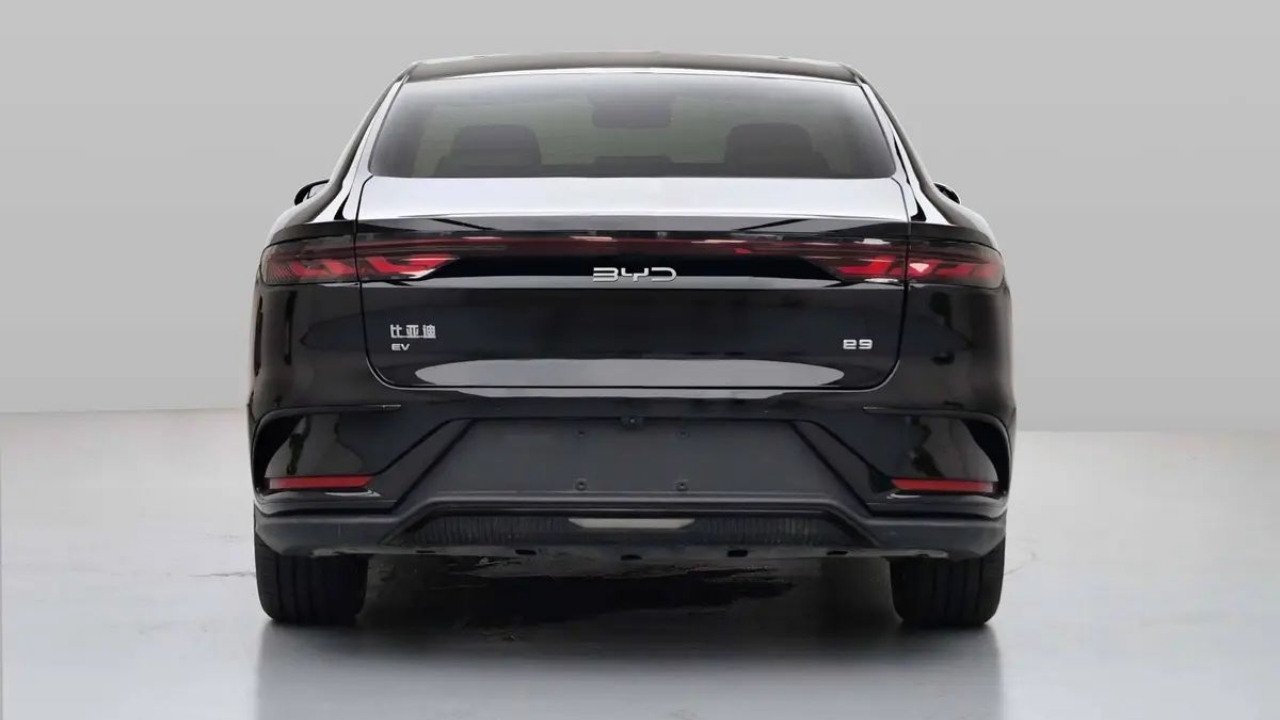
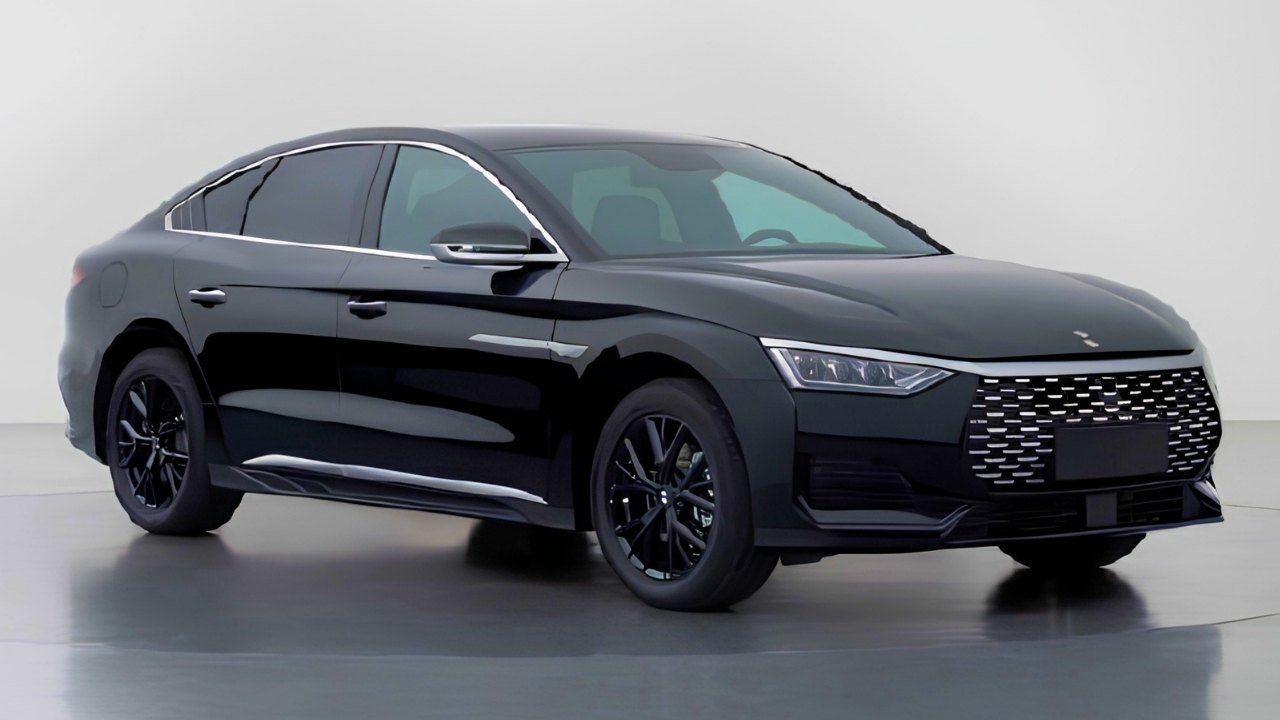
Its exterior is quite attractive. Up front, it features a matrix grill giving it modern style, narrow LED headlights for better visibility, and vertical air intakes for brake cooling; in profile, it gets flush-type door handles visible that reduces drag and alloy wheels with the option of 18-inch with 245/50 tires and 19-inch with 245/45 tires; and the rear gets ‘Chinese Knot’ taillights to create a wide stance.
The interior features the seating capacity of 5 people in a layout of 2-3 with ample legroom, headroom, and shoulder room for 5 adults to sit comfortably. Features a cargo capacity of around 450 liters that helps carry two big pieces of luggage. The rear seats are benches that can be folded down to extend the boot space if luggage is big and only two are travelling.
On the dashboard, it is expected to get a 15.6-inch rotatable touchscreen at the center, which acts as the control panel of the cabin to access the functions and settings, as they are all touch-based, and a 12.3-inch driver display that shows all driving data. Its seats are made up of synthetic materials to ensure better comfort.
Other features expectations are the ambient lighting to enhance mode, dual-zone automatic AC, a high-efficiency PM 2.5 air filtration system giving clean air inside the cabin to breathe, acoustic glass for a quiet cabin experience, and Vehicle-to-Load (V2L) that helps in running external electronic devices.
A total of 9 airbags are available across the cabin, which plays a crucial role in saving lives in case of an accident; it has a 360° HD camera giving a bird’s-eye view and a Level 2 advanced driving assistant system featuring adaptive cruise control, lane keeping assist, and forward collision warning, which make the driving also stress-free and autonomous.
Now, moving to its powertrain, it gets a permanent magnet synchronous motor on the front axle featuring a front-wheel drive (FWD) drivetrain. Its transmission is single-speed automatic, which is standard, which is also offered with its competitors: GAC Aion S Plus, Geely Cao Cao 60, and XPENG Mona M03.
While the Linghui e9 focuses on the commercial sector, users looking for high-performance luxury or advanced battery tech can also consider the Zeekr 007 or the Arcfox S3, which offer similar 800V capabilities.
Comes with two BYD Blade 2.0 battery packs that are 60.5 kWh and 64.3 kWh batteries, whose CLTC range is 535 km (333 miles) and 605 km (376 miles), respectively. Based on the electrical architecture of 800 volts supporting BYD’s flash charger that takes 5 minutes for 10-70% of the charging.
The power output with the standard battery pack is 181 hp (135 KW), but with the large one, it is 201 hp (150 KW), and peak torque for both is 330 Nm (244 lb-ft). With both battery packs, the car is capable of accelerating from 0 to 100 km/h (0-60 mph) in 7.9 seconds, and its top speed is 185 km/h (112 mph).
