
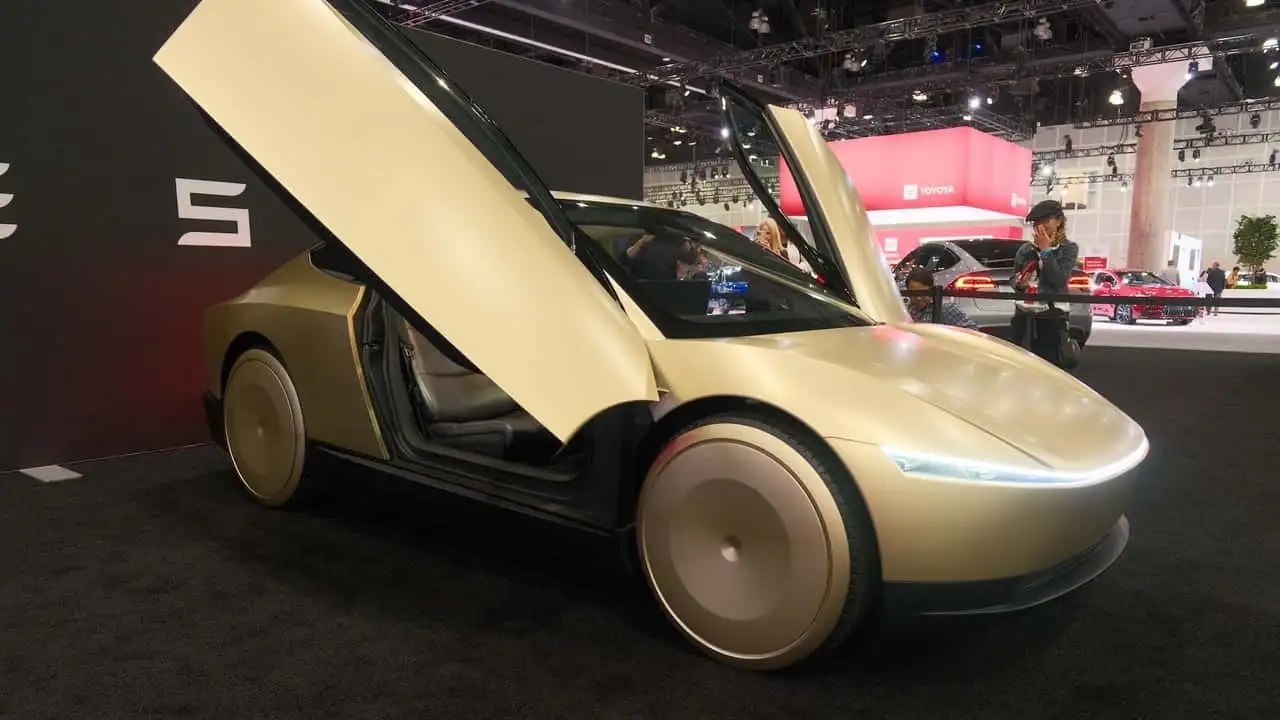
Tesla, an American electric vehicle manufacturer, has finally filed the official documents for the Tesla Cybercab, a pure-electric, two-seater, fully autonomous robotaxi, with the US Environmental Protection Agency, which means now they can start the mass production of this upcoming robotaxi. The filing has revealed many details about the Cybercab. Let’s have a closer look.
The EPA filing shows that its kerb weight is 3,113 lb (1,412 kg), which includes the weight of the battery pack, motor, tyres and fluids. The Gross Vehicle Weight Rating is 3,730 lb (1,692 kg); it includes kerb, passenger and luggage weight, meaning the total weight to run the robotaxi on the public road legally shouldn’t exceed it. The payload, meaning the sum of passengers and the luggage weight, shouldn’t exceed 617 lb (280 kg).
As an all-electric robotaxi, it will get a permanent magnet synchronous motor on the front axle. Notably, the PMSM is set to be mounted with a single-speed automatic transmission. Since the electric motor is bolted to the front axle, it will come with the front-wheel drive drivetrain. Reportedly, the e-motor generates the peak power of 163 kW, which translates to 219 hp.
Gets a lithium-ion battery pack of 146 amp-hours running at 326 volts, that is, 48 kWh; they are yet to disclose its mounting position but highly anticipate it beneath the seating compartment. The carmaker claims that with each full charge, it gives an EPA range of 418 miles, which translates to 672 km. But the real-world range is anticipated around 292 miles, equivalent to 470 kilometres.
Notably, this Cybercab will support wireless charging using the UWB (ultra-wideband) radio technology, for which the manufacturer has already received approval from the Federal Communications Commission. They are yet to reveal its DC (Direct Current) charging output and time. Reports suggest that this robotaxi may support DC chargers up to 150 kW, which will take 10-15 minutes for 10-80% charging.
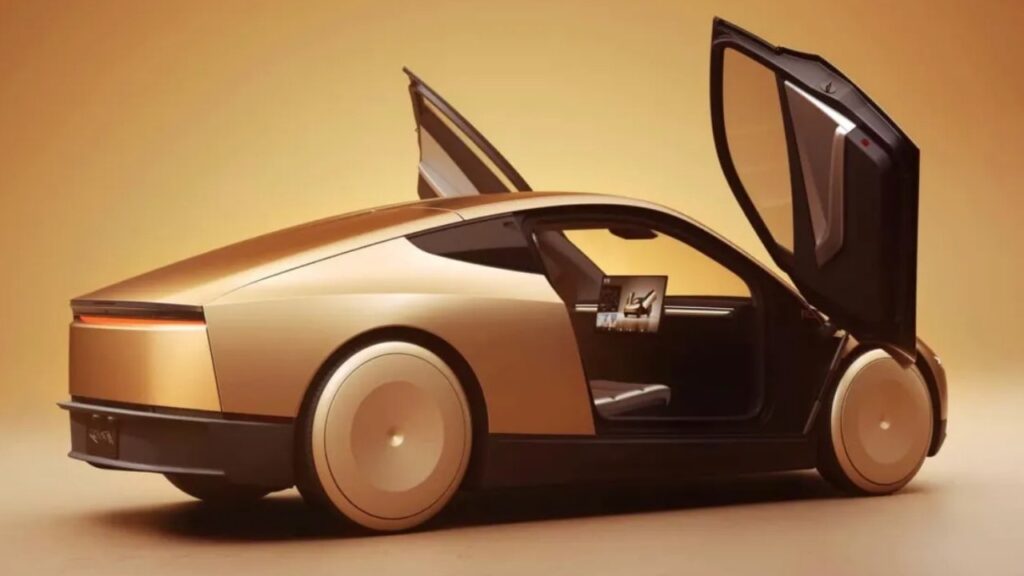
Dimensions are still pending. Its estimated length is around 4.5 metres, so we are expecting that its distance between the front and rear axle is around 2.6 metres. On October 10, 2024, at Tesla’s “We, Robot” event, they showcased it, and now its image is all across the web; however, it was just a concept. They are yet to reveal the production model, which is set to be the same as the concept but with tweaks, upgrades and changes.
The concept showcased back in October 2024 gets full-width connected LED daylight running lights that connect with the main headlamps, creating a wide stance and giving better visibility at nighttime; features a non-traditional grill to ensure better aerodynamics; and has a smooth bumper with black cladding to reduce drag and improve efficiency.
Other exterior highlights from the concept are a two-door layout that opens in butterfly wings, adding premium, large, forward-push, aero-optimised alloy wheels that give it a dynamic side look; a teardrop-shaped roofline that ensures better airflow across the body; a full-width taillight that mirrors the front-end lighting signature; and a minimalist bumper design that makes its rear view uncluttered.
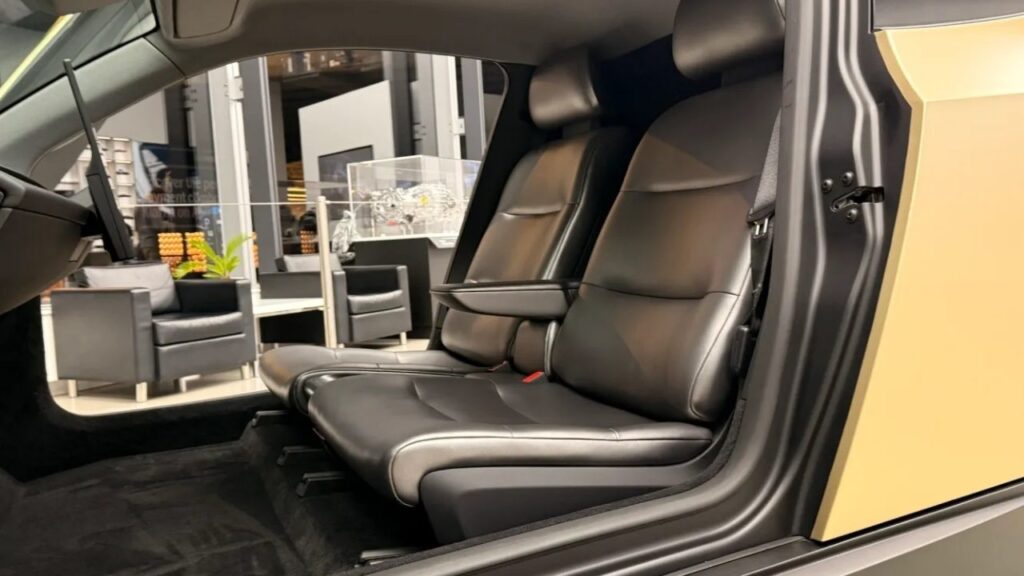
Inside the concept, we get to see two people’s seating layout with ample legroom. The dashboard is equipped with a floating touchscreen infotainment system and central console cup holders. Notably, the cabin doesn’t have any steering wheel or paddle. The production model will also be the same, as it is an autonomous driving robotaxi.
As of now, there’s no confirmation regarding its launch in the US. The manufacturer is all set to sell to the public for private use. Reportedly, Tesla will introduce it to the domestic market somewhere in 2027, which will cost under $30,000, equivalent to ₹28.40 lakh.
