
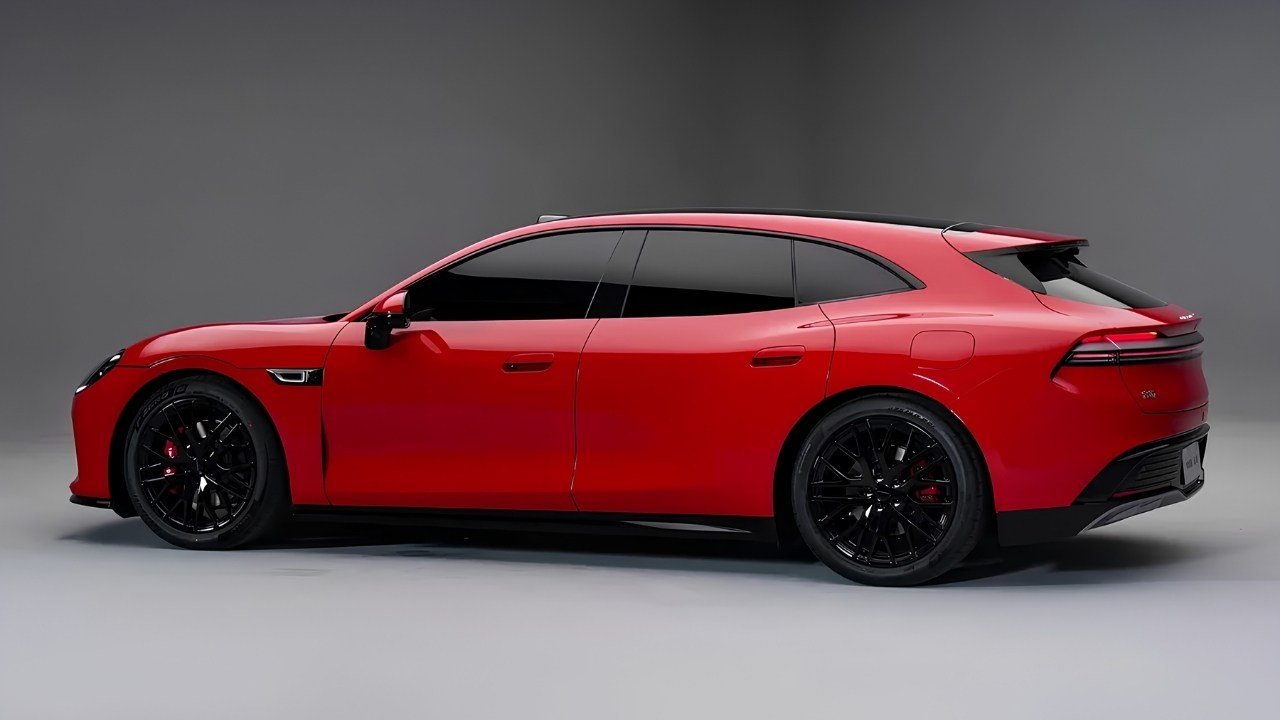
Aistaland is a NEV (new energy vehicle) brand in China that is developed by two Chinese automakers GAC and Huawei. They are all set to introduce the first vehicle Aistaland GT7 for the domestic market.
Reportedly, the launch will happen in June 2026 and delivery will be shortly after the launch, probably in July 2026. Notably, the GT7 from Aistaland is an all-electric shooting brake (sporty wagon) that was unveiled back in March 2026.
The carmaker will announce the price for the vehicle with launch, it is expected to be available with the price starting from ¥300,000 (₹42.3 lakh). It will compete with Yangwang U7, Luxeed S7 and Zeekr 001.
Prior to the launch of Aistaland’s GT7, they revealed its interior. The interior is available with four colour option Including Daybreak Red, Starry Night Black, and Moonlight Beige.
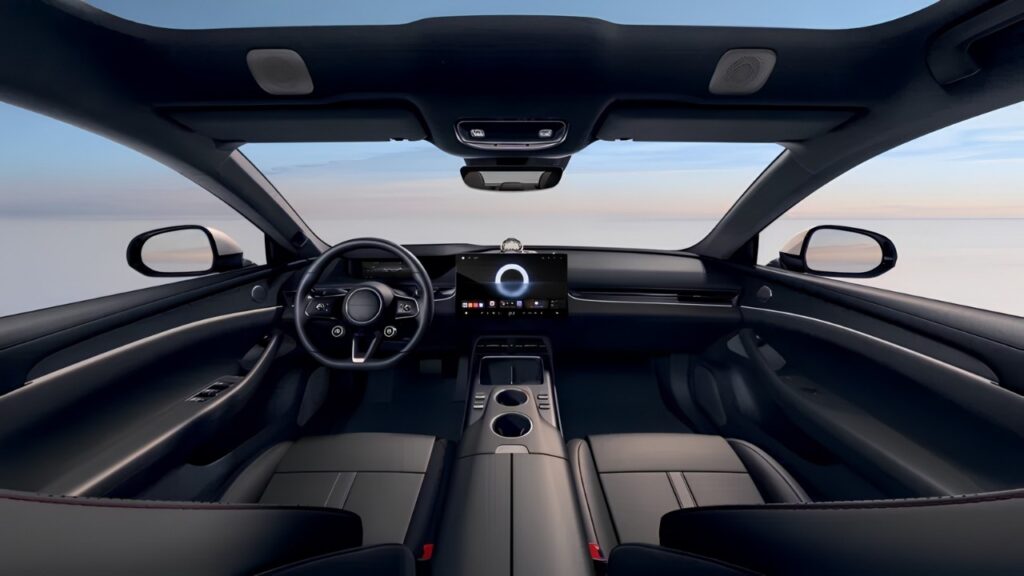
The cabin is equipped with a 15.6-inch touchscreen at the centre of the dashboard as an infotainment system that runs on the latest HarmonyOS operating system featuring AI voice assistant, app ecosystem, navigation, media, and vehicle controls.
To enhance the infotainment experience with immersive sound, the cabin gets a 21-Speaker Premium Audio system that configures 7.1.4 surround architecture and 260-parameter tuning.
Get a three-spoke Gemini steering wheel with different controls at the right and left side, under which there’s a LCD Instrument Cluster that shows speed, navigation, smart driving assistant information, and battery and charging data.
Also features a 88-inch AR-HUD (Augmented Reality Head-Up Display), which projects navigation arrows, lane guidance, hazard warnings, and speed info on the windshield, and helps the driver stay focused on driving to drive safely.
Other notable features are double phone charging pad and two cup holders at the front row, a 2.2-square-meter panoramic canopy featuring 9-Zone Smart Dimming that helps with reducing heat, and adjusting sunlight.
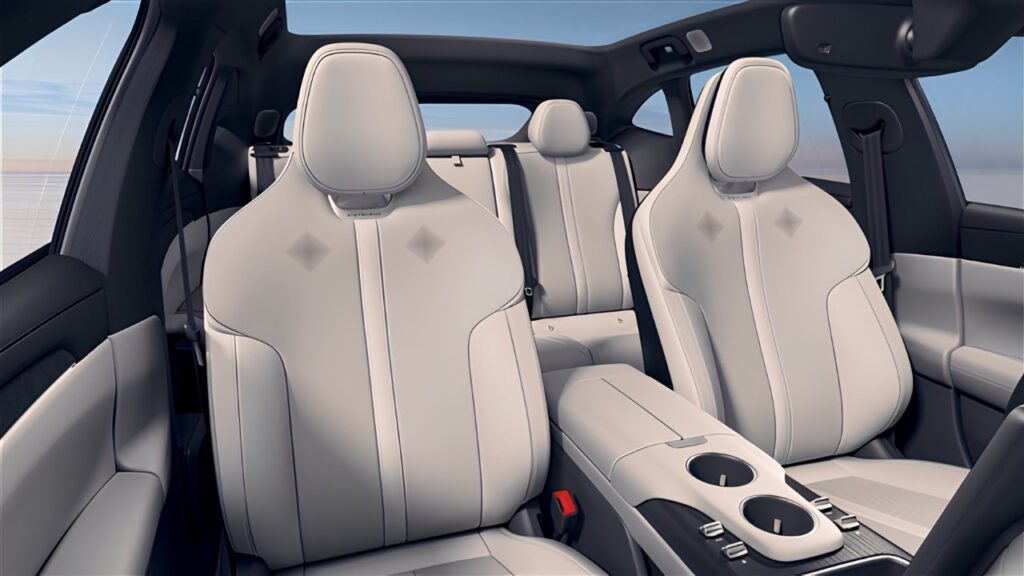
Comes with a seating capacity of 5 people in a layout of 2-3. The front row seats are zero-gravity with the 16-way electric adjustment and 10-point massage system; and second rows seats come with reclining, two-stage angle adjustment, and one-touch folding feature.
To carry luggage and stuff, it has frunk (front trunk storage) of 215 liters and 647 liters of boot space behind the second row seats that is accessible through the tailgate. Interestingly, the second-row seats are foldable which expands the cargo space to 1606 liters.
To ensure the quiet cabin experience even at the high speed, it features double-layer laminated glass, and 12 NVH (Noise, vibration, and harshness) optimization components. It features Huawei Qiankun ADS with 896-line LiDAR unit, which makes the driving almost autonomous.
Dimensionally, it is 5,050 mm longer, 1,980 mm wider and 1,470 mm taller. Its wheelbase is 3000 mm, which is quite large for a five seater, meaning all the rear-seating individuals get ample legroom.
Reportedly, it is built on Huawei Qiankun platform featuring XMC 3.0 digital chassis. The carmaker will introduce it in both single-motor rear-wheel drive and three-motor all-wheel drive configuration. The power output for RWD is 250 kW and AWD is 500 kW.
Set to be introduced with two LFP battery packs that are 86.111 kWh and 102.768 kWh, whose estimated CLTC-range is 700 km and 900 km, respectively. Its electrical architecture is 800-volt and supports 6C charging, which adds a CLTC-range of 300 km with 5 minutes of charging.
