
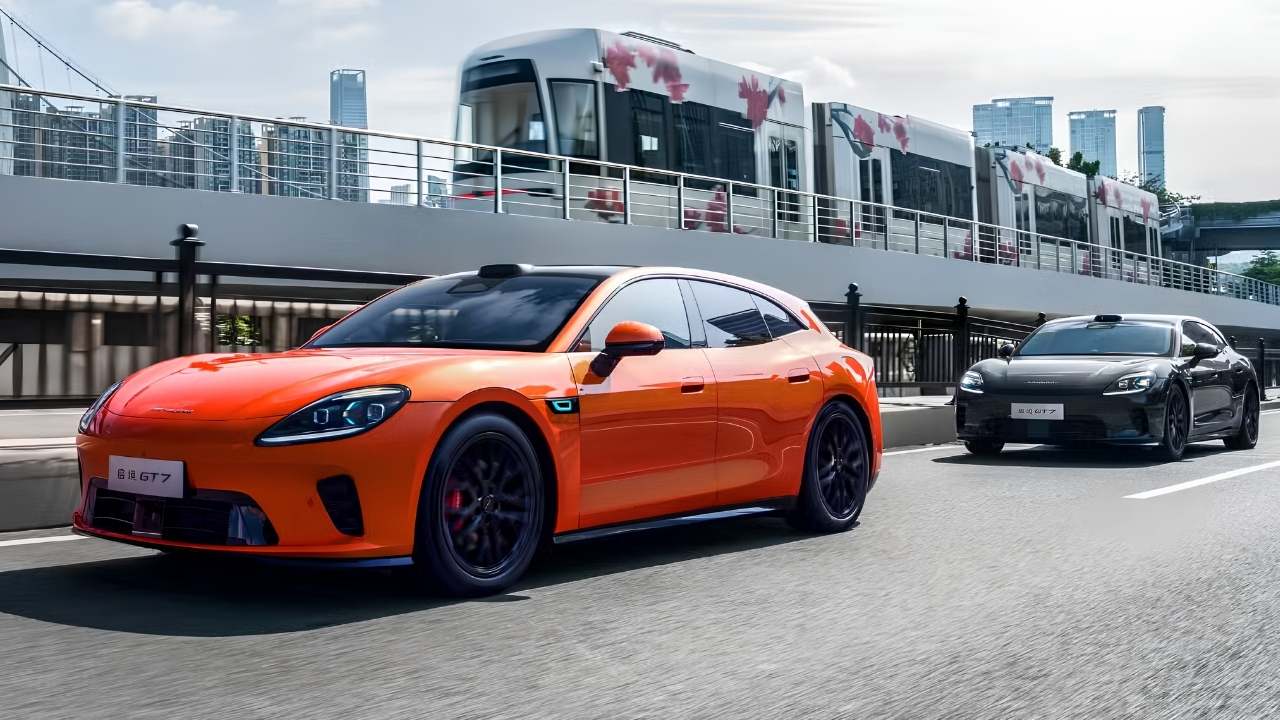
After starting the pre-sale of the Aistaland GT7, an all-electric shooting brake, on May 29, 2026, Aistaland, the premium electric vehicle brand set up with the collaboration of GAC Group and Huawei, has now announced the official date on which they are going to launch this vehicle in the Chinese market.
The announcement confirms they will introduce this EV in China on June 26, 2026, by announcing the price and other details. Reportedly, the sale price is expected to be below the one with which a pre-sale is taking place. It may be available for sale with a price between 199,800 and 289,900 yuan.
They will introduce this EV in India in a total of four variants; however, names are still undisclosed. Following the launch, the carmaker are expected to start the delivery within a month. Its main competitors are Zeekr 001, Nio ET5 Touring, Denza Z9 GT and Avatr 12.
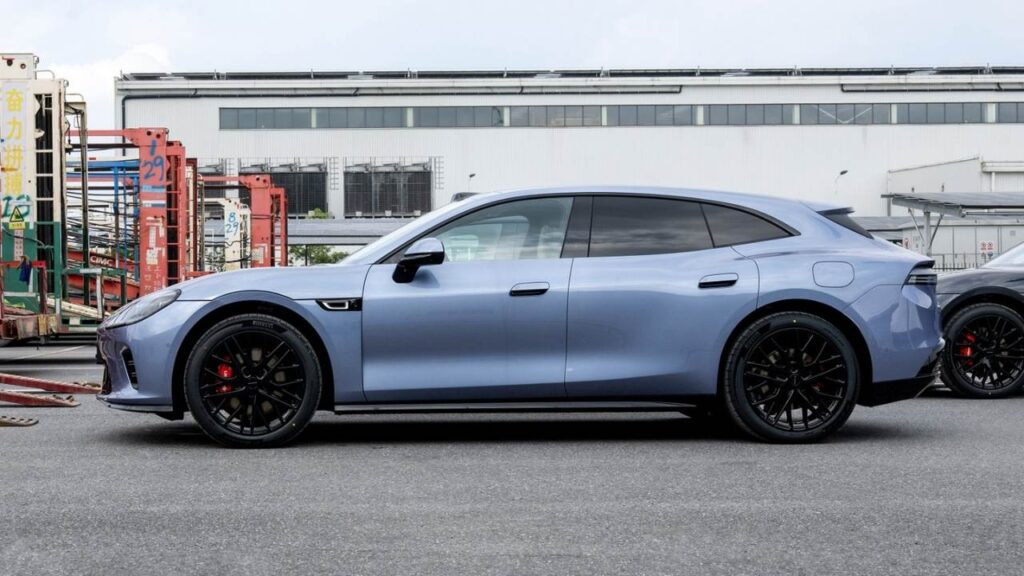
Its length, width, and height are 5,050 mm, 1,980 mm, and 1,470 mm, respectively. Features a seating capacity of 5 people in a layout of 2-3, meaning two separate seats in the front row for the driver and co-passenger, and the second-row seats are bench-type.
The length between axles, that is, the wheelbase, measures 3,000 mm, which ensures ample legroom for rear-seating passengers so even during long-distance driving they don’t face any inconveniences.
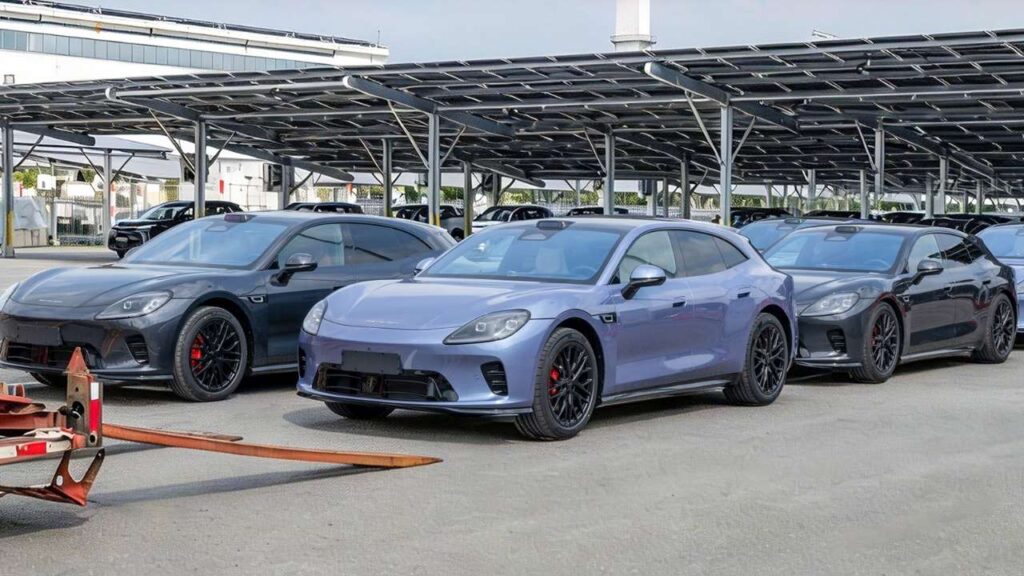
Behind the second-row seats, there’s a boot space of 647 litres to carry luggage and also a 215-litre front storage trunk usable for carrying small items. The overall cargo capacity is 862 litres. Rear seats are foldable; the boot space can be extended to 1,606 litres.
To provide multicolour options to buyers, the carmaker is all set to introduce a total of six exterior colour options that are Monte Carlo Red, Chaka Silver, Sicily Orange, Provence Purple, Nice Blue, and Meili White.
The carmaker has built this shooting brake on the Huawei Qiankun Chitu Digital Chassis platform, which features closed-loop dual-chamber air suspension with double wishbone at the front and H-arm multi-link at the rear.
The disc manages the braking for all wheels; it also features electronic brake control and regenerative braking. To ensure the safe braking, it gets ABS with EBD, which prevents the wheels from locking and distributes the braking force among all wheels.
Outside, it gets teardrop-shaped LED headlights, a closed-off grille, roof-mounted LiDAR, multi-spoke alloy wheels, two-toned ORVMs with integrated blinkers, flush-type door handles on sides, a full-width LED taillight, and an integrated rear spoiler.
Inside, a three-spoke steering wheel is present before the driving seat, under which there’s an 8.8-inch digital instrument cluster showing all the driving data. It also features an 88-inch AR-HUD projecting the driving data on the windscreen to ensure driving convenience.
The centre of the dashboard is equipped with a rectangular 12.6-inch digital instrument cluster that runs HarmonyOS 6. It is integrated with Huawei Sound’s premium audio system of 21 speakers to ensure an immersive audio experience inside the cabin.
The GT7 will make its debut in two motor setup configurations: the single-motor will come as rear-wheel drive and the triple-motor with all-wheel drive, whose power outputs are 250 kW (335 hp) and 500 kW (670 hp), respectively. The 0-100 km/h acceleration timing is 5.8 seconds for RWD and 2.8 seconds for AWD.
Like to be offered with two different battery packs, 86.1 kWh and 102.8 kWh, giving the CLTC range 700 km and 900 km, respectively. Both are based on 800-volt electrical architecture, which supports 6C charging that adds 1 km CLTC range in just 1 minute.
