
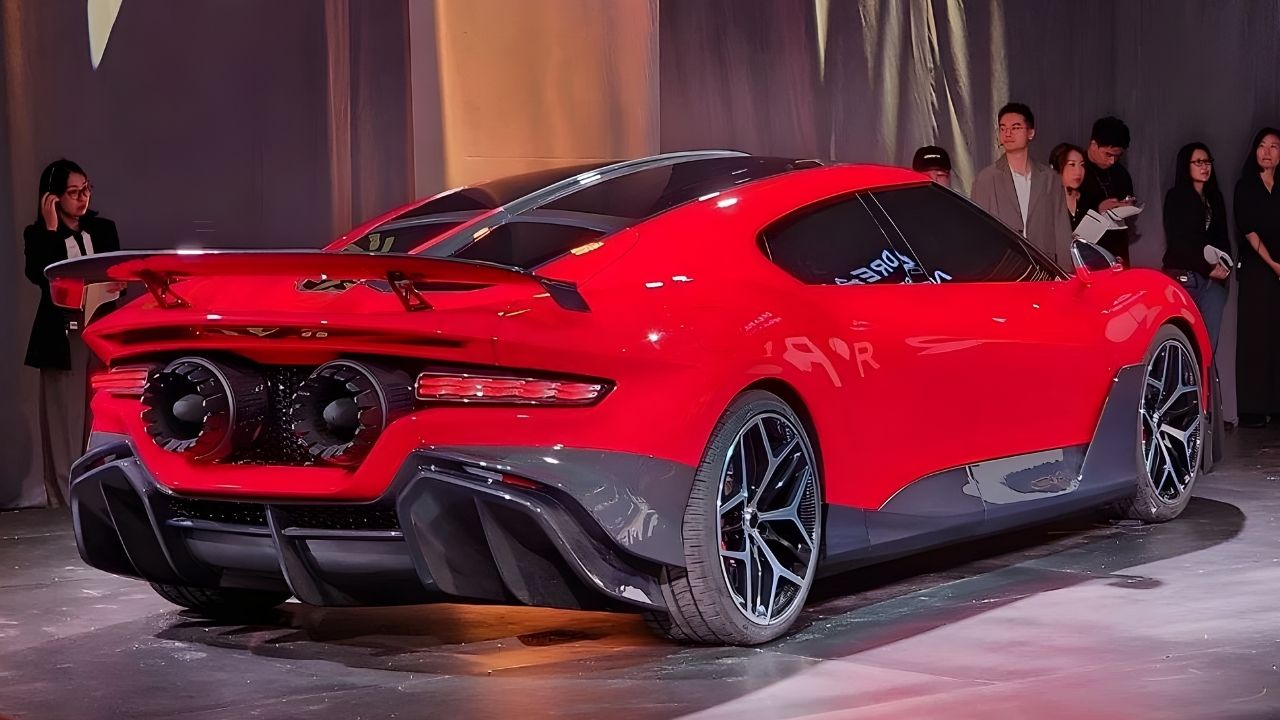
Dreame Technology, a Chinese company which was founded in 2017 and used to manufacture smart home appliances, has now made its entry into the automotive sector with the unveiling of its first car, Nebula Next 01 Jet Edition, in an event named ‘Dreame Next’ in Silicon Valley.
In August 2025, the company announced making a car that can challenge the Bugatti Chiron’s speed. The vehicle that was showcased in the event featured acceleration of 0 to 100 km/h in 0.9 seconds, as claimed by the company.
Propulsion System
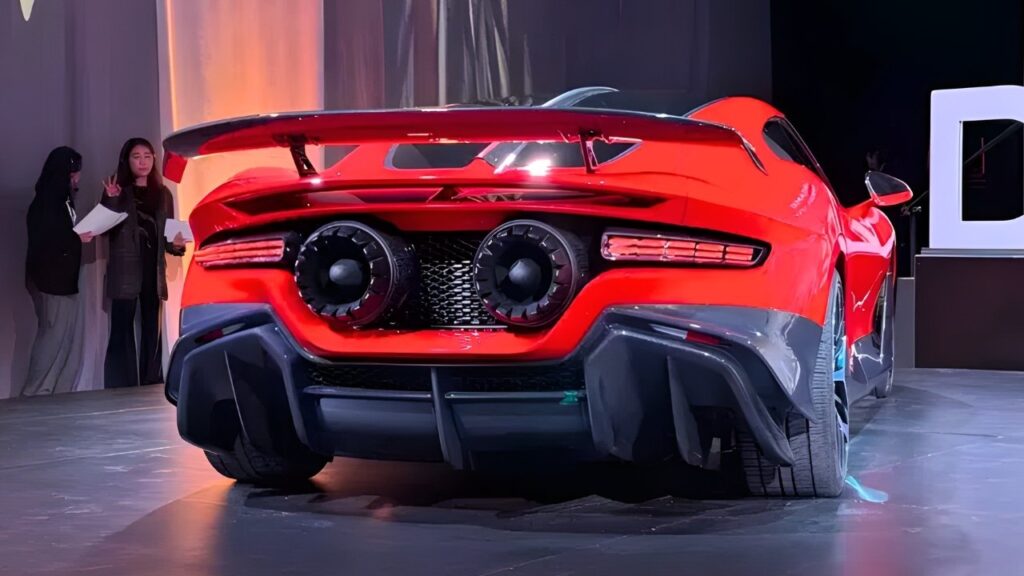
The car comes with a custom-designed dual solid rocket booster system. Basically, the company has tried to adapt the aerospace-grade technology in cars, which resulted in a response time of 150 milliseconds and 100 kilonewtons. Balancing the safety and performance, it comes equipped with precise electronic control systems.
Battery Technology
The vehicle comes with a sulfide-based all-solid-state battery featuring an energy density above 450 Wh/kg. They offer higher energy density and better charging safety and comfort than lithium-ion batteries that are used in almost all electric vehicles. The company has stated they are still in the preparation phase to start the production; as claimed, it will come with a CLTC range of over 550 km.
Autonomous Driving & LiDAR System
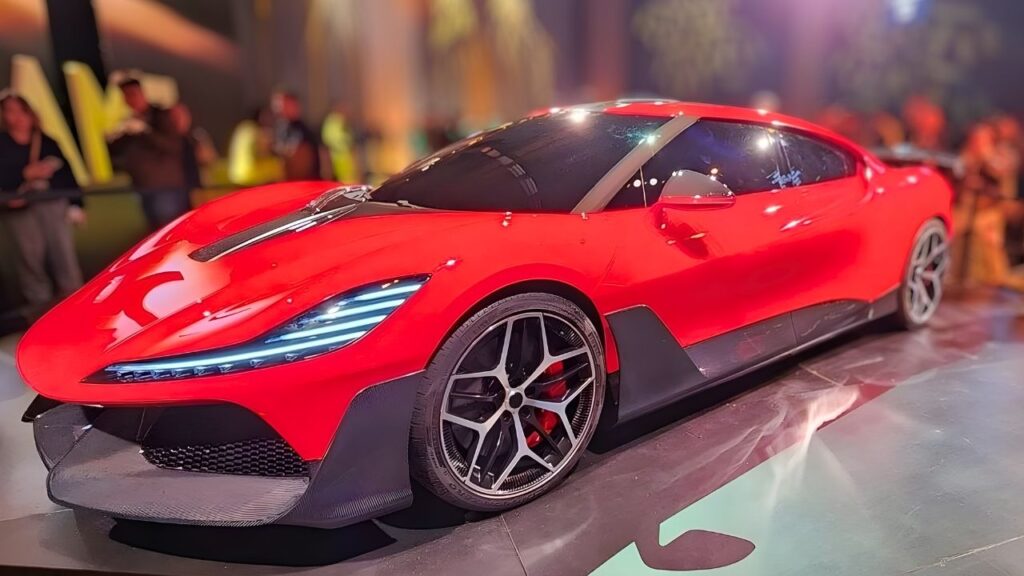
The car is built on VLA (Vision-Language-Action) AI architecture, which has three main capabilities, including world understanding, self-learning, and human-machine co-driving. Interestingly, the company has already tested the system in extreme conditions such as dense fog, mountain roads, and construction sites, and they found it working.
If the company launches a car with the system, it will be a great achievement for them. Now, it is yet to be seen what its real-world performance would be. The system integrates DHX1 LiDAR with high-resolution 4K cameras for superior environment mapping. It features 4,320 lines, offering a detection range of 0.6 km and can even detect an object that is 400 meters ahead with just 10% reflection.
Not only these, but the system is also capable of detecting traffic cones and other smart targets from a distance of 300 meters and also even small animals at the distance of 280 meters. Light Detection and Ranging (LiDAR) systems play a crucial role in making driving almost autonomous.
Chassis & Cabin
The car features a steer-by-wire architecture with 14 degrees of freedom control and a 1-millisecond response time, which can handle pivot turns, tire blowouts, and complex maneuvers. Its cabin is like a smart life hub, which includes home robots and smart appliances, which act like a central AI brain.
What’s next now?
The car that the company has showcased is more likely a concept and publicity stunt; the production model may not get the rocket booster. Instead, they will use a real EV powertrain with a focus on safety, cooling, braking, and crash performance.
The company still doesn’t have any manufacturing unit; now they have two options: either to make a partner or build their own factory, but it needs millions of dollars of investment.
One of the biggest claims of the company is the 450 Wh/kg solid-state battery; it is seen as the biggest opportunity for them. But they have to build a pilot production line to prove its stability, lifespan, and cost viability.
The AI that they used in the car sounds ambitious, but they have to prove its real-world use. Firstly, they may launch Level 2/Level 3 ADAS first and then improve it via OTA (over-the-air) updates.
