
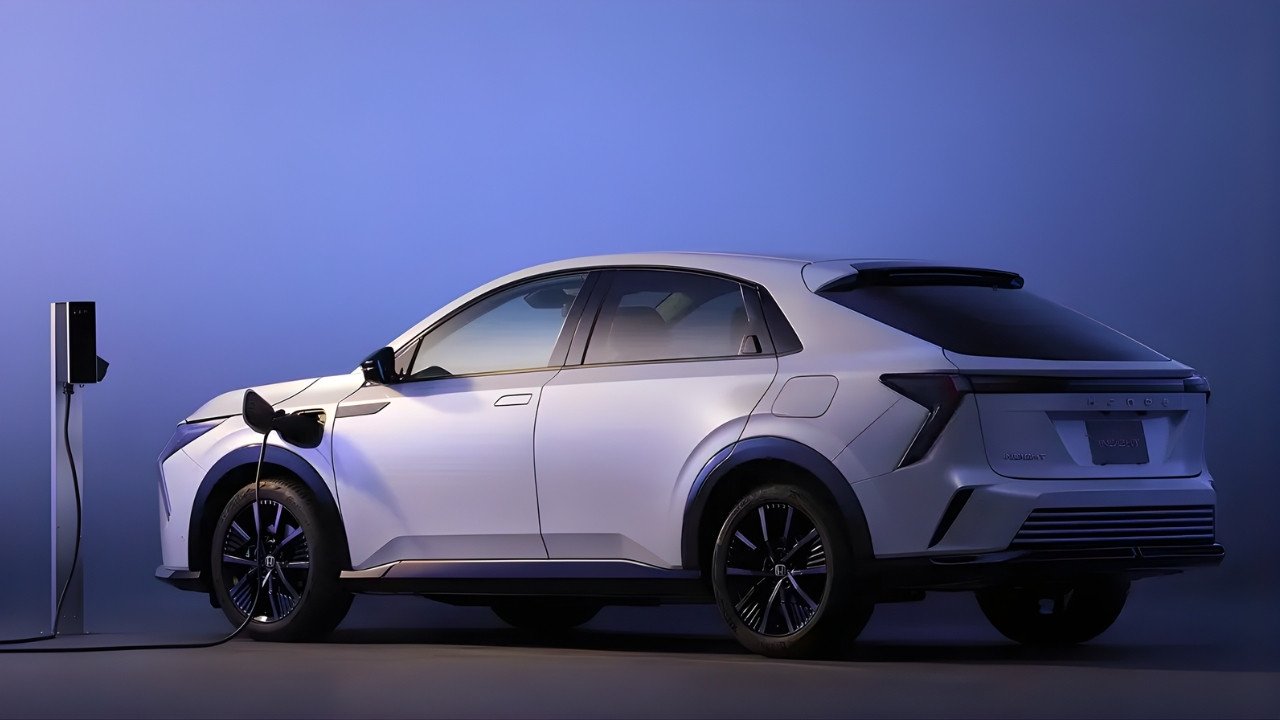
The Japanese automaker, Honda, is all set to start the sale of the all-new Insight EV, a crossover SUV, from April 17, 2026, with a limited number of units, up to 3,000, in the domestic market. Its delivery is anticipated to start in May 2026. The starting price is 5,500,000 Japanese yen.
It is a five-seater electric car in a two-three seating layout that comes with four different driving modes, including Normal, Sport, Econ and Snow. Notably, it is available in five colour options: Diamond Dust Pearl, Crystal Black Pearl, Slate Grey Pearl, Aqua Topaz Metallic II and Obsidian Blue Pearl.
In terms of length, width, and height, the Honda Insight EV’s dimensions are 4,785 mm, 1,840 mm, and 1,570 mm, respectively, which are large compared to other crossover SUVs, featuring ample headroom, legroom and shoulder room for all occupants, which make the long journey comfortable.
Comfort, Convenience & Safety Features
It gets an intelligent heating system that simultaneously controls seats, steering and cabin heating. The rear seats are reclining to ensure better comfort for a long drive. Other notable comfort features are multi-zone ambient lighting that is integrated with door operation and an aroma diffuser system with the six fragrance options.
For the driver’s convenience, it gets a head-up display that projects the primary driving data on the windscreen. Also, a digital instrument cluster of 9.4 inches is added to the cabin for the driver that shows navigation and all the driving information. A large 12.8-inch touchscreen is also available for occupant infotainment, which supports wireless connectivity.
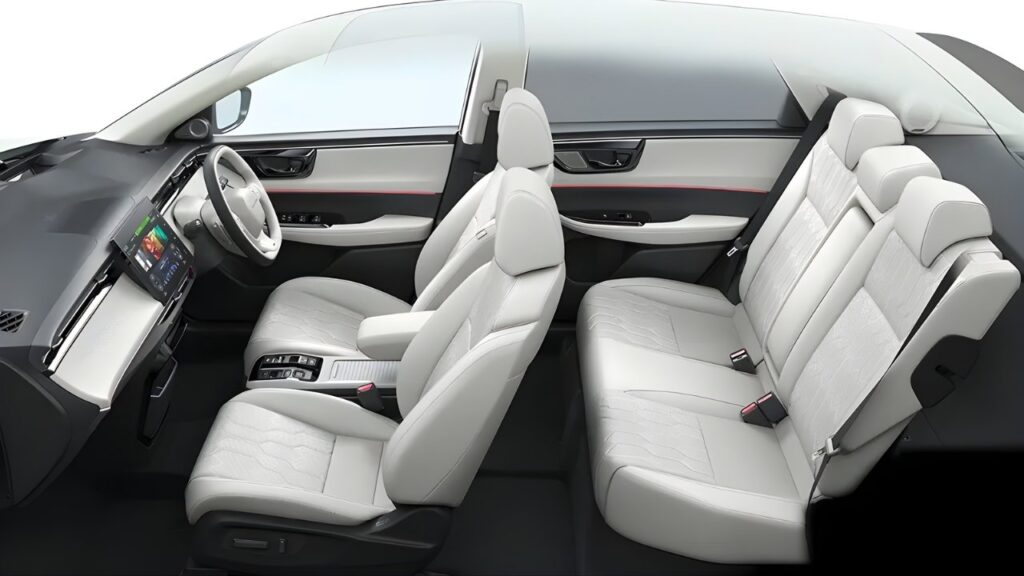
To ensure the theatre-like audio experience inside the cabin, it gets a 12-speaker BOSE premium audio system, and for usability, it features large cargo space that enables it to carry big luggage with ease. The rear seats are also foldable, which can significantly increase the boot space if needed.
To ensure the safety of occupants, it is equipped with Honda SENSING, which includes Collision Mitigation Braking System, Collision Mitigation Throttle Control and Low Speed Braking Control for safety; and Adaptive Cruise Control, Lane Keeping Assist System, Traffic Jam Assist and Road Departure Mitigation for driving assistance.
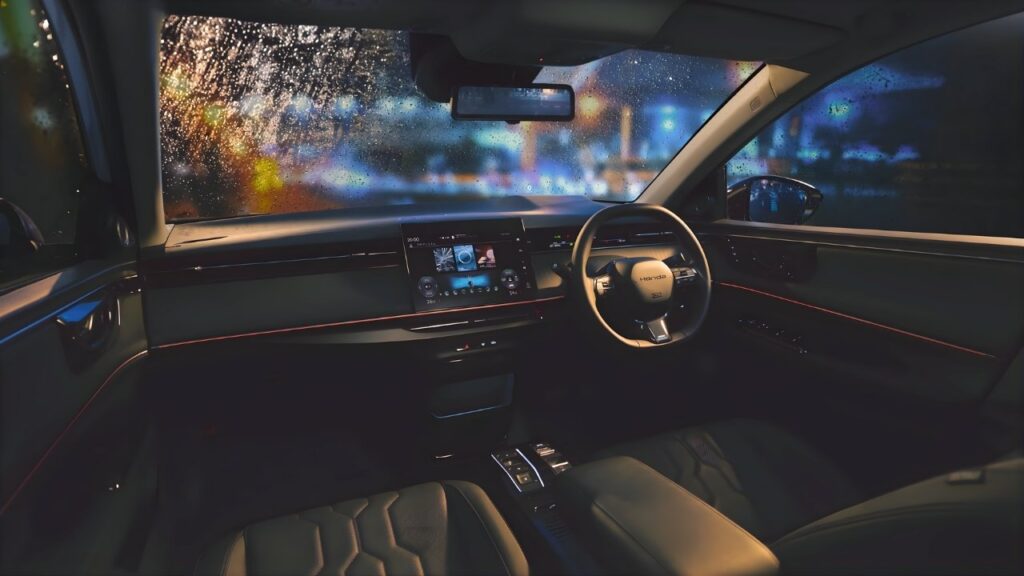
It gets Traffic Sign Recognition, Honda Info Center, Blind Spot Information System and Lead Car Departure Notification for the awareness and monitoring at the time of driving, and for the parking and visibility, it comes with Honda Parking Pilot, Parking Sensors and Auto High-Beam Headlights.
Front Design, Side Profile & Rear Look Highlights
The overall design of the Insight EV is a combination of SUV practicality and coupé sportiness with a focus on futuristic appeal. The front fascia is like a shark’s nose, giving it modern EV styling. The full-width LED light strip connects with the slim LED headlight and also features boomerang DRLs. The illuminated Honda logo in the centre reflects its identity.
On the sides, it gets a coupe-like sloping roofline that makes its silhouette sporty. The sharp shoulder lines add a muscular look, and door handles are flush-type, improving aerodynamics. Other notable features are 18-inch alloy wheels with a new design, and its stance is quite lower and wider than the traditional sport utility vehicles.
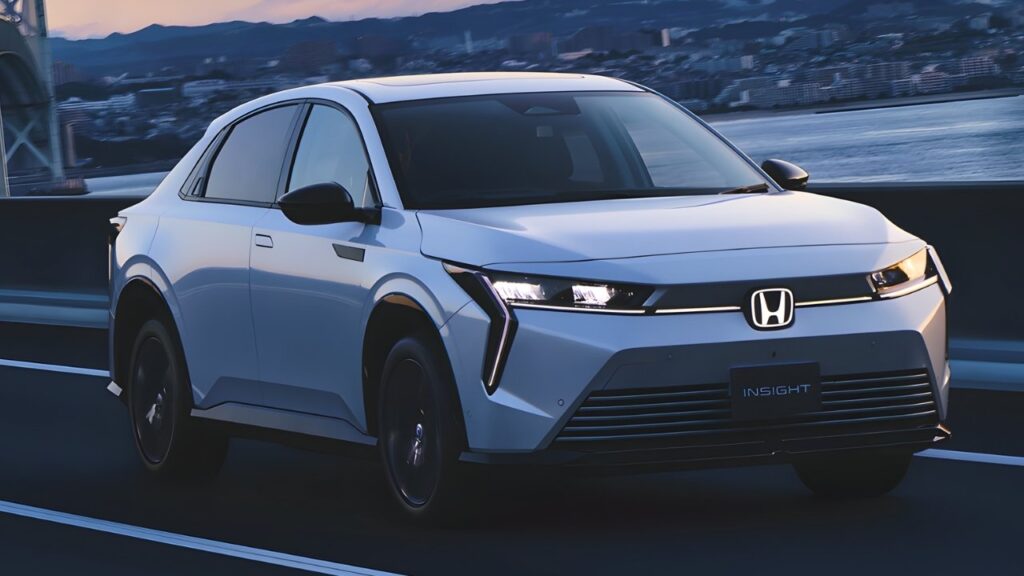
At the rear, it gets sleek, horizontally stretched LED taillights that create a wide visual stance; the tailgate design is clean and minimal, giving a premium and aerodynamic look. The bumper at the back is bold and slightly sculpted, which not only adds a sense of strength but also makes its road presence strong. The integrated reflectors and functional elements add stability.
Motor, Range, Battery Pack & Charging Time
It comes with a single permanent magnet synchronous motor that is mounted with front-axle bearing front-wheel drive drivetrain, and its transmission is single-speed automatic. It generates the power of 204 PS and 310 Nm, and the WLTC range is 535 km; the real-world range is around 430 km, depending on the driving style.
It is available with the single LPF battery pack of 68.8 kWh, and it supports the DC charger up to 50 kW that takes 40 minutes for 10 to 80 per cent charging. The standard portal AC charger comes with the vehicle of 11 kW; it takes 8-9 hours for a full charge. The acceleration timing for 0-100 km is 7 seconds, and top speed goes up to 160 km/h.
