
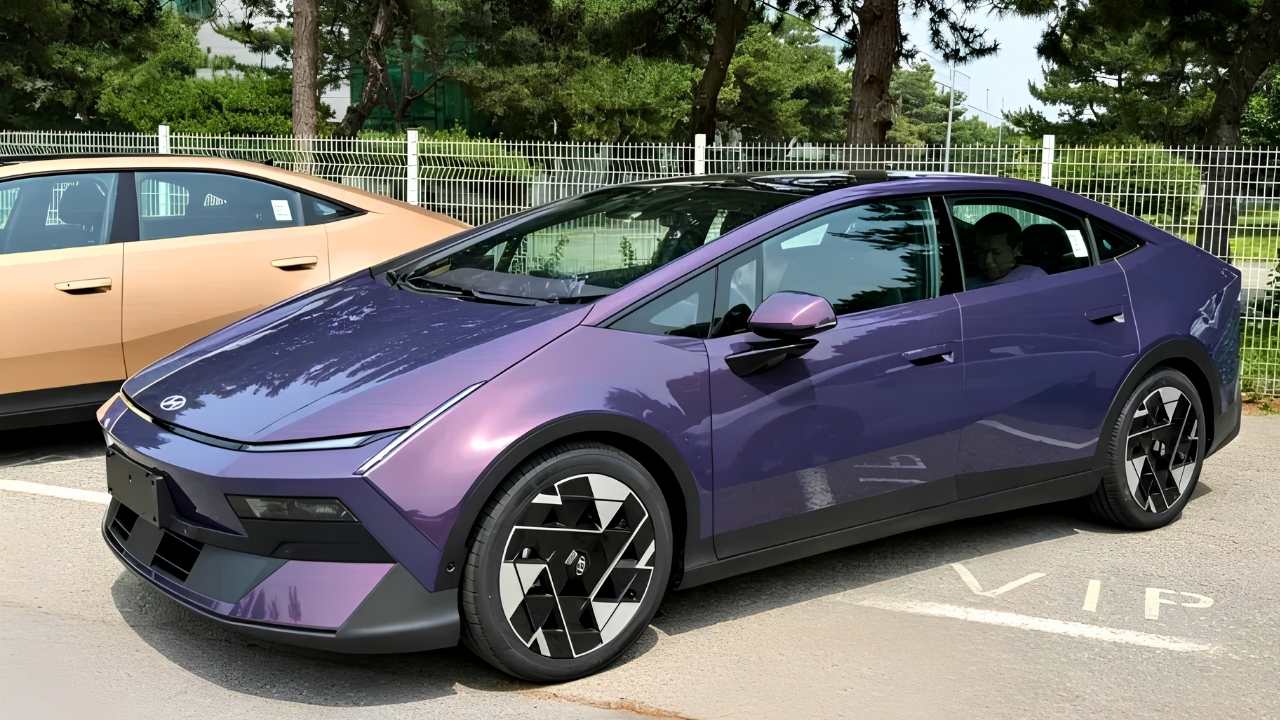
The BAIC Group and Hyundai Motor joint venture Beijing Hyundai’s Hyundai Ioniq V is spotted in China, revealing many details about its exterior. It is the same as the one showcased at the 2026 Beijing Auto Show on April 24. The electrified sedan is all set to make its debut in the domestic market with both pure-electric and extended-range electric powertrains providing options to buyers.
It is all set to be introduced in China by this year’s end, and then the company may also launch it abroad, reports say. After the unveiling, its specifications floated on the web through China’s MIIT filing catalogue release on May 10, 2026. As of now, many details about the upcoming sedan are available in the public domain, including powertrain, features, and more. Let’s have a closer look.
Features a unique and aero-optimised body design
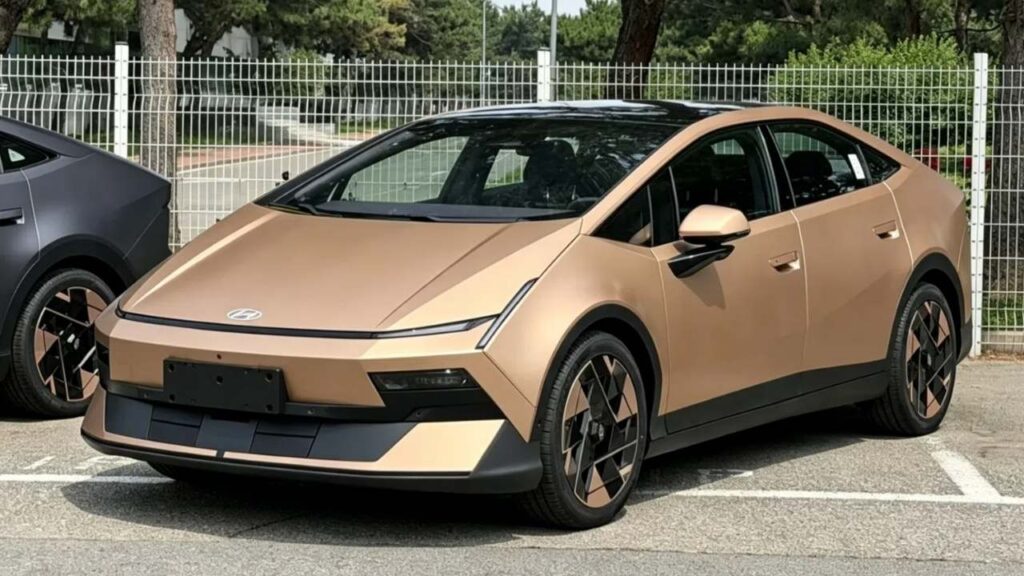
Starting with the exterior, upfront, it features LED headlights, including connecting H-shape daylight running lights just below the hood end, giving it a modern touch, and the main headlamps are placed below into the bumper to ensure better visibility for nighttime driving, and active air intakes are positioned on the sides below the number plate housing for cooling.
On the sides, you can clearly see that it has flush-type door handles which not only reduce drag for better efficiency but also add a premium touch. Other noticeable features on the side are frameless doors that give a clear side view, double-toned outside rear-view mirrors that are electronically adjustable, a blacked-out window surrounding, black wheel arch cladding, and large alloy wheels.
And, at the rear, it features full-width ‘Dimensional Star Rail’ LED taillights, creating a wide stance and reflecting a modern lighting signature, and a blacked-out lip spoiler that improves the air flow at the back and provides better stability during high-speed driving. The back is designed in a way that looking from it makes it recognisable in heavy traffic.
Double-toned cabin with large infotainment system
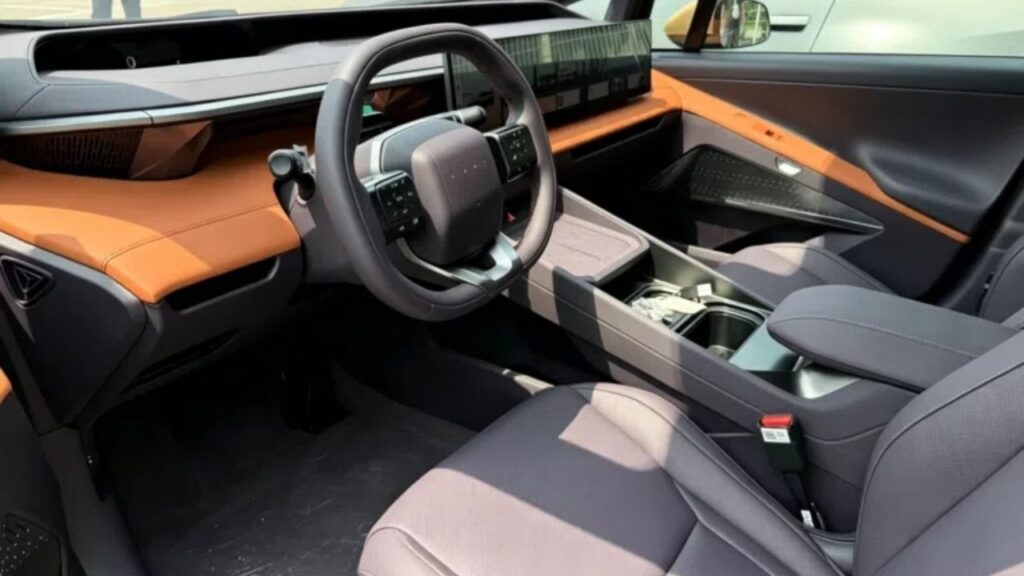
Moving inside, it comes with a seating capacity of 5 people in a layout of 2-3 with decent boot space for carrying luggage. Features a double-tone themed cabin with soft-touch materials and trims. Get a large panoramic sunroof glass with an electric sunshade which makes the cabin feel spacious. Not confirmed officially, but both front seats may be powered with a memory function and also feature heating, ventilation and massage.
Features a three-spoke steering wheel with touch sensitivity controls; notably, there’s no traditional digital instrument cluster. Instead of that, it features a horizontal head-up display that projects driving details on the windscreen. The dashboard is equipped with a 27-inch ultra-thin 4K panoramic display that acts as an infotainment system and also a front passenger entertainment screen, which is powered by the Qualcomm Snapdragon 8295 chipset.
Other notable features inside the cabin are double cup holders, a double-wire phone charging pad, ambient lighting, and an eight-speaker sound system with Dolby Atmos. Reportedly, it is equipped with a momenta-based advanced driving assistant system, which features both city and highway navigation autopilots, making the driving semi-autonomous.
Set to be introduced as both the EREV and the BEV
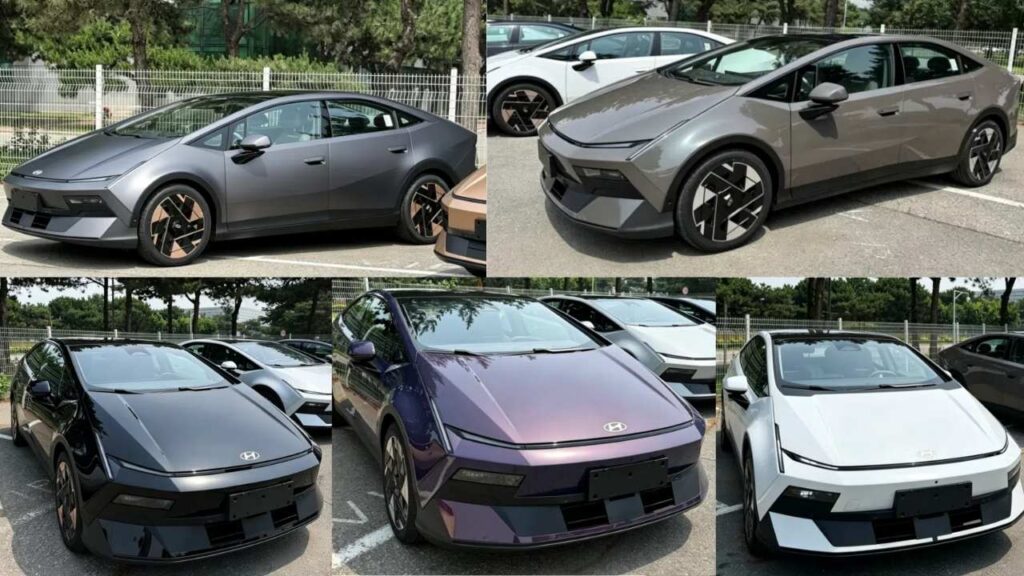
Lastly, switching to powertrain and performance, the carmaker is set to introduce EREV and BEV in China. One with an extended-range electric powertrain will get a gasoline-powered internal combustion engine under the hood that will act as a generator and be set to be equipped with a permanent magnet synchronous motor on the front axle featuring a front-wheel-drive drivetrain.
On the other hand, the one with pure-electric powertrain will get a permanent magnet synchronous motor on the front-axle, meaning it will also introduce FWD configuration using the single-speed automatic transmission. The battery pack is still pending, and reports say that its CLTC condition will be around 600 km, however the official confirmation is still awaited from the carmaker.
Notably, the EREV and the BEV are built on Hyundai’s E-GMP platform with an electrical architecture of 800 volts, so the Hyundai Ioniq V with both powertrains supports ultra-fast charging. Reportedly, the motor outputs are 140 kW and 168 kW, it is still uncertain which one is offered with the EREV and BEV, but it is the former one may be introduced with the pure-electric powertrain, and the latter with the extended-range electric.
