The Chinese automotive giant Build Your Dreams has officially revealed the interior for the next-generation BYD Seal 07. It is a four-door sedan whose launch in the domestic market will happen with both the battery-electric and plug-in hybrid electric powertrains. The date for the launch is still undisclosed; reports suggest the brand may launch this model in late 2026.
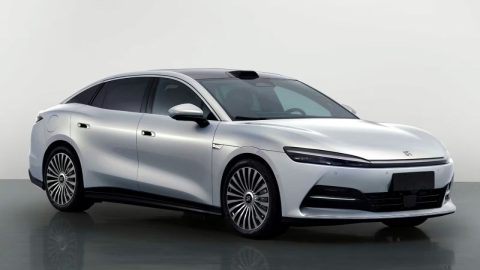
BYD firstly released the official exterior image for this all-new model on September 28, 2026, and revealed the design, and now they have made public the interior images revealing key features that get inside the cabin. This is a model from BYD under the Ocean family, which also appeared in the China MIIT filing catalogue release and revealed all the core specifications for this car.
How’s its interior?
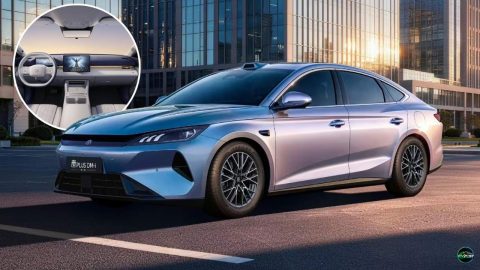
The new-generation BYD Seal 07 looks premium and tech-loaded; the brand has introduced it as a light-luxury cabin. Officially revealed details suggest that the cabin is equipped with zero-gravity front seats which also have heating, ventilation, and pneumatic massage functions. These features not only reflect premiumness but also ensure better comfort during the long journey.
On the centre of the dashboard, we can see a large floating touchscreen infotainment system that is integrated with a 20-speaker Devialet sound system to enhance the infotainment experience with the immersive audio. The size of the screen is still disclosed. A three-spoke steering wheel before the driving seat can be seen, behind which there’s a slim digital instrument cluster.
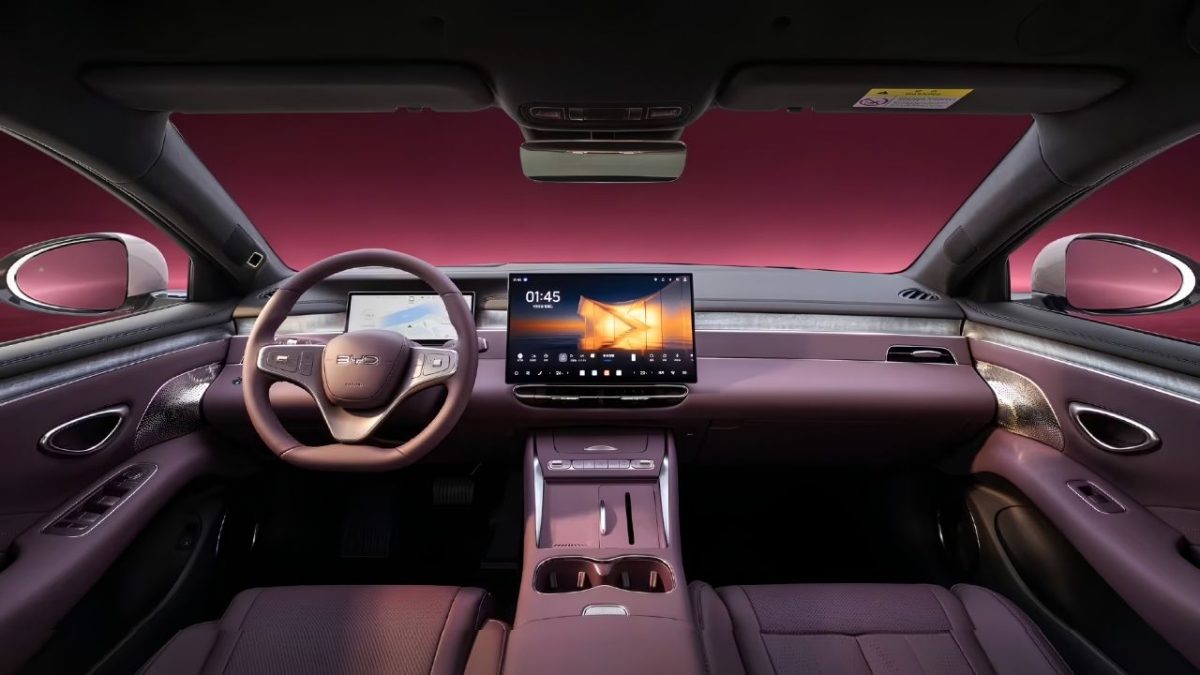
Below the infotainment system, vertically orientated air conditioning vents are present. Two cup holders and two wireless phone charging pads are the features that further enhance premiumness inside the cabin and also add convenience for both co-passenger and driver. In the second row, the sofa-like seats can be seen clearly for enhanced rear seating occupant comfort.
Emerged core specifications.
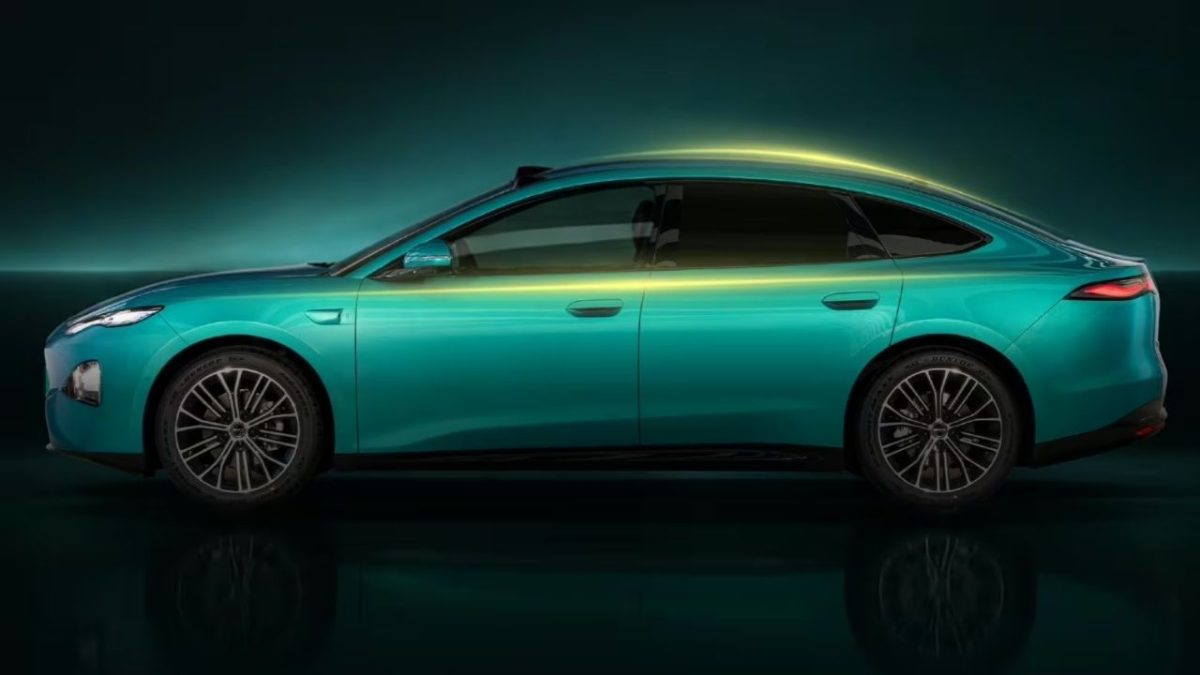
The next-generation BYD 07 Seal four-door sedan measures 5,080 mm, 1,960 mm, and 1,495 mm in terms of length, width, and height, respectively, with a wheelbase of 2,960 mm. Compared to the previous-generation model, it is 85 mm taller with a 60 mm wheelbase and 50 mm wider.
The wave-shaped split headlights, full-width rear light bar, and semi-hidden door handle are the exterior design highlights. Other revealed details are 1,975 kg and 2,060 kg for the battery-electric version; the same for the plug-in hybrid electric is 1,960 kg. Both the EV and PHEV versions are equipped with roof-mounted LiDAR sensors, ensuring an intelligent ADAS suite.
The battery-electric version is equipped with a permanent magnet synchronous motor on the rear axle. The power output is 245 kW and 300 kW for the 76.744 kWh LFP and 88.682 kWh LFP variants, respectively. The top speed is 240 kmph. The range on CLTC condition is 775 km and 875 km for the standard and large battery pack versions, respectively.
On the other hand, the plug-in hybrid electric version is equipped with 1.5-litre four-cylinder turbocharged petrol-powered internal combustion engine that is integrated with an electric motor. The power output for the engine is 115 kW, and the same for the motor is 160 kW. Its top speed is 190 kmph.
Also have a 38.029 kWh LFP battery pack beneath the floor, whose CLTC range on EV mode is 245 km. The mileage of 4.25 litres for each 100 km when the battery is drained. Reports suggest that both the EV and PHEV are equipped with next-generation Blade Batteries supporting ultra-fast DC charging that takes 5 minutes for 10 to 70 per cent charging.