
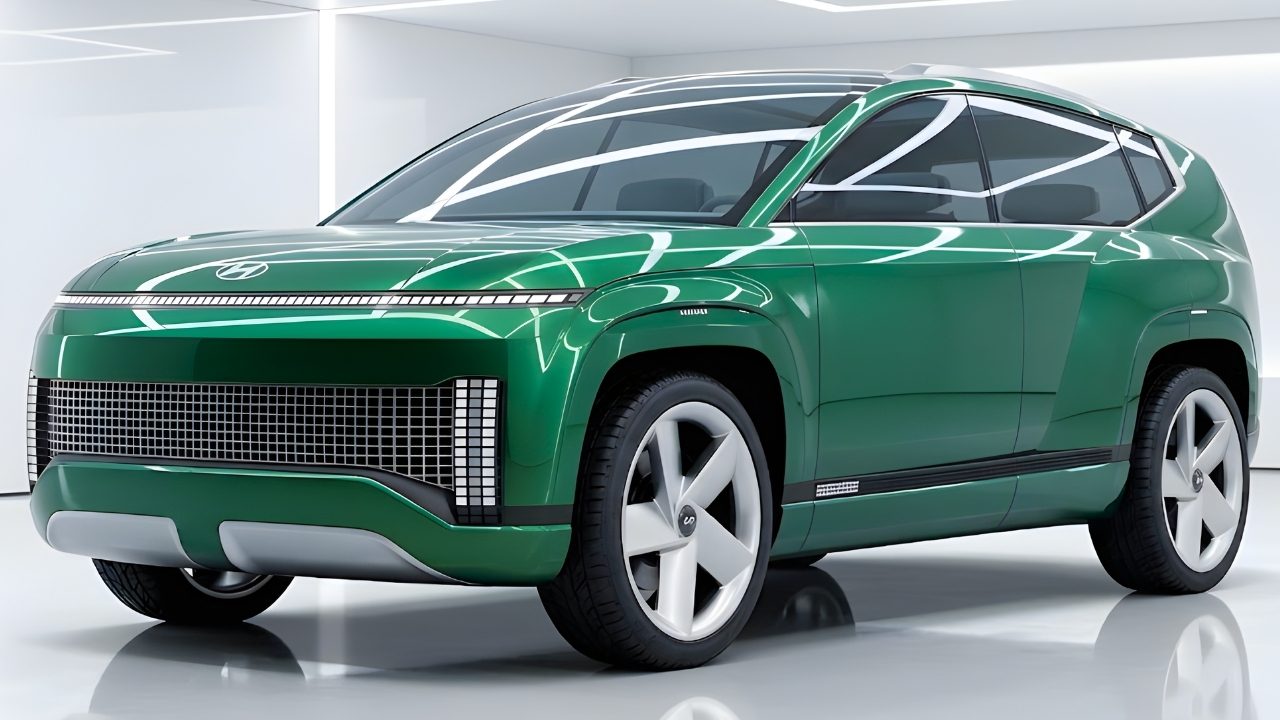
The Ioniq 7 from Hyundai Motor is still under production, and its global debut is likely to happen in 2026. Reports say that it is all set to be based on the concept SEVEN, which was showcased back in 2021 during the LA Auto Show. It is the flagship three-row EV, which will compete with the Tesla Model X and Kia EV9.
It is certain that the Hyundai Ioniq 7 is going to be based on E-GMP (Electric-Global Modular Platform), whose electrical architecture will be 800 volts. In the United States, its price is likely to be around $55,000, which translates to ₹51.16 lakh. More about this upcoming all-electric SUV is discussed below.
Design
The Ioniq 7’s exterior is all set to be the same as the concept ‘SEVEN’. Up front it will get Parametric Pixel LED lights, which reflects the signature of the Ioniq line-up by giving it its modern and futuristic design. It may feature a full-width LED light bar that makes its look wider and more premium and a closed-off grill for electric vehicle styling.
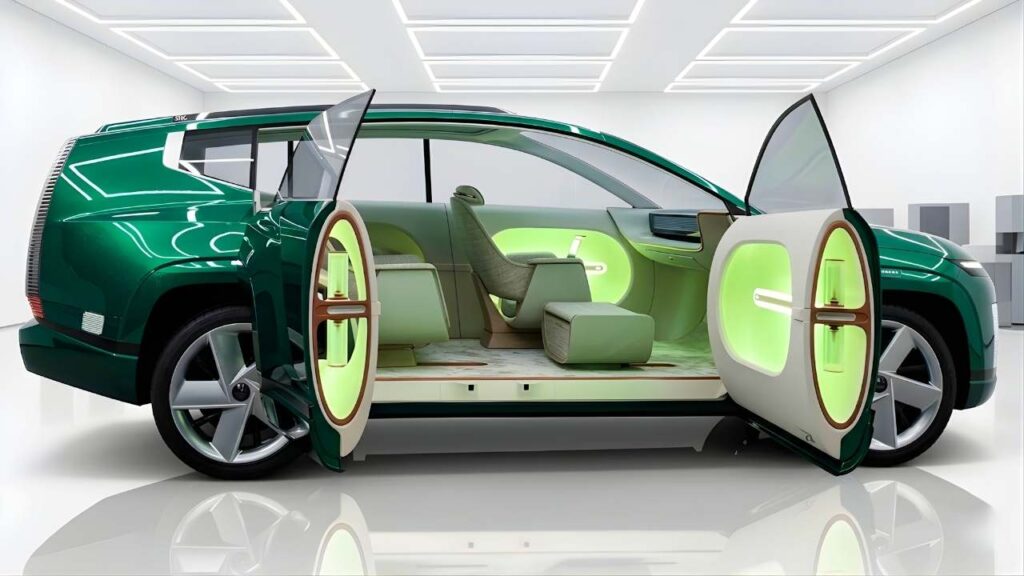
On the sides, we can expect a boxy yet clean silhouette that maximises the SUV’s interior space. It is likely to feature a coach door with no B-pillar that creates a lounge-like openness and a long wheelbase which gives ample legroom for all occupants. It may also get flush door handles, which improves aerodynamics and adds to the premium feel.
It is likely to feature full-width pixel tail lights on the back with a parametric pixel theme, which provides a strong visual identity. The tailgate design is likely to be clean but looks modern; its wide and stable stance will enhance its road presence, and an integrated spoiler may improve aerodynamics and add a sporty touch at the rear.
Features
The Ioniq 7 will get a lounge-style cabin layout, which is designed as a room, and may feature rotating seats so passengers can face each other. The panoramic glass roof will give an airy and premium cabin feel, and relaxation-focused ergonomics will make it ideal for long-distance travel. Since it is an EV, it has a flat floor that gives ample legroom with open space.
It is all set to get a smart infotainment system, which features large digital screens with minimal physical buttons. All the controls will be through the touch screen, which features AI-based personalisation. It will also have wireless Android Auto and Apple CarPlay, a wireless charging pad, ambient lighting, and digital key & connectivity.
For the safety of occupants, it gets ADAS that includes lane keeping assist, adaptive cruise control, and collision avoidance. Multiple airbags will be available across the cabin that ensure minimal injury during an accident. There will also be a 360° camera & sensor suite, blind spot monitoring, an emergency braking system, and other features.
Specification
The Ioniq 7 will come with two drivetrains, which are rear-wheel drive and all-wheel drive configurations with one-motor and double-motor setups, respectively, whose power output may be 300-420 hp. It is likely to have an LPF battery pack of 100-118 kWh, whose range is expected to give the claimed range of 480-640 km.
It will take around 6-7 seconds to accelerate from 0 to 100 km/h and features a top speed of 180 km/h. Likely to support a DC charger up to 350 kW, which takes 25 minutes to charge from 0 to 80%, resulting in a real-world range of up to 250 km; and an AC charger up to 11 kW, which takes a whole night for a full charge.
The front suspension is MacPherson strut, and the rear is a multi-link setup, which provides a good balance of comfort and handling and improves ride comfort and stability, respectively, and is likely to get ventilated discs at the front and rear, which provides strong and consistent braking performance.
