
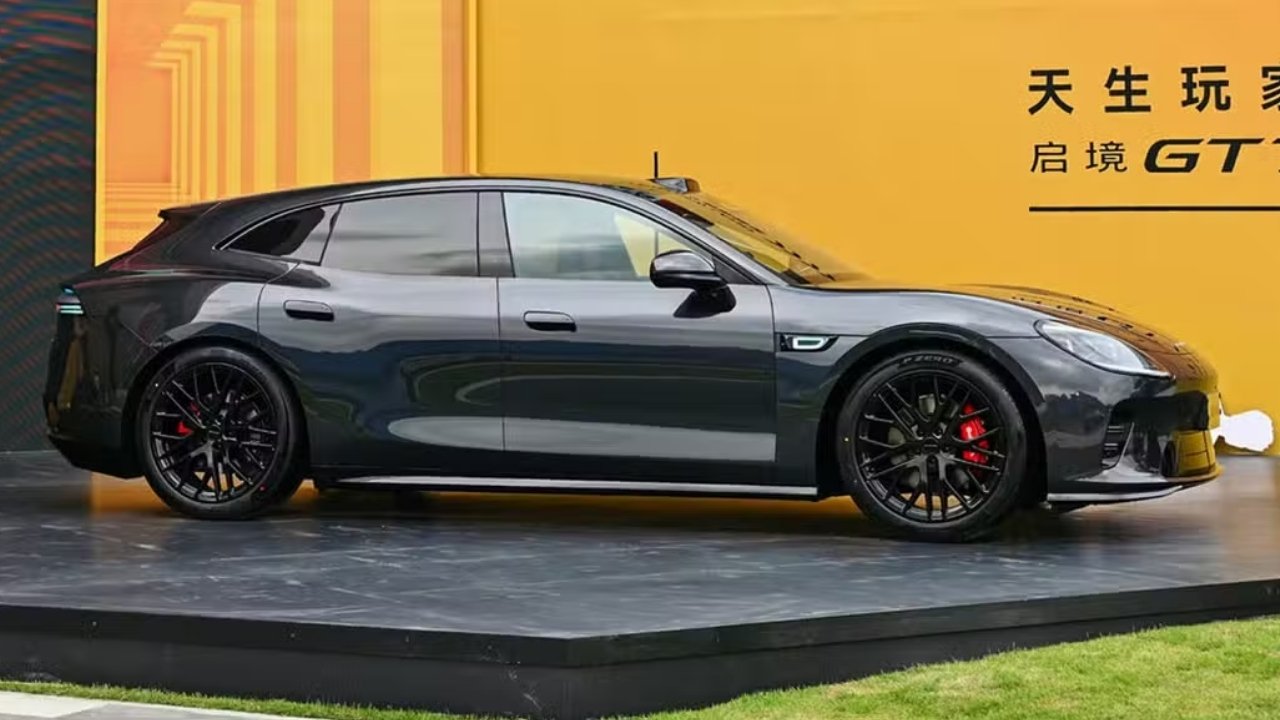
On May 29, 2026, the Aistaland GT7 electric shooting brake pre-sale began with the price of 219,900 yuan to 309,900 yuan, which translates to ₹30.86 lakh and ₹43.50 lakh in the Indian market, respectively. Reportedly, within 5 hours of the presale start, it has received more than 10,000 bookings, which is huge. The launch is all set to take place in June 2026, and delivery will begin shortly after that.
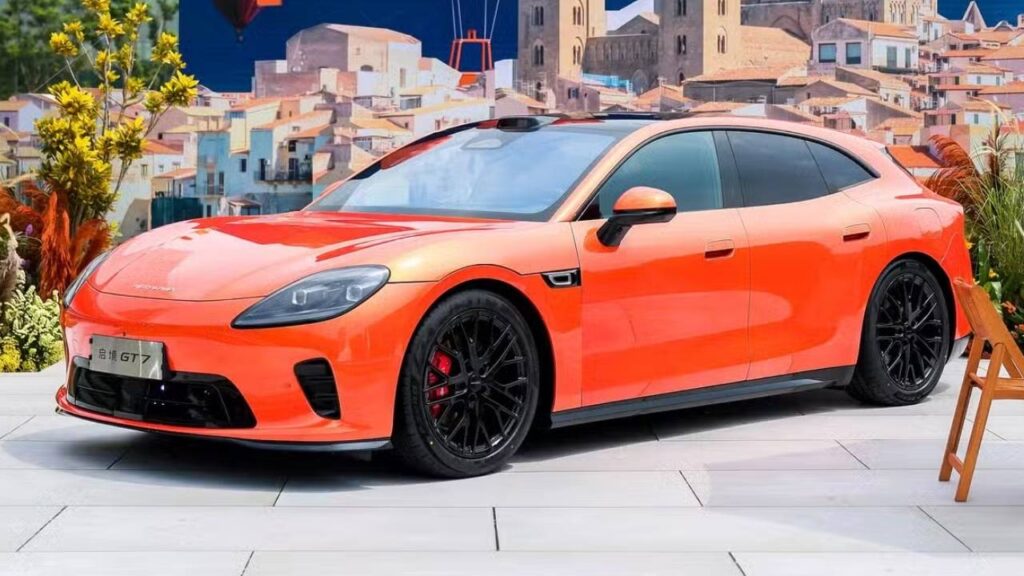
The Aistaland, known by the name of Qijing in China, was established by the GAC and Huawei. Launch is still pending, but most of the details about the Aistaland GT7 are already floating across the web that the carmaker has officially released. Let’s begin with the dimensions and exterior; notably, the length, width, and height are 5,050 mm, 1,980 mm, and 1,470 mm. Upfront, it has aerodynamic features with a low-slung nose, teardrop-shaped main LED headlamps with integrated LED DRLs, and side air intakes.
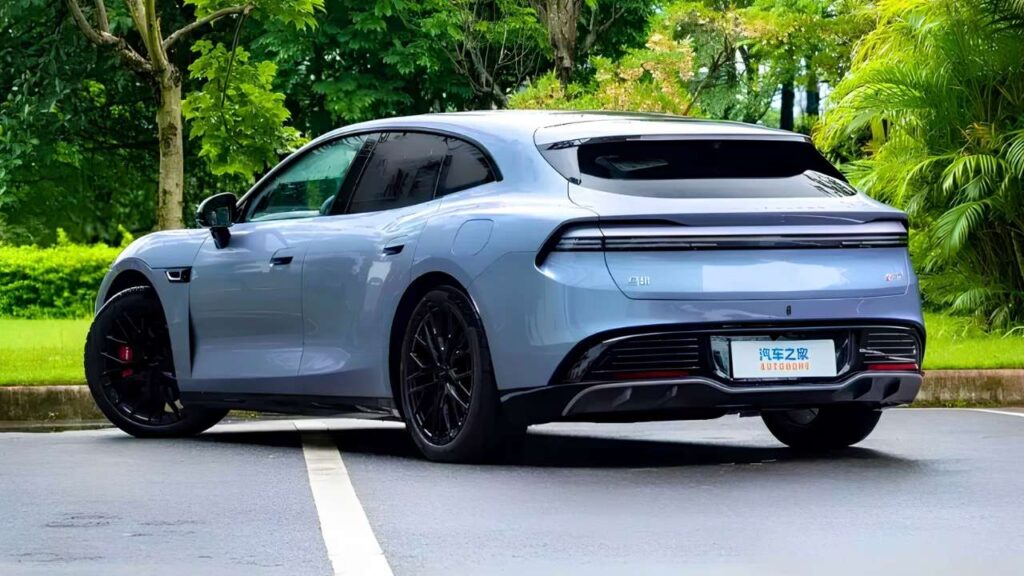
On the sides, it comes with a shooting brake silhouette, frameless windows, flush-type door handles, dual-tone electrically adjustable outside rear-view mirrors with side indicators, and large aero-optimized modern alloy wheels in a mesh style, and the rear features roof-integrated spoilers, full-width connecting LED taillights, and a minimalist tailgate design. Available with six exterior color options that include Monte Carlo Red, Chaka Silver, Sicily Orange, Provence Purple, Nice Blue, and Meili White.
Now, moving to its interior, it features a seating capacity of 5 people in a layout of 2-3. Behind the second-row seats, there’s a cargo capacity of 647 liters, which can be extended by folding the rear seats. The cabin is offered with three color schemes, including Daybreak Red, Starry Night Black, and Moonlight Beige. It comes with a three-spoke steering wheel with physical buttons on the sides, under which there’s an 8.88-inch digital instrument cluster.
It also features an 88-inch augmented reality head-up display that projects the driving data on the windshield. The center of the dashboard is equipped with a 15.6-inch floating touchscreen infotainment system and 21 speakers with the Huawei Sound premium audio system. The entire cabin runs on HarmonyOS 6, ensuring the smooth and smart user interface for both screens mounted on the dashboard. Other notable features of the interior are the Huawei Xiaoyi AI voice assistant, the AI-powered intelligent interaction system, and OTA updates.
Both front seats are zero-gravity; they are electrically adjustable in 16 ways and also feature a 10-way massage function. The rear seat is foldable with just one touch-based command; it also features two-step reclining for the convenience of occupants. On the center console, it has a double wireless phone charging pad and also two cup holders. The cabin has 256-color ambient lighting and a 2.2 sqm panoramic glass roof featuring nine-zone intelligent dimming technology.
And now talk about the powertrain’s performance. It is built on the Qiankun platform and based on the 800V high-voltage architecture. Offered with the two battery packs provided by the CATL, they are 86.111 kWh and 102.768 kWh; with the standard battery pack, it runs up to 700 km, but with the larger one, it has a range of 900 km on CLTC conditions. Notably, both battery packs support 6c DC charging, meaning they are set to add a range of hundreds of km with a few minutes of charging.
Reportedly, it will debut as rear-wheel drive with a single electric motor on the front axle whose maximum power output will be 340 hp, and also an all-wheel drive with a triple-motor setup will be available with a peak power of 768 hp. The acceleration timing for 0-100 km/h for single-motor and three-motor variants is 5.9 seconds and 2.98 seconds.
