
Tata Motors is planning to introduce the facelift of the Tata Tiago to make it more affordable and appealing to buyers. They officially have not confirmed any date for the launch, but there’s high speculation they will introduce it to the Indian market in August 2026. They will introduce the refreshed version with many exterior and interior upgrades.
Besides cosmetic changes and cabin feature enhancements, the carmaker is most expected to introduce the model with two different battery packs. The existing one of 26 kWh with 315 km is most likely to be continued as a standard variant; reports suggest that a new 36 kWh, giving a range around 420 km, may be added as long range.
The standard one gets a permanent magnet synchronous motor with single-speed automatic transmission on the rear axle, whose power output and peak torque are 75 PS and 170 Nm, respectively. Its drivetrain is front-wheel-drive. The expected long range will also come with a single-motor RWD configuration, but the power and peak torque for the same are anticipated to be a little more.
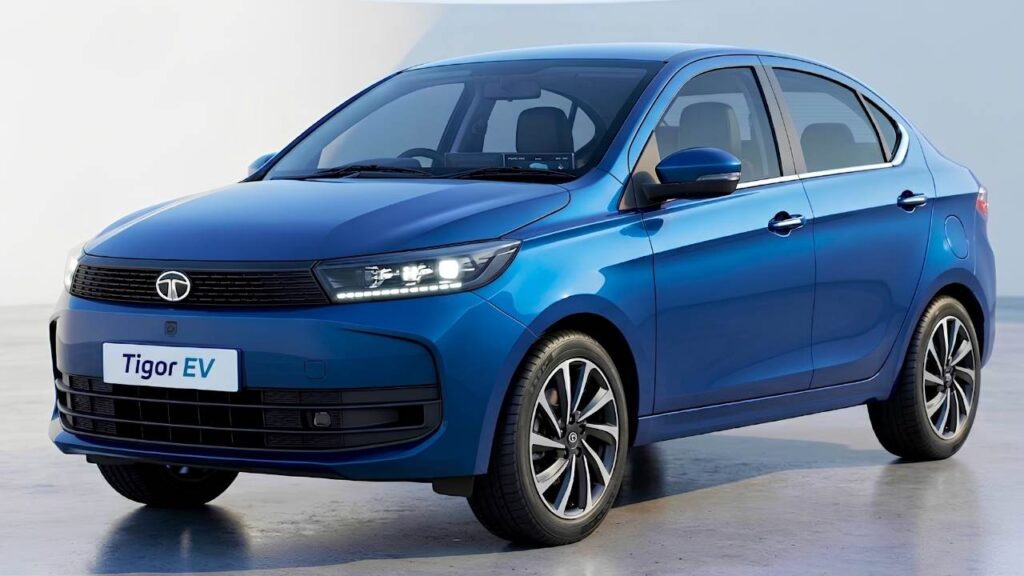
The facelift of the Tata Tigor EV will make the manufacturer’s electric vehicle portfolio stronger and help to increase the market share in the EV segment. It is certain that the manufacturer will introduce the standard version with more affordable pricing, and the top-end is set to be costlier with the addition of a new battery pack.
The existing Tata Tiago EV is available for sale with the ex-showroom price between ₹12.49 lakh and ₹13.75 lakh, but the upcoming one may debut with the starting cost of ₹11 lakh up to ₹15 lakh if they add a new, larger battery pack. In 2026, they have introduced two facelifts, the Punch EV and Tiago EV; both see a price reduction.
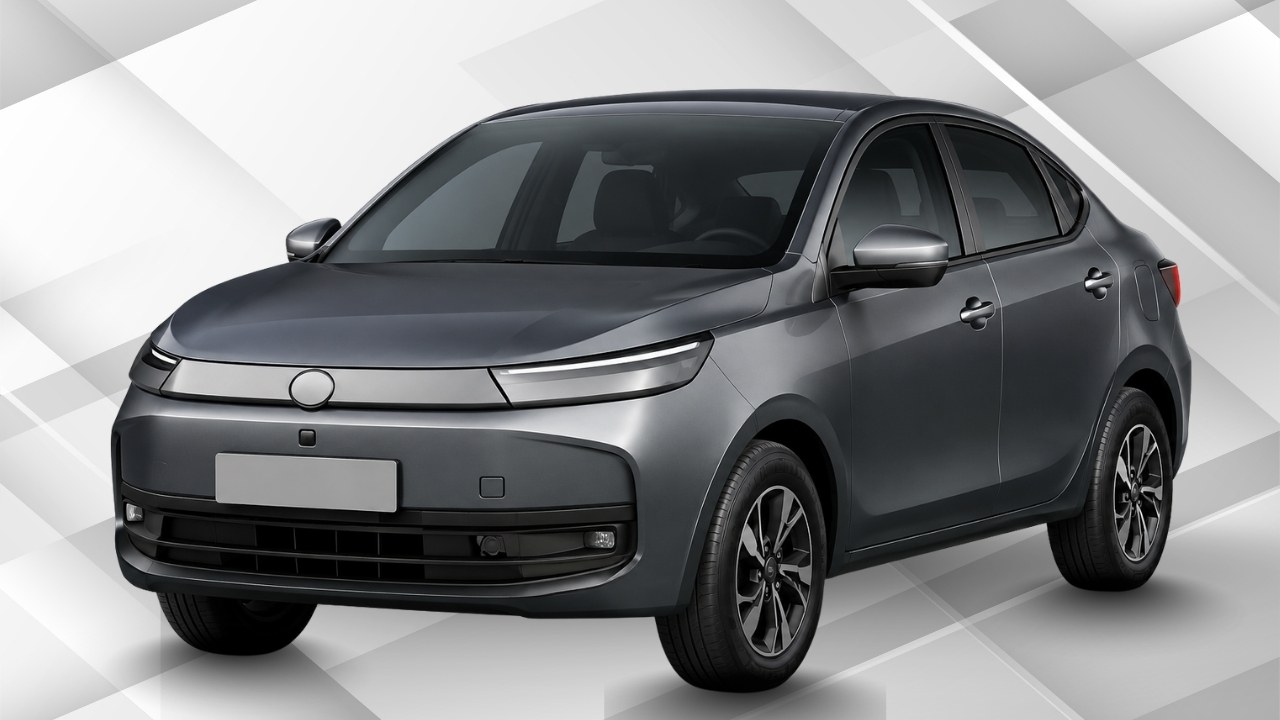
Notably, Tata Motors has already patented the Tata Tigor ICE facelift; the electric vehicle counterpart of the same is all set to get the similar side and rear design. The front may come with a few revisions, such as a body-coloured, closed-off grille for better aerodynamics and lower air intakes for electric part cooling.
Things that we are expected to see on its exterior are slim integrated headlights and daylight running lights being connected with black trim; mechanical door handles; A-pillar-mounted outside rear-view mirrors with integrated blinkers; flared wheel arches; eight-spoke alloy wheels; a roof-integrated spoiler; through-type LED taillights with the Tata logo at the centre; and bumper-integrated side reflectors.
Inside, the dashboard and door trim are likely to be upgraded with soft-touch material and seating with better upholstery. The steering wheel and digital instrument cluster are expected to be retained, and the touchscreen infotainment system is most likely to be upgraded with a large unit replacing the existing one, which may have a smoother user interface supporting multi-device wireless connectivity.
No changes in the dimensions are expected. The facelift of the Tata Tigor EV will measure the same as the outgoing model. Notably, the length, width, and height of the existing one are 3,993 mm, 1,677 mm, and 1,532 mm, respectively. The wheelbase is 2,450 mm, and the ground clearance is 172 mm. Features 5 people seating in a 2-3 layout with a boot space of 316 litres for carrying big luggage conventionally.
As of now, Tata Motors is selling a total of seven electric vehicles: the Tigor EV, the Punch EV, the Tiago EV, the Curvv EV, the Sierra EV, the Harrier EV, and the Nexon EV. The refreshed Tigor EV won’t add a new model but replace the existing one, like two other facelifts that they introduced in 2026. Following the launch, it will give more tough competition to all rivals.