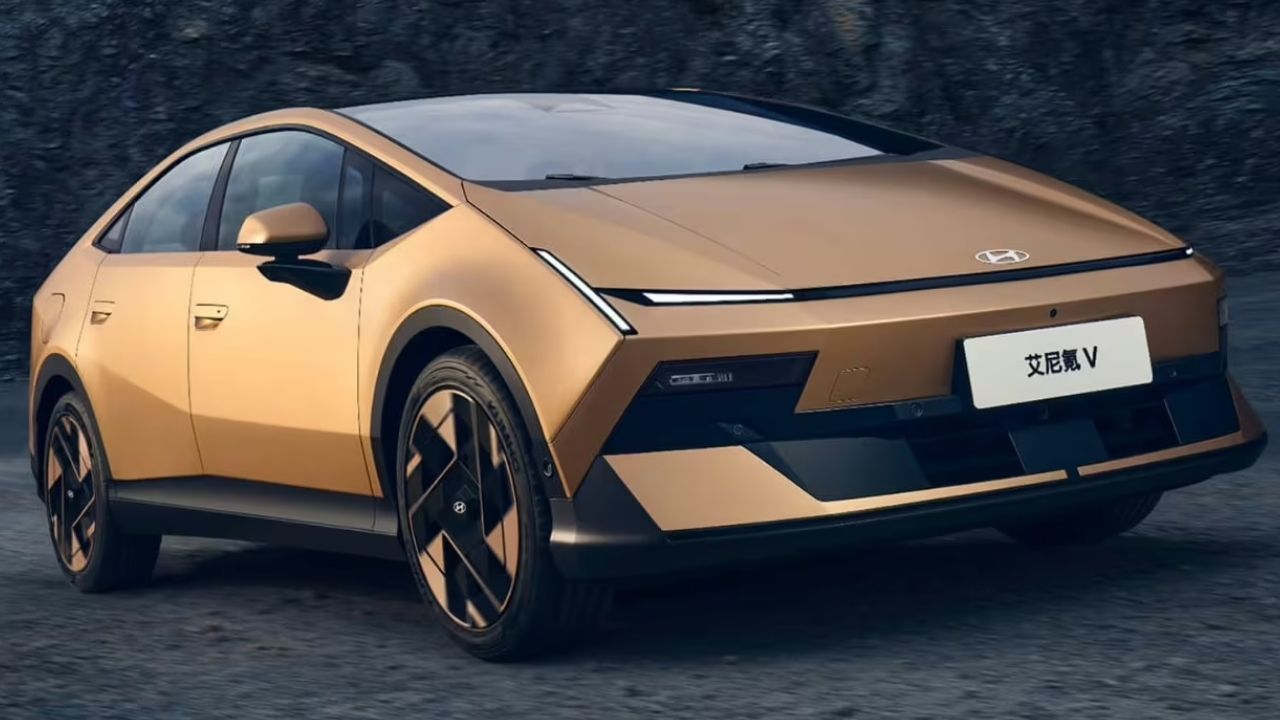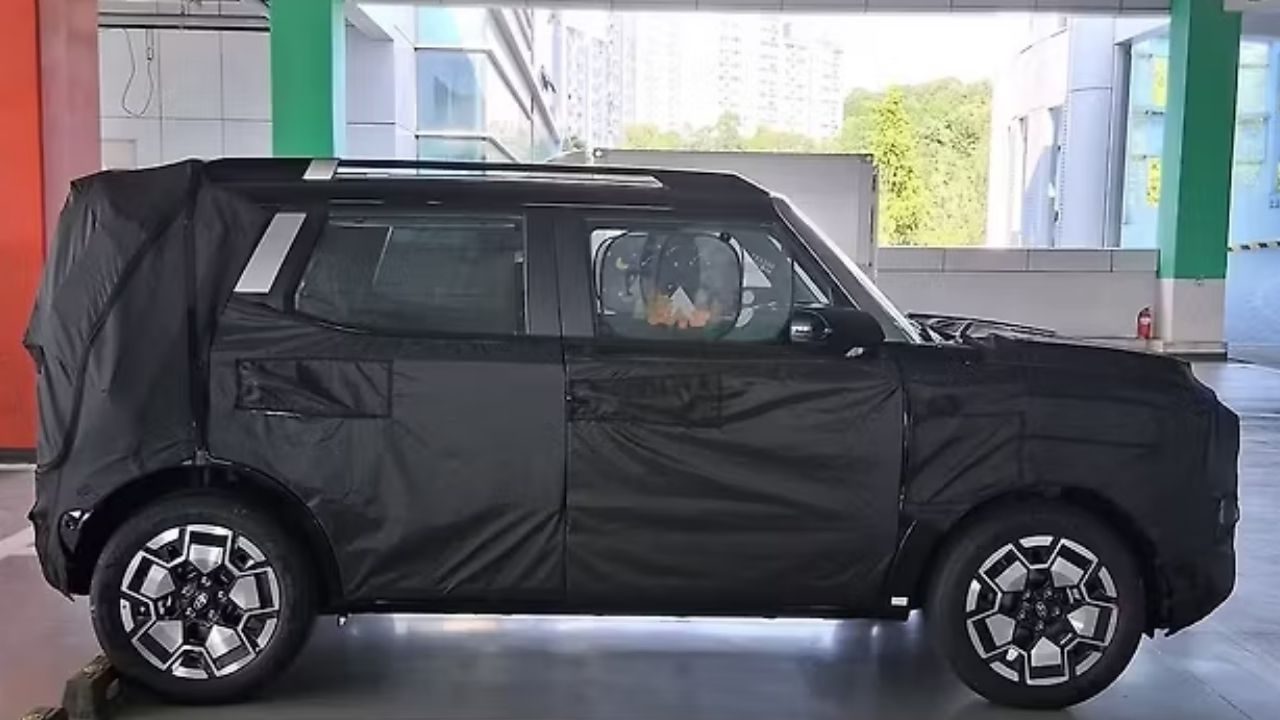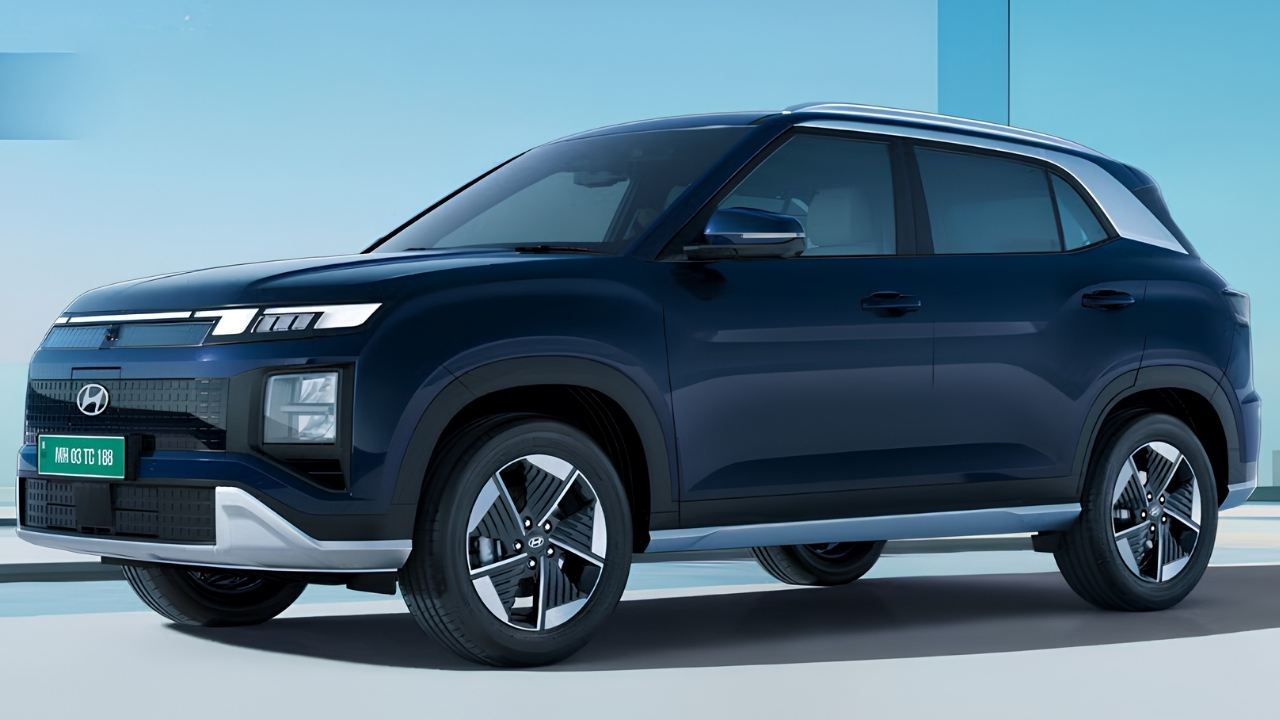
The Creta Electric, an all-electric compact sport utility vehicle from Hyundai, is now available with a battery-as-a-service model with the ex-showroom price of ₹10.99 lakh. Under the BaaS model, purchasing a vehicle means you are buying only the vehicle without the battery pack; you are required to pay a separate fee for the use of the battery. Apart from the vehicle’s ex-showroom price, you have to pay ₹3.90 per kilometer used.
The South Korean automobile manufacturer took this decision just one day after the Tata Sierra EV launch so that it could compete more effectively. Based on its availability under the BasS model, they have made two changes: the first one is that now the carmaker is all set to give a 7.4 kW AC charger as standard for better charging speed and an integrated side step for easy ingress and egress. Let’s take a closer look at its specs and features.
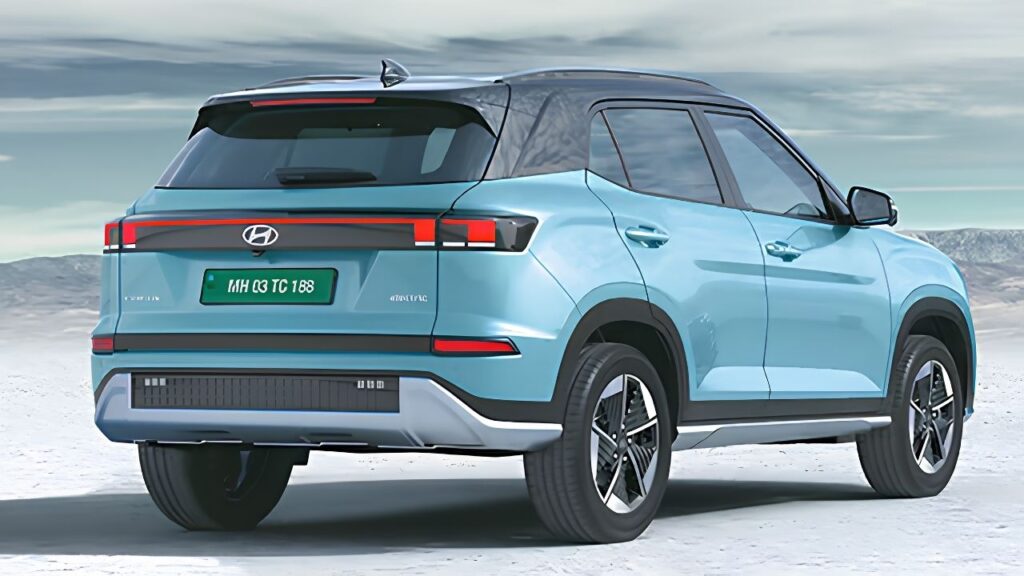
The length is 4,340 mm with a wheelbase of 2,610 mm; the width is 1,790 mm; and the height is 1,655 mm without roof rails. Features a ground clearance of 190 mm, which makes it ideal for Indian road conditions, and sits on 17-inch alloy wheels. It comes with a seating capacity of 5 people in a 2-3 layout with a boot space of 433 liters behind the second row to carry the luggage conventionally.
Built on Hyundai K2 architecture, whose front and rear suspension are MacPherson struts and coupled torsion beams (twist beams), respectively. Features disc brakes for all wheels to ensure powerful braking, and an electronic parking brake for convenience is also available. To ensure safe braking, the carmaker has added the features of ABS with EBD and electronic stability control.
A permanent magnet synchronous motor is mounted on the front axle, featuring a front-wheel drive drivetrain. The electric motor is mated with a single-speed automatic transmission. The carmaker is offering this vehicle with two different lithium-ion NMC battery packs that are 42 kWh and 51.4 kWh, with which the PMSM generates the power of 135 PS (99 kW) and 171 PS (126 kW), respectively.
Notably, the peak torque with both battery packs is 255 Nm. With the standard battery pack, it gives the ARAI-certified range of 390 km, but with the large one, it runs up to 510 km. To accelerate from 0 to 100 km/h, the variant with a 51.2 kWh battery pack takes 7.9 seconds, but 42 kWh takes 9 seconds, and the top speed is 180 km/h for both.
Support DC chargers up to 100 kW, which take 39 minutes for 10 to 80 percent charging. With the standard AC charger of 7.4 kWh, it takes 4 to 6 hours for the 10 to 100 percent charging for either of the battery packs. Capable of supporting an AC charger up to 11 kW, available as optional, which takes only 3 to 4 hours of timing.
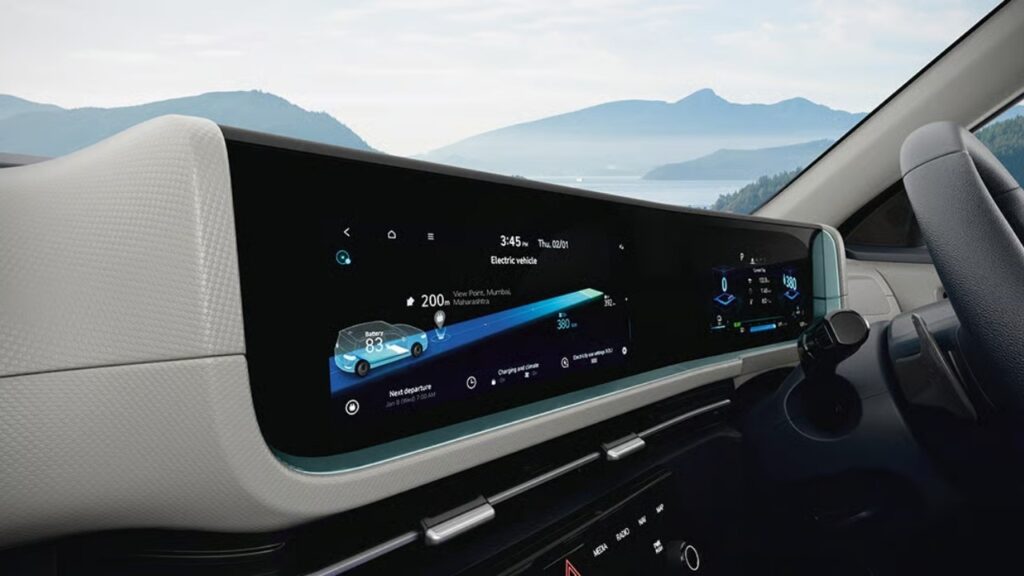
Get a three-spoke steering wheel with physical buttons, under which there’s a 10.25-inch digital instrument cluster that shows all the driving data clearly. The center of the dashboard is equipped with a 10.25-inch touchscreen for infotainment that is integrated with an eight-speaker BOSE premium sound system to enhance the audio experience.
The centrally mounted display runs ccNC (Connected Car Navigation Cockpit) software features OTA software updates, wireless connectivity via Android Auto and Apple CarPlay, and voice commands. It also features a wireless phone charging pad, an 8-way power-adjustable driver’s seat, a Level 2 ADAS suite, and six airbags.
In May 2026, the carmaker sold only 450 units, 98 lower than in April 2026, registering a month-on-month decline of 17.9%, and on a year-on-year basis, the sales are down by 50 units compared to May 2025, recording a degrowth of 10%. Sales figures for June 2026 are still pending.