
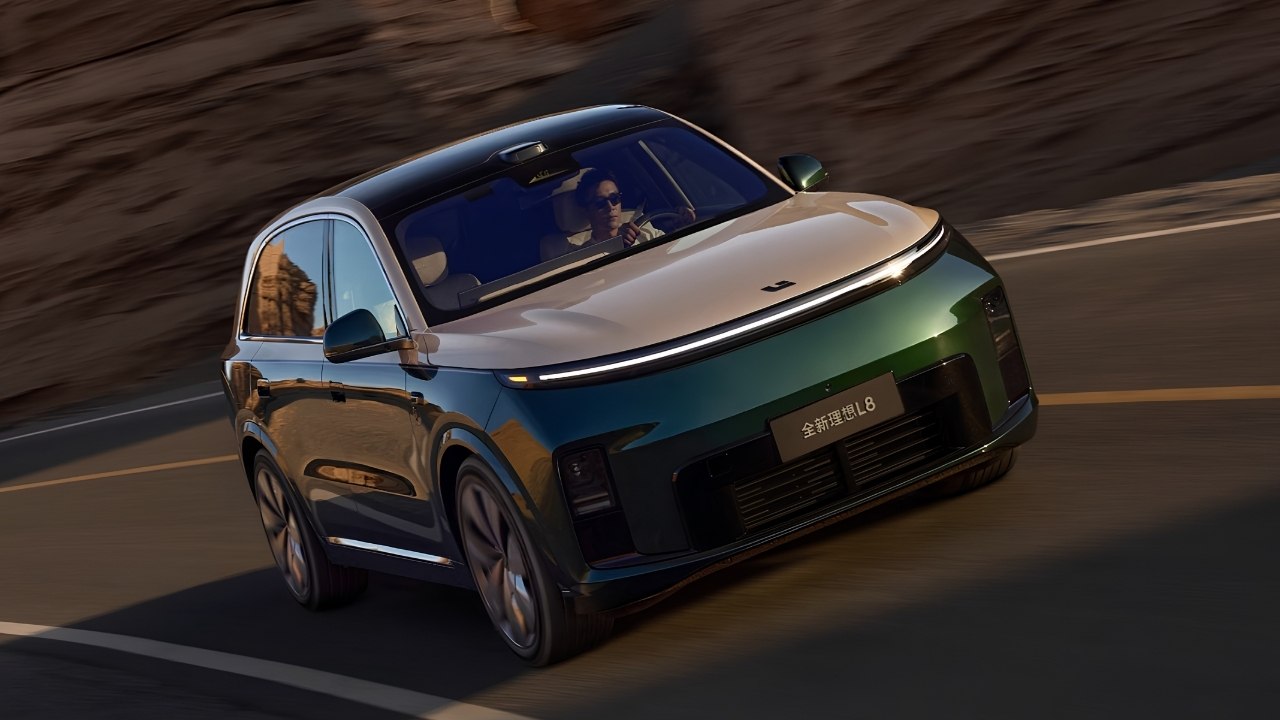
Li Auto, a premium smart electric vehicle manufacturer, has launched the 2026 Li L8, an extended-range electric sport utility vehicle, on June 23, 2026, in two variants that are Ultra and Livis.
The first one is available with the price of 359,800 yuan (50.20 lakh rupees) and the second with 419,800 yuan (58.57 lakh rupees), meaning the top variant is 60,000 yuan (8.36 lakh rupees) costlier.
Its main rivals in the Chinese market are the Aito M8, Xpeng G9, and BYD Denza N8L, whose prices start from 309,800 yuan (43.27 lakh rupees), 319,800 yuan (44.67 lakh rupees), and 248,800 yuan (34.75 lakh rupees), respectively.
Reportedly, the carmaker will start the delivery in early July 2026. This EREV comes with a seating capacity of 5 people; thanks to a length of 5,135 mm, a width of 2,000 mm, and a height of 1,800 mm, all occupants get ample legroom, headroom, and shoulder room.
The wheelbase distance between two axles is 3,045 mm, which keeps the car stable even at high speed. Behind the second-row seats, there’s a boot space of 820 liters with a depth of 1,113 mm that helps in carrying the multiple pieces of luggage.
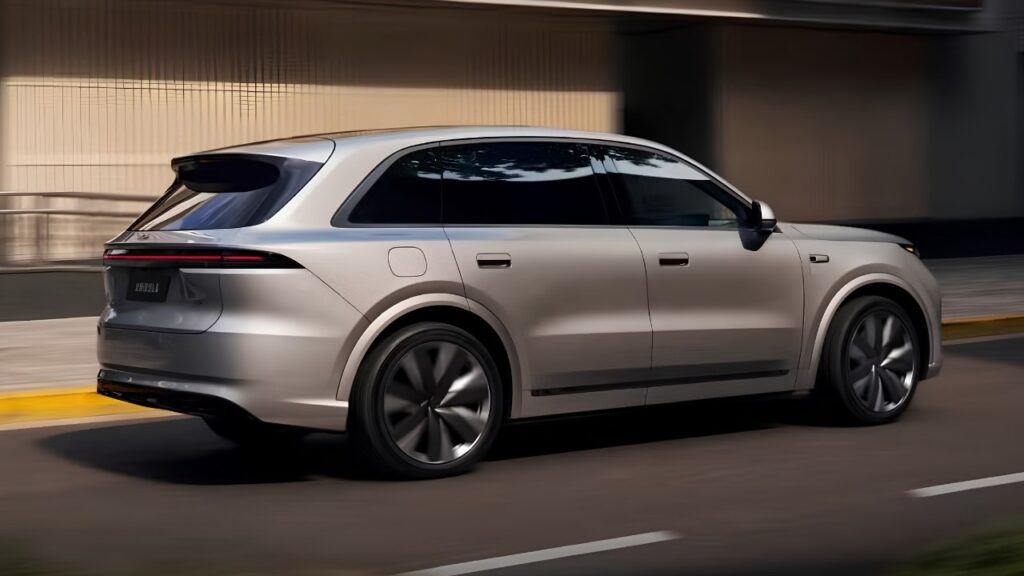
Outside, it gets full-width LED daylight running lights below the hood, bumper-integrated vertical-shape headlights, a roof-mounted LiDAR unit, a blacked-out radiator grille, wheel arch cladding, seven-spoke alloy wheels, and dual-tone ORVMs with integrated blinkers.
Other notable features on the exterior are flush-type door handles, full-width LED taillights, a roof-mounted spoiler above the rear windshield, a minimalist tailgate with a number plate holder, and bumper-integrated reflectors on both sides.
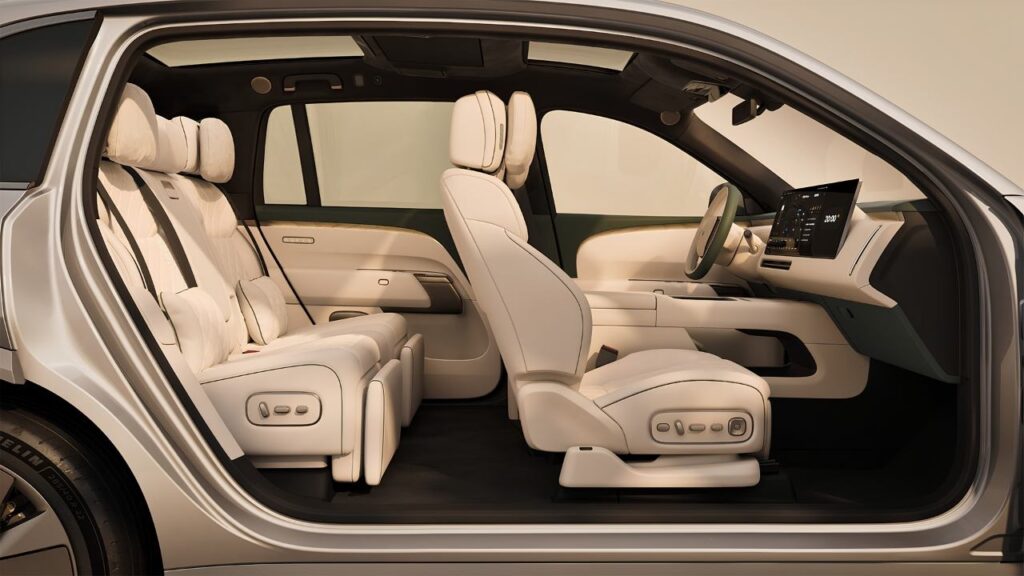
Inside, it gets a 29-inch 6K panoramic screen on the dashboard, which has an infotainment system and also a co-passenger entertainment screen; it also features a ceiling-mounted 21-inch 4K rear entertainment screen, which not only supports video streaming but also gameplay.
To enhance the infotainment experience, the cabin is equipped with a 27-speaker sound system with the output of 1,000 W. To ensure the comfort of occupants, it features zero-gravity front seats and a six-zone intelligent air conditioning system.
Other notable features inside the cabin are foldable trays for eating and working, a double wireless phone charging pad for conventionally charging the phone, electric sunshades for side windows to avoid the direct sunlight, and a ceiling-mounted door button for better practicality.
The Ultra variant is available with the Mach intelligent driving system, while the Livis features the advanced Mach intelligent driving system with embodied intelligence. The first one gets a Mach M100 chip of 1,280 TOPS computing power with seven 8MP cameras, and the second features two chips featuring 2,560 TOPS.
They also come with steer-by-wire for smooth steering and rear-wheel drive to reduce the turning radius. The Ultra variant gets double-chamber air suspension, and the Livis is equipped with 800-volt active suspension. Both ensure better ride comfort even on rough terrain, but the Livis’s suspension is the one who provides better comfort.
Built on the third-generation 5C EREV (Extended-Range Electric Vehicle) system, it features a 1.5-liter four-cylinder turbocharged range-extender internal combustion engine under the hood and one electric on each axle. Its drivetrain is all-wheel drive, and transmission is single-speed automatic.
Notably, the engine, the first e-motor, and the second e-motor generate the power of 115 kW, 145 kW, and 275 kW. The combined power output of two electric motors is 420 kW, and peak torque is 710 Nm. Its 0 to 100 kmph acceleration timing is 5.3 seconds, and the top speed is 200 kmph.
Under the floor, it gets a 72.7 kWh Ternary NMC battery pack, which supports 5C DC charging. The pure-electric CLTC range is 430 km, and the combined range is 1670 km. It has a fuel tank of 60 liters; fuel efficiency when the battery is depleted is 6.2 liters per 100 km.
