
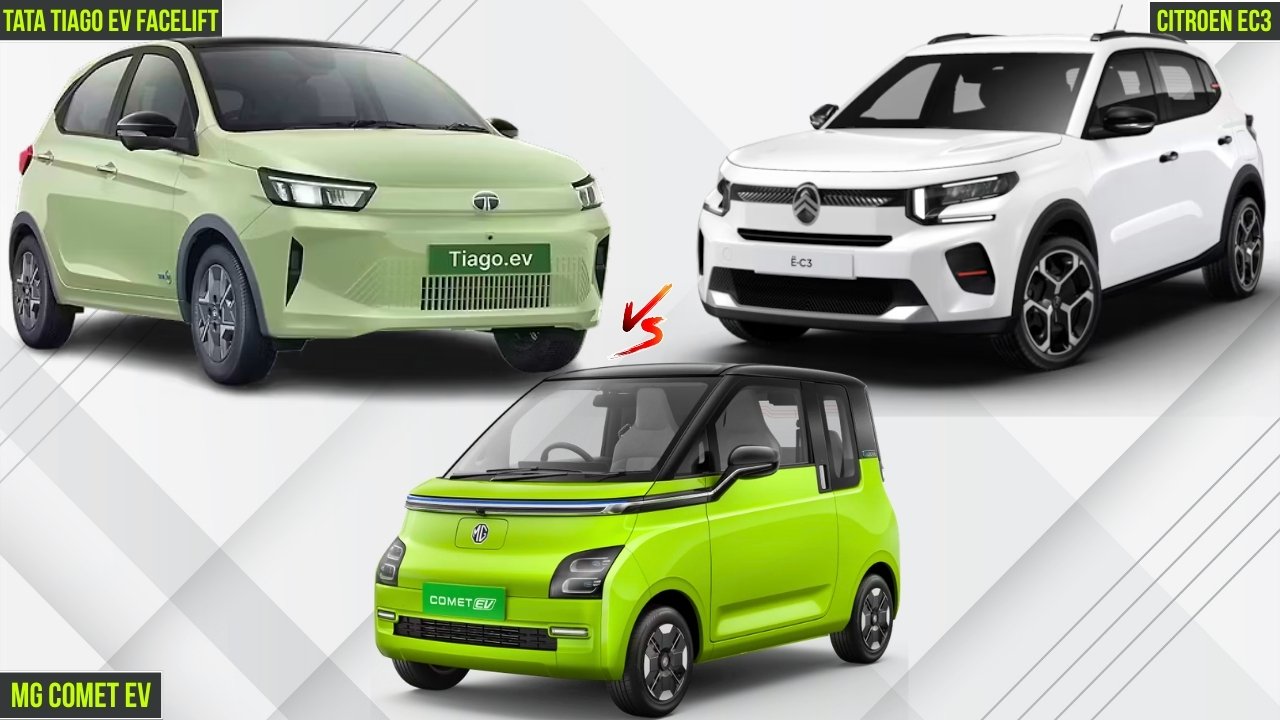
In the last four months, India has seen a sharp increase in demand for EVs. Aligning with the trend, Tata Motors, one of the leading automobile manufacturers in India, launched the Tata Tiago Facelift EV on May 28, 2026, at more affordable pricing than the outgoing version introduced back in September 2022.
Notably, the facelift isn’t grabbing the attention of electric car buyers; by reducing the price, they have made some significant upgrades that actually make sense. Now, it has received many upgrades in exterior and interior; however, the powertrain is the same, but the charging speed has improved.
With the launch of the facelift version, the Tata Tiago EV is all set to give more tough competition to its rivals, which are the MG Comet EV and the Citroen eC3. Let’s have a closer look at the comparisons among them in terms of price and variant, battery pack, range and charging, motor setup and performance, interior and features, and dimensions and exterior.
Variant & Price
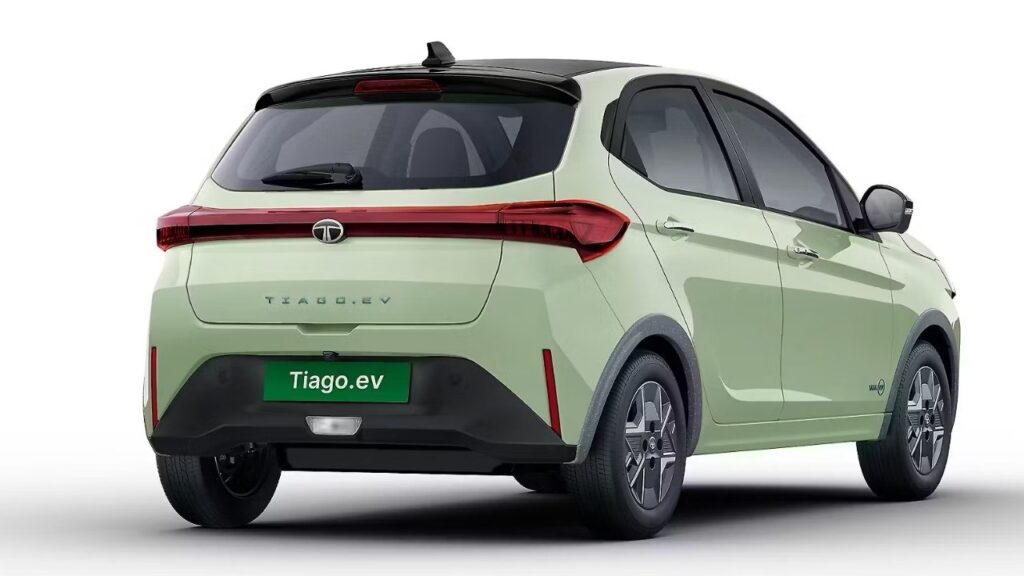
| Car Model | Variant | Ex-Showroom Price Range |
| Tata Tiago EV (Facelift) | Smart 19, Pure Plus 19, Pure Plus 24, Creative Plus 24 | ₹6.99 Lakh – ₹9.99 Lakh |
| MG Comet EV | Executive, Excite, Blackstorm Edition, Excite FC, Exclusive, Exclusive FC | ₹6.31 Lakh – ₹8.68 Lakh |
| Citroen eC3 | Feel, Shine, Shine DT | ₹12.90 Lakh – ₹13.41 Lakh |
Among them, the most affordable is the MG Comet; its standard variant is available with an ex-showroom price of ₹6.31 lakh, ₹0.85 lakh cheaper than the new Tiago EV, and even the top goes up to ₹8.69 lakh; even the top trim of MG’s EV is more affordable. If we compare the Citroen eC3 with the Tata Tiago Facelift EV, it is clearly visible that the Citroen’s EV standard variant is costlier by ₹6.09 lakh, and the price gap between the top trims is ₹3.42 lakh.
Battery Pack, Range & Charging
| Parameter | Tata Tiago EV | MG Comet EV | Citroen eC3 |
| LFP Battery Pack | 19.2 kWh / 24.0 kWh | 17.3 kWh LFP | 29.2 kWh |
| Claimed Range | 226 km / 285 km | 230 km | 320 km |
| DC Fast Charge Support | Yes | No | Yes |
| 10% to 80% DC Charging | 35 Minutes (Up to 30 kW) | N/A | 57 Minutes (Up to 30 kW) |
| Standard AC Home Charging | ~6.9 to 8.7 Hours (15A Socket) | ~7 Hours (3.3 kW Charger) | ~10.5 Hours (15A Socket) |
| Fast AC Wallbox Support | ~3.6 Hours (7.2 kW Charger) | ~3.5 Hours (7.4 kW – FC trims) | No |
The MG Comet EV has an ARAI-certified range of 230 km, compared to Tata’s car with a standard battery pack, which has 4 km less range, but with the large battery pack, it beats the MG’s car by 55 km. The Citroën’s EV has a range of 320 km, compared to the new Tiago EV base and top trim, which have a lesser range of 94 and 85 km. In terms of charging, the Tata e-car takes 35 minutes for 10-80% charging, while the Citroen eC3 takes 57 minutes with a 30 kW DC charger, and the MG Comet doesn’t support a DC charger, meaning, among them, the new Tiago. An EV is one that has a fast charging feature.
Motor Setup & Performance
| Specification | Tata Tiago EV | MG Comet EV | Citroen eC3 |
| Motor Type | Permanent Magnet Synchronous Motor | ||
| Maximum Power | 61 bhp / 75 bhp | 42 bhp | 57 bhp |
| Maximum Torque | 110 Nm / 114 Nm | 110 Nm | 143 Nm |
| Drivetrain | Front-Wheel Drive | Rear-Wheel Drive | Front-Wheel Drive |
| 0–60 km/h Acceleration | 8 Seconds / 6.2 seconds | 7.0 seconds | 6.8 seconds |
| Drive Modes | City and Sport | Eco, Normal, and Sport | Eco and Standard |
All three are equipped with a single PMSM; the Tata’s and Citroen’s cars get it on the front axle, but the MG’s on the rear. Compared to Tata’s e-car, the Citroën eC3 and MG Comet EV both have power outputs. If we talk about the acceleration timing, then the Tata EV with a large battery is the one that is quicker; it takes 6.2 seconds, compared to the Comet EV and the eC3, which are 0.8 seconds and 0.6 seconds faster in acceleration, respectively.
Interior & Features
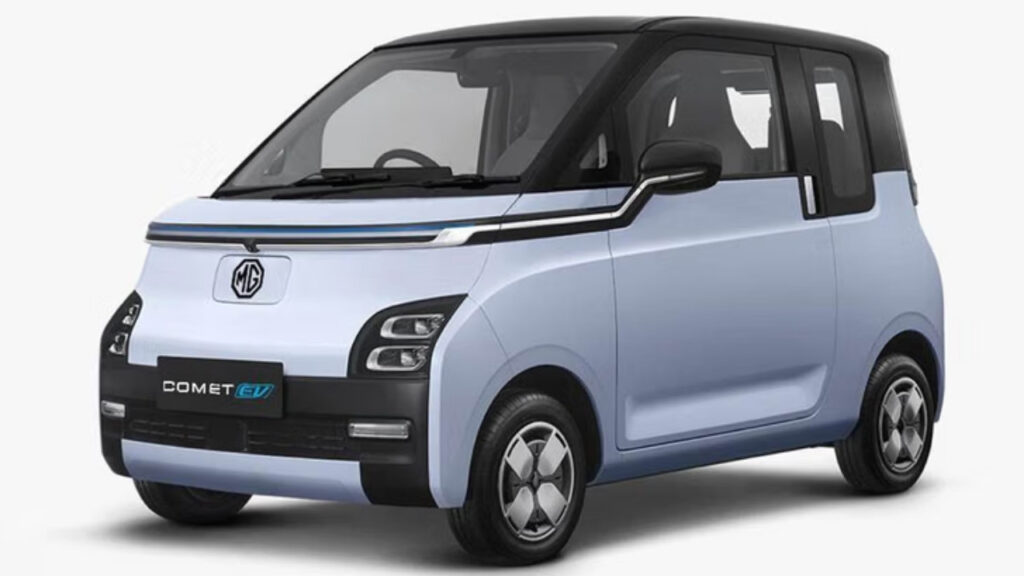
| Feature | Tata Tiago EV | MG Comet EV | Citroen eC3 |
| Seating Capacity | 5 Passengers | 4 Passengers | 5 Passengers |
| Boot Space | 240 Litres | 100 Litres (Seats up)350 Litres (Seats down) | 315 Litres |
| Touchscreen Size | 10.25-inch free-standing | 10.25-inch integrated | 10.23-inch integrated |
| Driver Display | Part-digital TFT panel | 10.25-inch fully digital | Monochrome digital cluster |
| AC System Type | Automatic Climate Control | Manual AC knob system | Manual AC knob system |
| Total Airbags | 6 Airbags (Standard) | 2 Airbags (Frontal only) | 2 Airbags (Frontal only) |
| True Cabin Identity | Premium family hatchback | Ultra-compact urban cruiser | Utilitarian, crossover-styled SUV |
The Tiago EV and eC3 are 5-seaters with a 2-3 layout, but the Comet comes as a four-seater in a 2-2 configuration. Among them, the Citroën’s EV has the biggest standard boot with a capacity of 315 liters; the Tata car has only 240 liters, meaning there’s a gap of 75 liters between them, and the MG’s e-car has 100 liters of boot, which is very small. The infotainment systems in all of these EVs are quite similar, but in terms of safety, the Tiago.ev wins; it has 6 airbags, while the other two have only 2-2.
Dimensions & Exterior
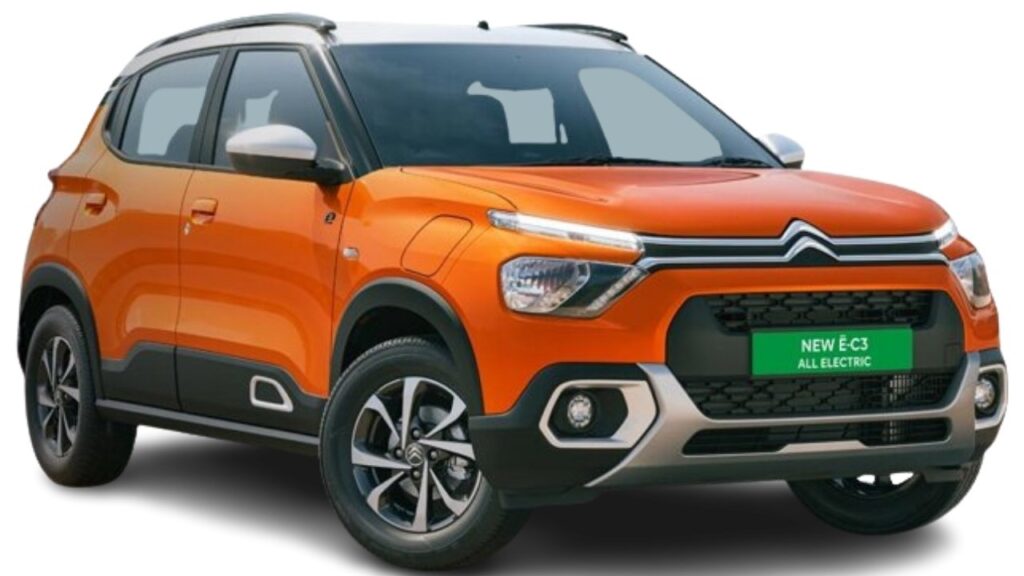
| Metric | Tata Tiago EV | MG Comet EV | Citroen eC3 |
| Length | 3,769 mm | 2,974 mm | 3,981 mm |
| Width | 1,677 mm | 1,505 mm | 1,733 mm |
| Height | 1,536 mm | 1,640 mm | 1,604 mm |
| Wheelbase | 2,400 mm | 2,010 mm | 2,540 mm |
| Ground Clearance | 165 mm | 165 mm | 170 mm |
| Turning Radius | 5.1 metres | 4.2 metres (Sharpest) | 5.4 metres |
| Tyre Profile | 175/65 R14 | 145/70 R12 | 195/65 R15 (Largest) |
| Body Style | Traditional Hatchback | Ultra-compact 2-door pod | SUV-inspired Crossover |
Among them, the longer and wider is the eC3, but the taller is the Comet EV. The wheelbase of the Taigo.ev compared to the Comet EV is 390 mm longer but 140 mm shorter compared to the eC3. The ground clearance for Tata’s and MG’s electric cars is 165 mm, but the Citroën’s EV has 170 mm; the gap is only 5 mm, not a big one. All three are capable of easily passing the potholes and speed breakers.
