
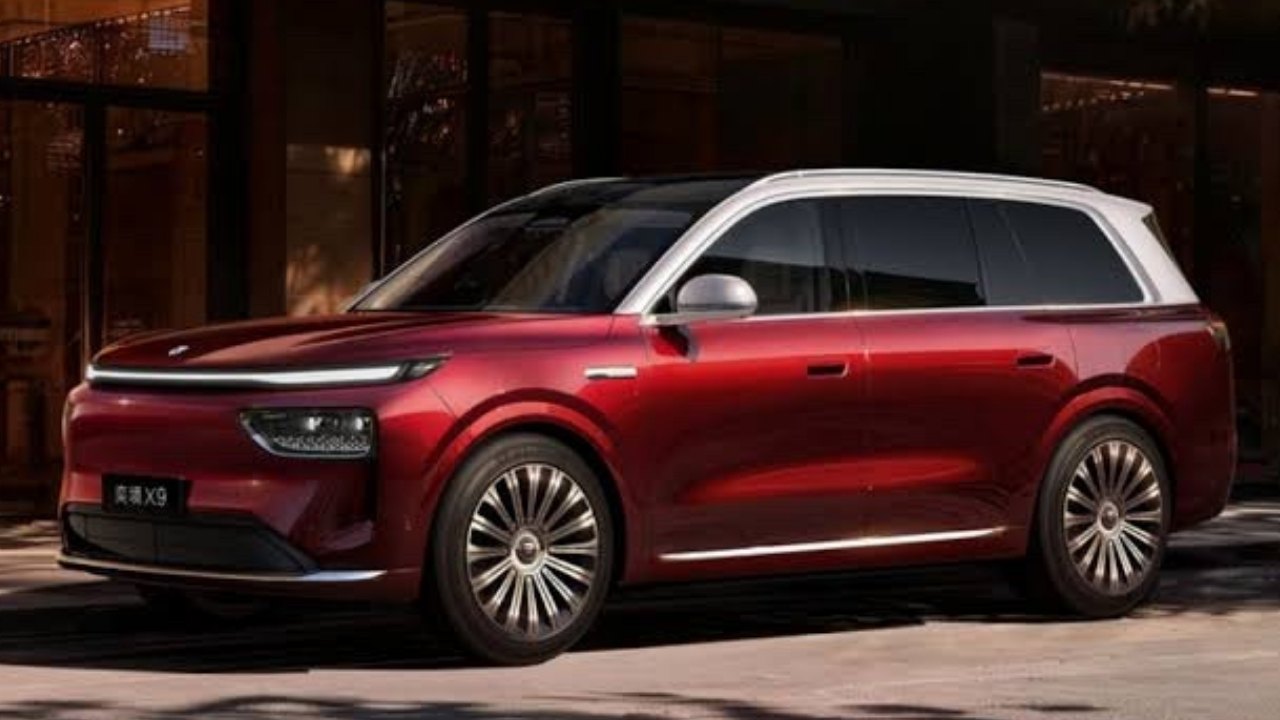
The joint venture between Dongfeng and Huawei, Yijing, made the global debut of the Yijing X9, a full-size electrified sport utility vehicle, on April 23, 2026, during the Huawei Intelligent Automotive Solution Technology Conference. Reportedly, they are all set to start the pre-sale of the model with the tentative price in August 2026, and the month after that, the market launch will take place with the actual price.
As of now, there’s no update regarding its price. Reportedly, the model will be available for sale in the Chinese market with the price between 350,000 yuan and 520,000 yuan, which translates to ₹49.91 lakh and ₹74.15 lakh. Following the launch, it will compete with the AITO M9, the Li Auto L9, and the Denza N9. Set to make its debut as a six-seater in a 2-2-2 layout and a seven-seater in a 2-3-2 arrangement.
Its name for the international market is still pending, but many reports suggest that it will be known with the name Epicland X9. This upcoming car is built on the Huawei Chitu Platform, featuring the Huawei Qiankun Digital Chassis Engine. The model is set to be available for sale as a battery electric vehicle and extended range electric vehicle. They are expected to come with an 800V high-voltage architecture featuring AWD and RWD drivetrains.
The BEV with AWD will get a permanent magnet synchronous motor with a single-speed automatic transmission rear axle and an induction motor on the front axle. Under the floor of which, there will be a lithium-ion battery pack, which will power the electric motor to move the wheels. The EREV with the AWD is all set to get all from the battery electric vehicle and a petrol-powered internal combustion engine under the hood, which will act as a generator to power e-motors.
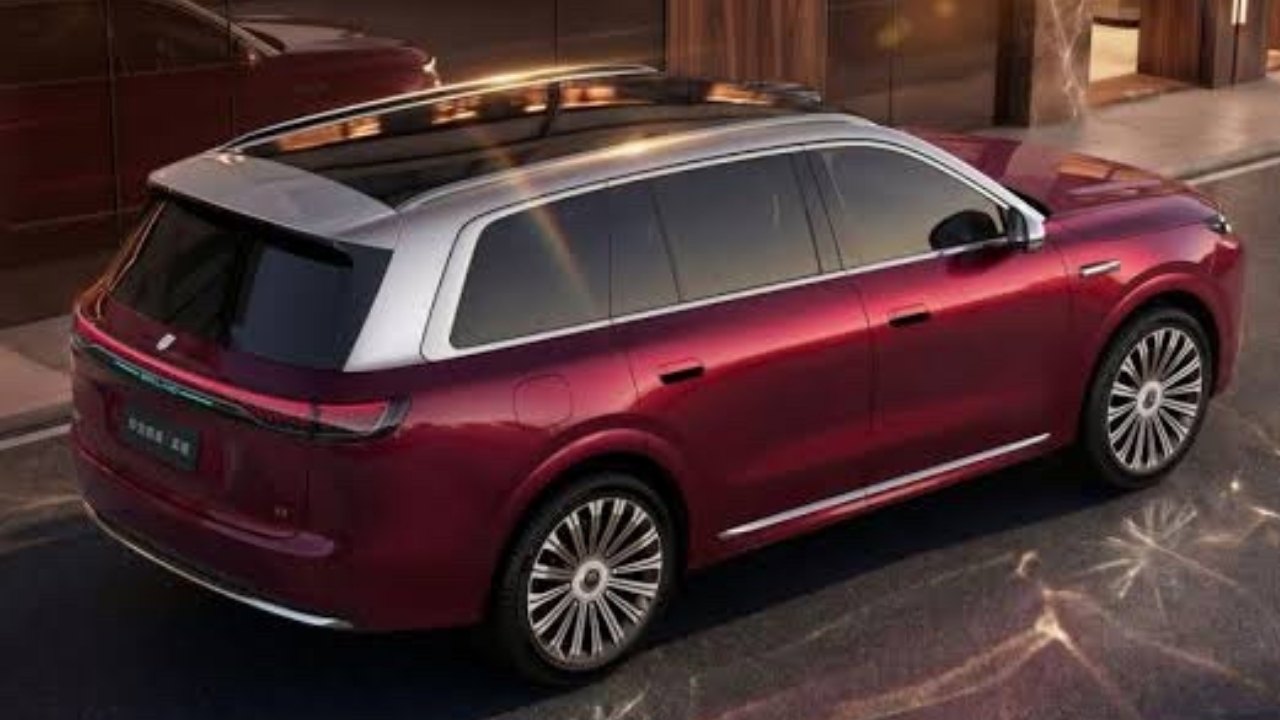
The RWD for both BEV and EREV is set to have only an electric motor, PMSM, with the one-speed automatic gearbox, on the rear axle. The kerb weight is 2,630 kg and 2,770 kg for the rear-wheel-drive and all-wheel-drive variants, respectively, for the extended-range electric vehicle version. The top speed for the EREV’s both RWD and AWD variants is 190 km/h. The length, width, and height are 5,301 mm, 2,015 mm, and 1,820 mm, respectively.
It is certain to get dual-chamber air suspension with double-wishbone independent at the front and multi-link independent at the rear, featuring adjustable ride height, which helps in increasing ground clearance for rough roads and lowering it for high cruising with better aerodynamics and improved efficiency. Also features CDC, which continuously monitors the road conditions and adjusts suspension stiffness in real time to enhance the smooth riding experience.
Other notable features are rear-wheel steering, which turns the rear wheel opposite to the front wheel when running at the lower speed, helping in smooth turning even in compact areas, and in case of high speed, it improves stability. They are yet to reveal that all wheels used ventilated discs or solid discs or were ventilated in the front and solid in the rear. The electronic parking brake for convenience and the ABS with EBD for stability are confirmed.
The carmaker has already confirmed that it features an integrated power brake brake-by-wire system, which not only improves braking response but also regenerative braking coordination. Its wheelbase is 3,120 mm, front track is 1,722 mm, rear track is 1,732 mm, approach angle is 18°, and departure angle is 21°. Its front and rear overhang is 971 mm and 1,210 mm, respectively.
It has dual 17.2-inch “Butterfly Wing” 3.4K screens, which run on Huawei HarmonySpace 6. Features Huawei Qiankun ADS 5 with 896-line dual-optical-path LiDAR features navigation and autopilot for city driving and highway cruising. Other notable features are the Huawei XHUD augmented reality head-up display, Huawei XSCENE laser projection entertainment system, and AMS three-in-one AI multimodal perception system.