
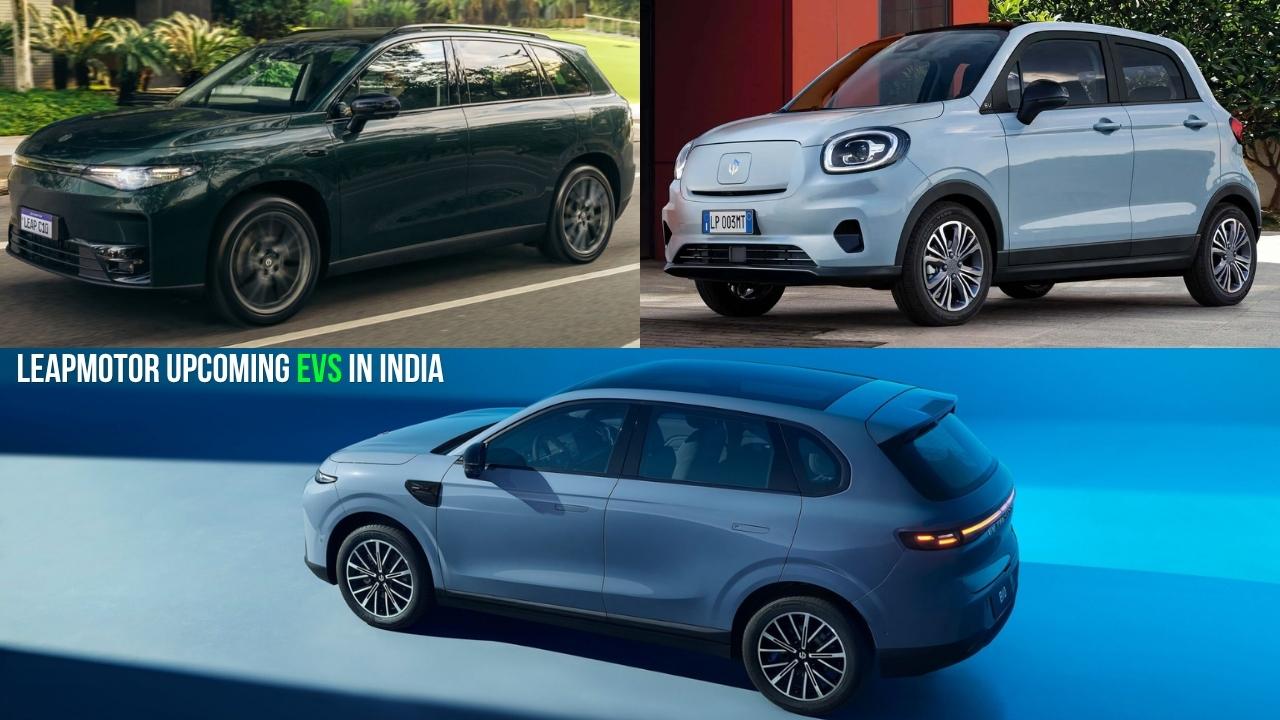
Leapmotor, the Chinese EV maker, is all set to launch three electric cars in the Indian market. The list includes Leapmotor T03, Leapmotor B10, and Leapmotor C10. The first one is anticipated to be introduced with an ex-showroom price of 8 to 12 lakh rupees in late 2026; the second may come in the first half of 2027, which may cost ex-showroom between 15 and 20 lakh rupees; and the last one is likely to make its debut in late 2027 with the ex-showroom cost ranging from 25 to 30 lakh rupees.
The Leapmotor T03 is going to be a compact urban hatchback, which will compete with the MG Comet EV and Tata Tiago EV; the Leapmotor B10 is a mid-size SUV, and it is set to give tough competition to the MG Windsor EV and Tata Curvv EV; and the Leapmotor C10 is a premium family car; it is set to take on the Hyundai Creta Electric and the Toyota Ebella. Let’s have a closer look at each of the upcoming EVs from Leapmotor in the Indian market.
Leapmotor T03
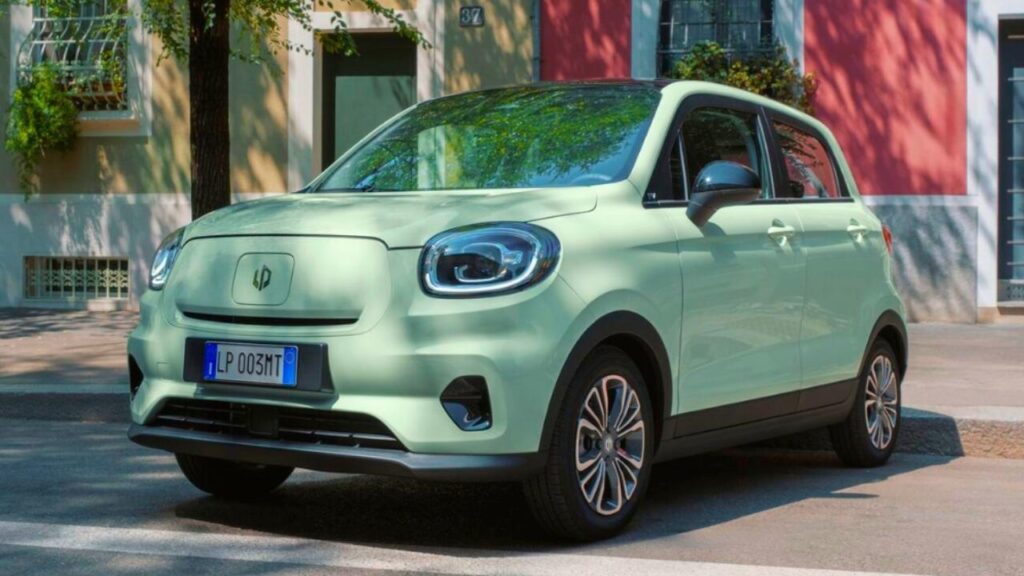
Set to get a permanent magnet synchronous motor on the front axle featuring a front-wheel drive configuration, which puts out a maximum of 94 bhp power and 158 Nm torque. Its acceleration timing from 0 to 50 km/h is 5 seconds, but to reach up to 100 km/h it takes 12.3 seconds, and its top speed is 130 km/h. Equipped with an LFP battery pack of 37.3 kWh, which gives the WLTP range of 265 km; and supports a 45 kW DC charger, which takes 36 minutes from 30 to 80 per cent charging.
Its length, width and height are 3620 mm, 1652 mm and 1577 mm, respectively. Upfront it gets rounded “smile-design” headlights which are surrounded by circular LED daylight running lights; the sides get 15-inch multi-spoke alloy wheels, a 2400 mm wheelbase, and mechanical door handles; and the rear has roof-integrated spoilers and squared C-shaped LED tail lamps. It comes with a seating capacity of 4 people and has a boot space of 210 litres.
Leapmotor B10
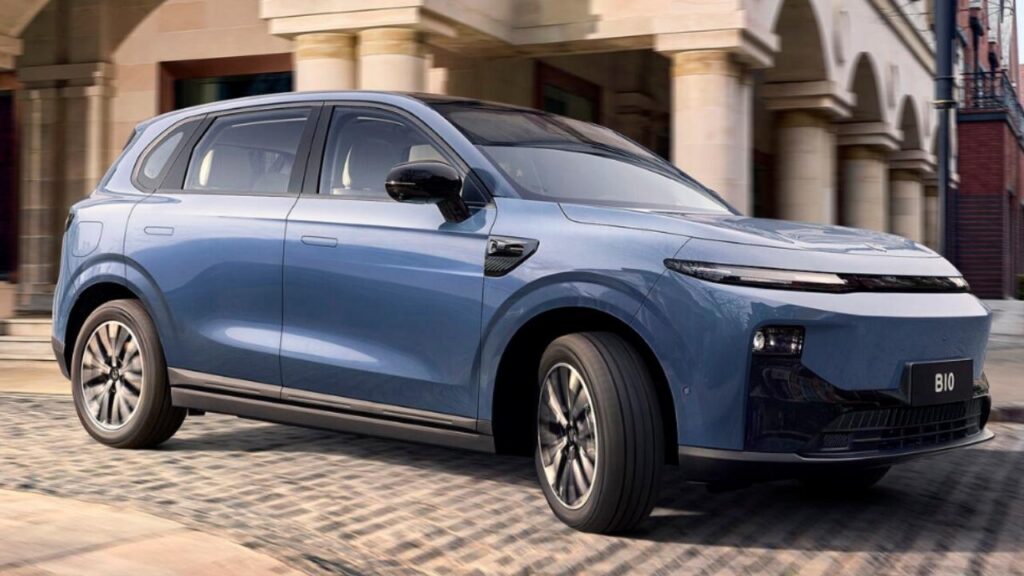
The Leapmotor B10 is built on advanced LEAP 3.5 architecture; its rear axle is mounted with a magnet synchronous electric motor, meaning it features a rear-wheel drive drivetrain. The maximum power output is 215 bhp, and peak torque is 240 Nm. Anticipated to be introduced with an LFP battery pack of 67.1 kWh, whose WLTP range on a full charge is 434 km. It supports a 168 kW DC charger, which takes 20 minutes for 30 to 80 per cent charging.
Dimensionally, it is 4,515 mm longer, 1,885 mm wider, and 1,655 mm taller. Notable features are 3.3 kW vehicle-to-load that help in running external electronic devices, a centrally mounted 14.6-inch 2.5K high-definition infotainment system that runs on the Leapmotor OS 4.0 Plus, dual wireless fast charging pads, a 1.8 sqm fixed panoramic sunroof, and an 8.8-inch LCD instrument cluster under the steering wheel which shows the driving data.
Leapmotor C10
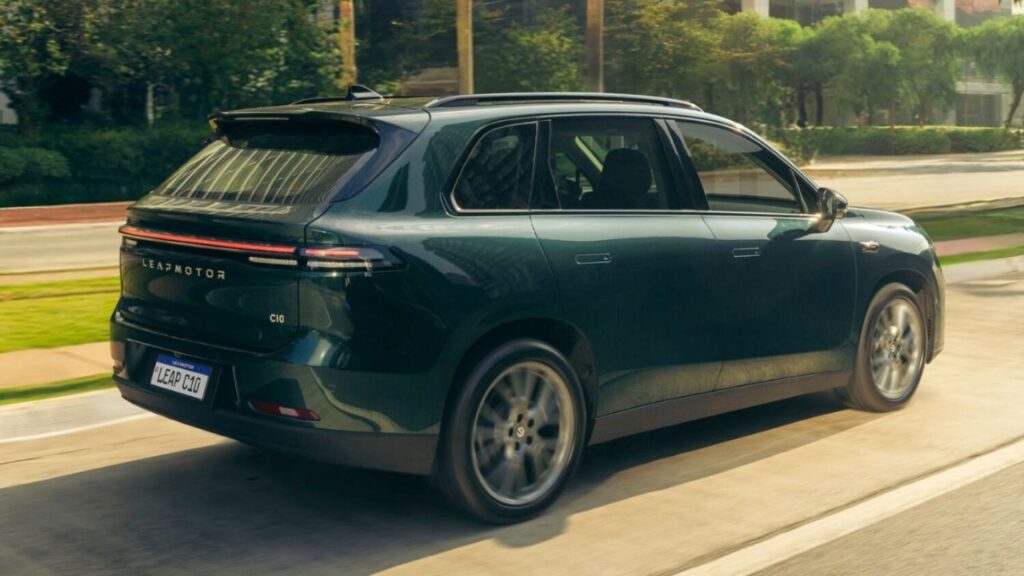
It made its debut in the Indian market with the rear-wheel-drive drivetrain, which uses the single-speed automatic transmission. It is equipped with a permanent magnet synchronous motor on the rear axle; it generates the maximum 215 bhp power and peak 320 Nm torque. To accelerate from 0 to 100 km/h, it takes 7.5 seconds, and top speed goes up to 170 km/h. As a five-seater, it has a boot space of 435 litres and also features a frunk of 31 litres.
Equipped with a 69.9 kWh lithium iron phosphate (LFP) battery pack, whose WLTP range is 420 km. It supports a DC charger up to 84 kW, which takes 30 minutes of time for 30 to 80 per cent of the charging. It features Vehicle-to-Load (V2L), a 10.25-inch HD digital instrument cluster and a 14.6-inch, 2.5K high-resolution touchscreen. It is 4,739 mm longer, 1,900 mm wider, and 1,680 mm taller. The wheelbase is 2,825 mm, and ground clearance is 180 mm.
