The launch of the 2027 BMW i7, an all-electric luxury sedan with a seating capacity of five individuals, is all set to make its debut in the Indian market on September 11, 2026. BMW India itself has confirmed the date for its launch in the country. It is coming to India within four months after the global debut.
Notably, the 2027-year model of the i7 sedan is a facelift, i.e., a mid-life upgrade, not a next-generation model. This all-electric sedan coming through the CBU route will replace the existing i7 that is sold in two variants. The booking for the sedan is already taking place from August 1, 2026, through BMW India’s website and dealerships across the country.
The facelift is all set to strengthen its position against the rivals, including the Audi e-tron GT, the Porsche Taycan, and the Mercedes-Benz EQS. The i7 sedan facelift has received many changes on its exterior and interior and even on the powertrain. Let’s have a closer look at the changes and upgrades.
Split headlights setup
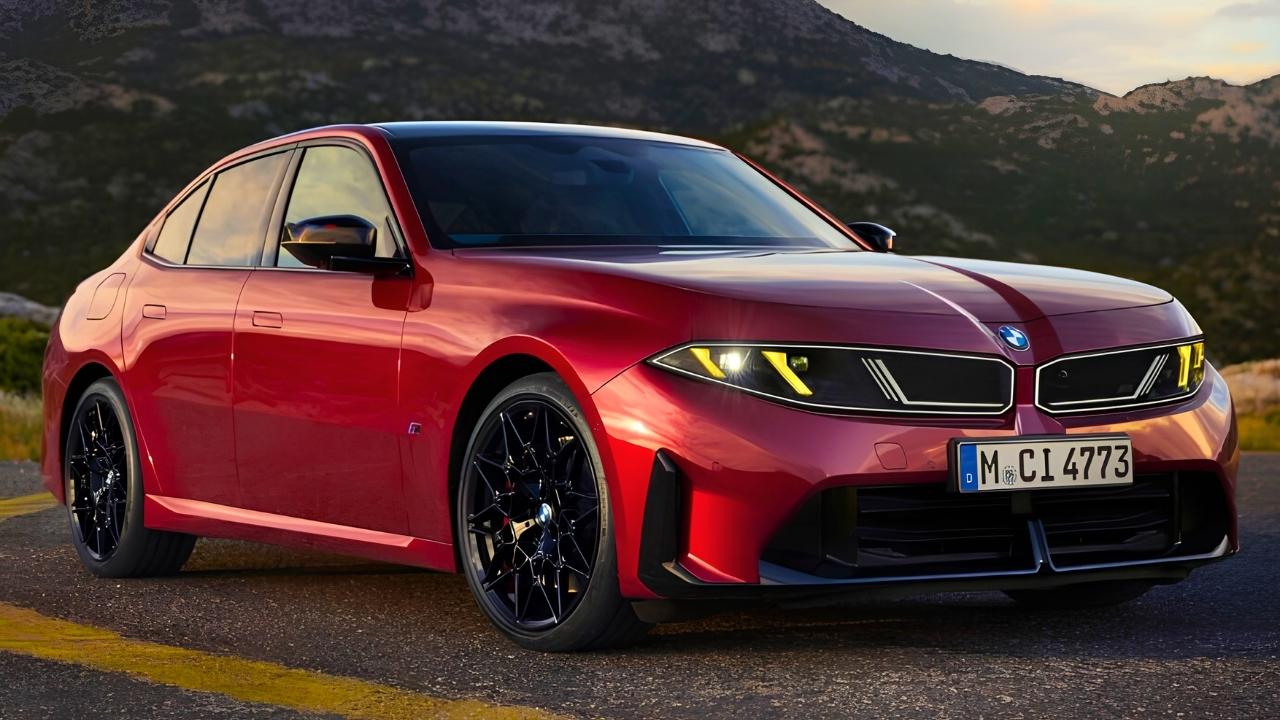
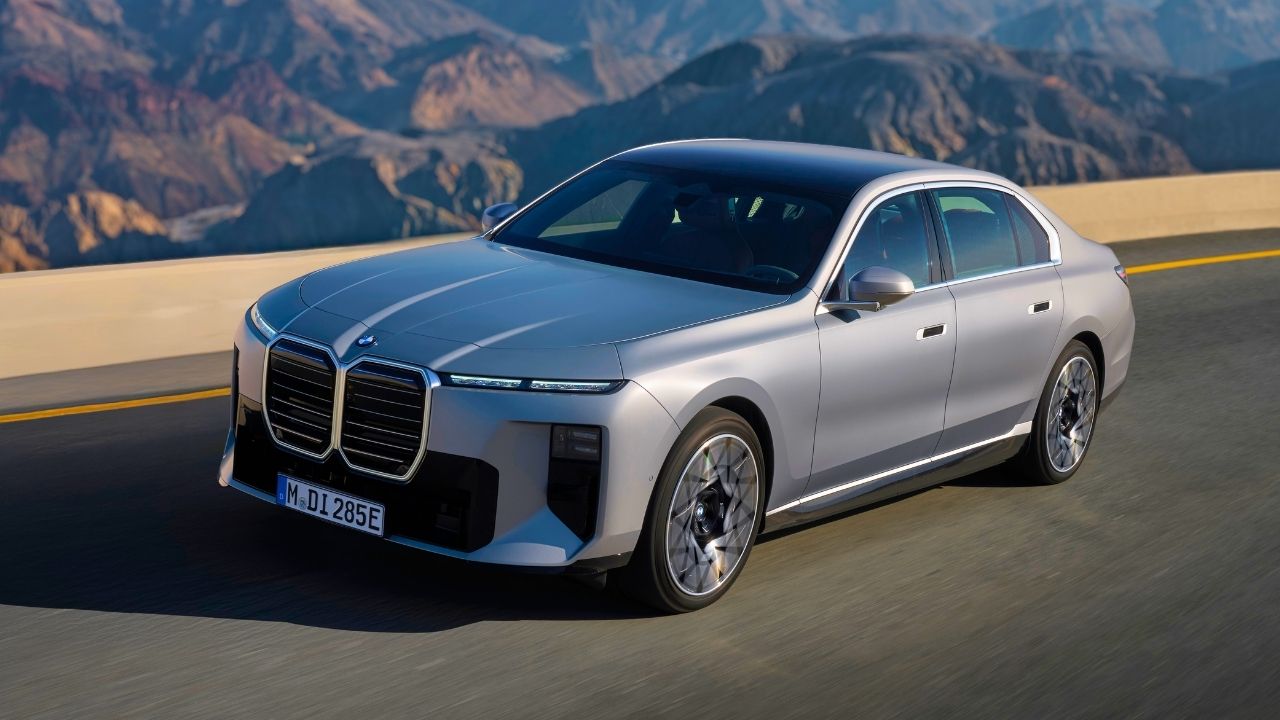
Below the bonnet, it gets two slim, horizontal-shaped daylight running lights on the left and right sides of the illuminated kidney grille. It has a bumper-integrated main headlamp comprising a low beam and a high beam in a horizontal shape. Features a sculpted bonnet getting the BMW logo, reflecting branding.
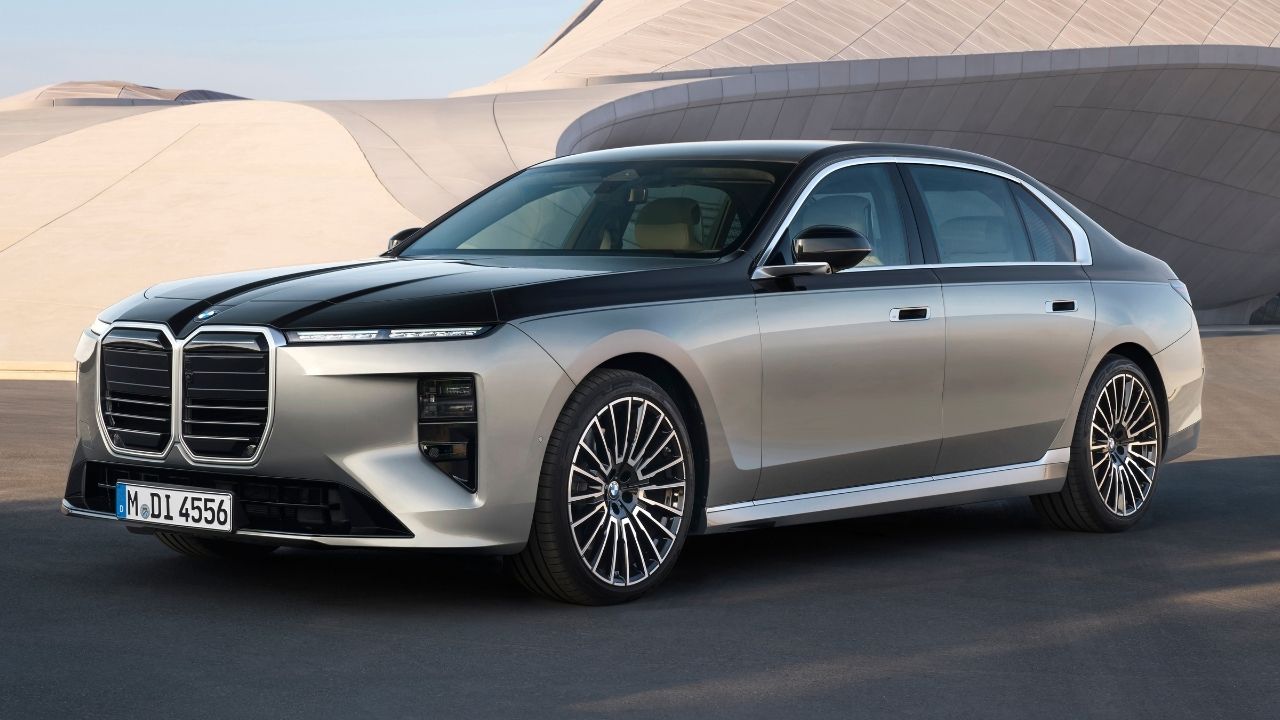
Its sides have flared wheel arches that bracket the multiple-spoke alloy wheels to enhance the road presence and in-profile view. Entry doors for the driver, co-passenger and others retain the hidden flush-type door handles that not only reduce drag but also improve the energy efficiency.
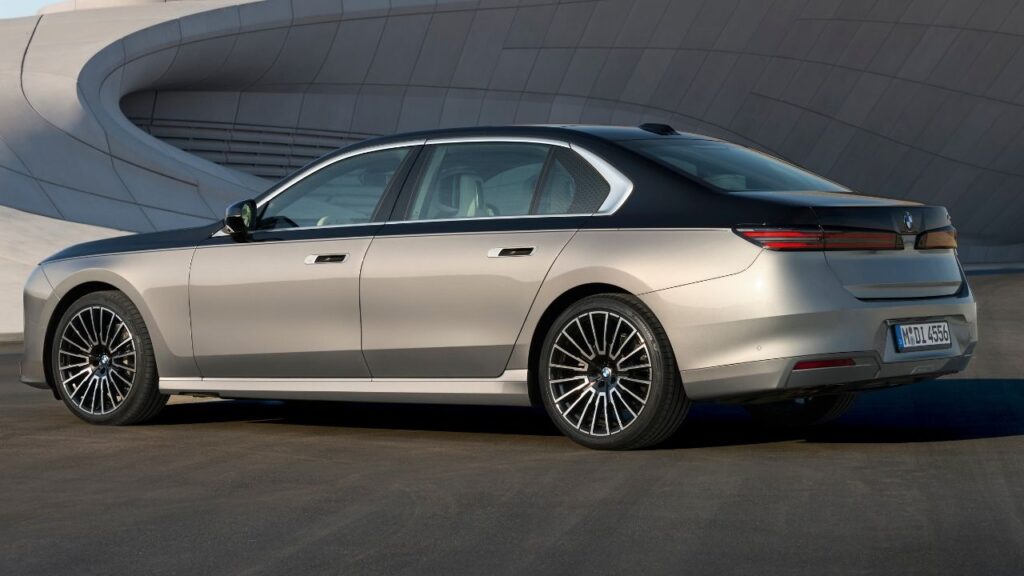
The rear has a Neue Klasse double-layer taillight in a horizontal shape that seems connected with the BMW logo at the centre. The bumper at the back has a slim horizontal reflector at either side. Other features that we get to see on its rear are a large rear windscreen directly connected to the roof.
BMW panoramic iDrive
The cabin doesn’t have a traditional digital instrument cluster; instead, it gets a full-width slim BMW panoramic iDrive based on the windscreen that connects the two A-pillars that shows driving data and helps with the other functions. It also has a 3D head-up display, which projects navigation instructions, driver-assistance information, and spatial information.
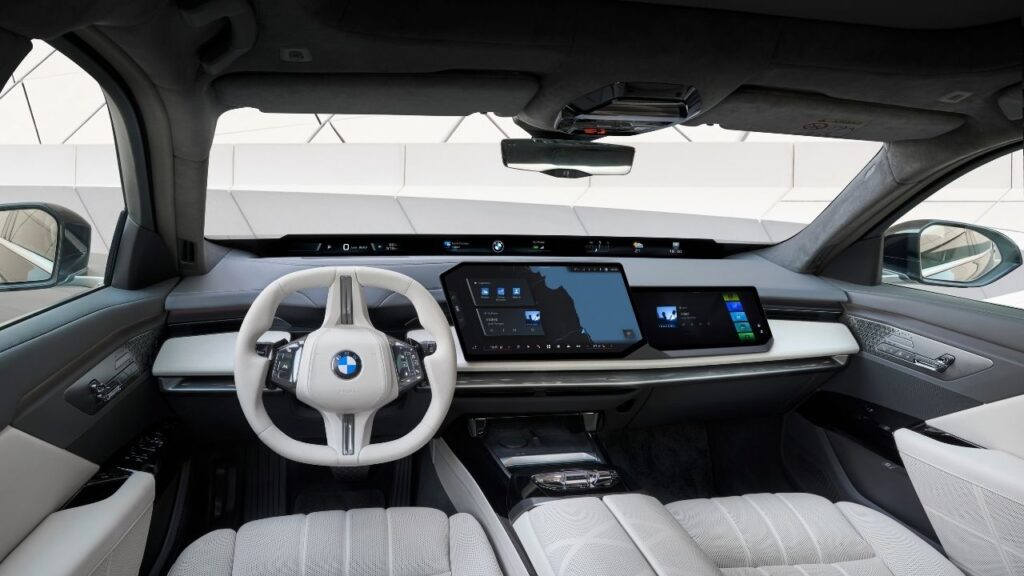
Before the driver’s seat, it has a squared-off steering wheel with physical buttons and a BMW logo. The dashboard features two free-standing screens, one before the co-passenger that measures 14.6 inches and another of 17.9 inches at the centre just above the centre console. Also features a 31.3-inch ceiling-mounted screen for rear-seating passengers’ entertainment.
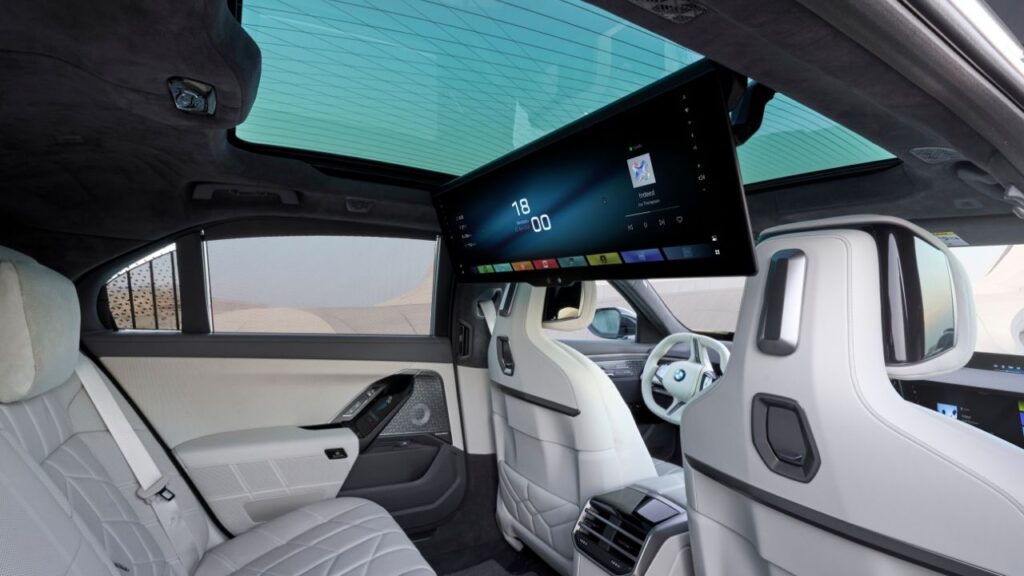
The entire system runs on BMW Operating System X, allowing personalised layouts, customisable widgets, and OTA software updates. The screens are integrated with the Bowers & Wilkins Diamond Surround Sound for an immersive audio experience. Other features include a full-width ambient light strip, four-zone climate control, and automatic doors with soft close.
Segment dominating wheelbase
As the 2027 BMW i7 is a facelift, there’s no change in dimensions. It is still 5,391 mm longer, 1,950 mm wider, and 1,544 mm taller. The distance between the axles is 3,215 mm. For clarity, it has a 315 mm longer wheelbase than the Porsche Taycan and Audi e-tron GT and only 5 mm more than the Mercedes-Benz EQS.
Double-motor AWD options
Three variants for the BMW i7 sedan facelift are set to be offered: 50 xDrive, 60 xDrive, and M70 xDrive. Each gets two electric motors, one on each axle. The maximum power output and peak torque for the first one are 455 hp and 660 Nm; the same for the second is 544 hp and 745 Nm, and for the third, 680 hp and 1,015 Nm.
Beneath the floor, it has a 112.5 kWh lithium-ion battery for all three variants. The WLTP-certified range is 728 km, 727 km and 686 km for the first, second, and their variants, respectively. It is 0 to 100 km/h set to range from 3.8 seconds to 5.5 seconds and top speed from 210 km/h to 250 km/h, depending on the variant.