
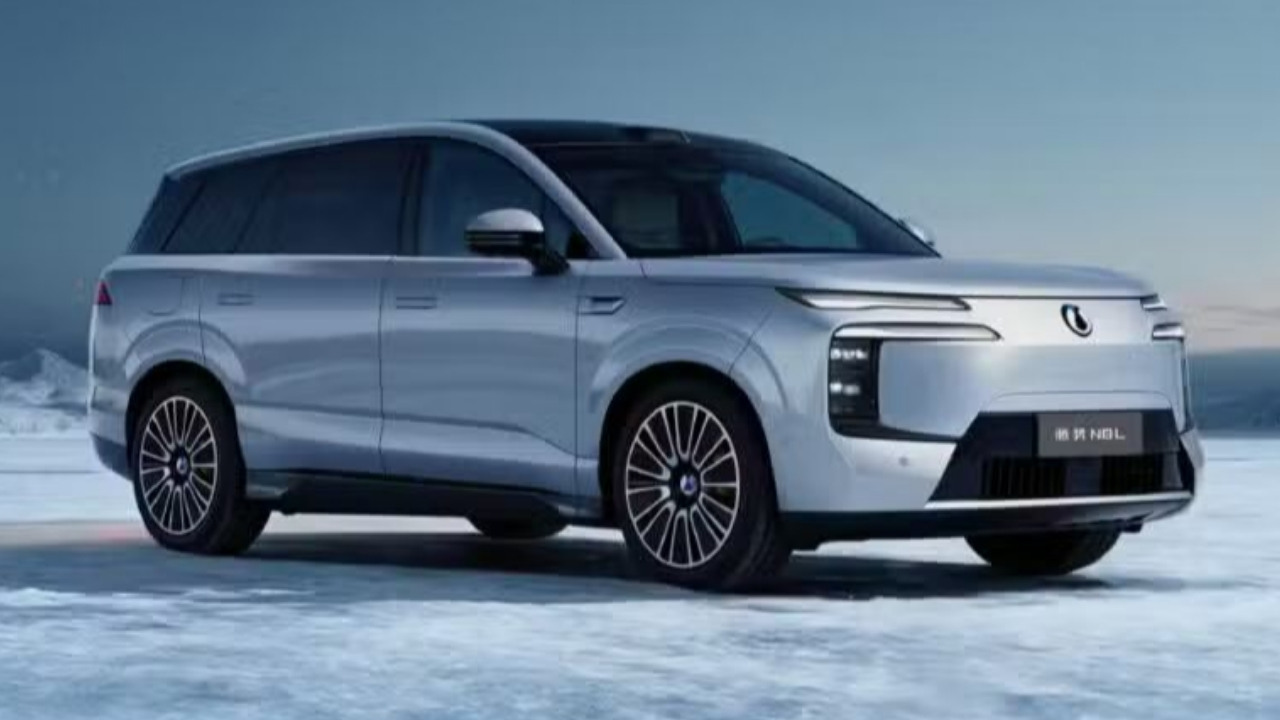
On June 23, 2026, Denza, a subsidiary under Build Your Dreams, launched the fast-charging edition for the Denza N8L, a 6-seater plug-in hybrid electric SUV, in two variants with the price between 319,800 yuan and 349,800 yuan, which translates to 44.67 lakh rupees to 48.86 lakh rupees.
They haven’t revealed the date for delivery of the model; it is expected to start within a month, so we are expecting that they will begin delivery of the same in July 2026. Its main rivals in China are other electrified 6-seaters in the segment that are the Aito M9, the Li Auto L9, and the Deepal S09.
The N8L is built on the e³ (Yi San Fang) platform, featuring an all-wheel-drive drivetrain whose electrical architecture is 1000V and also features rear-wheel steering up to 10° that helps in easy turning on compact roads. Also comes with crab walking, U-turn assistance, and DiSus-A intelligent air suspension, which features ride adjustment up to 150 mm.
Notably, the front and rear suspensions are double wishbone and five-link. The ventilated disc manages braking for all wheels, they are powerful and also absorbs the heat it wheel manner. It also comes with regenerative braking, electronic brake control, brake assist, electronic stability control, and a traction control system.
It is 5,200 mm longer, 1,820 mm wider, and 1,999 mm taller. Available with a 6-person seating capacity in a 2-2-2 layout, because of the 3,075 mm longer wheelbase, each occupant gets ample legroom to sit comfortably. Behind the third row, it has 313 liters of boot space that can be extended up to 1,077 liters.
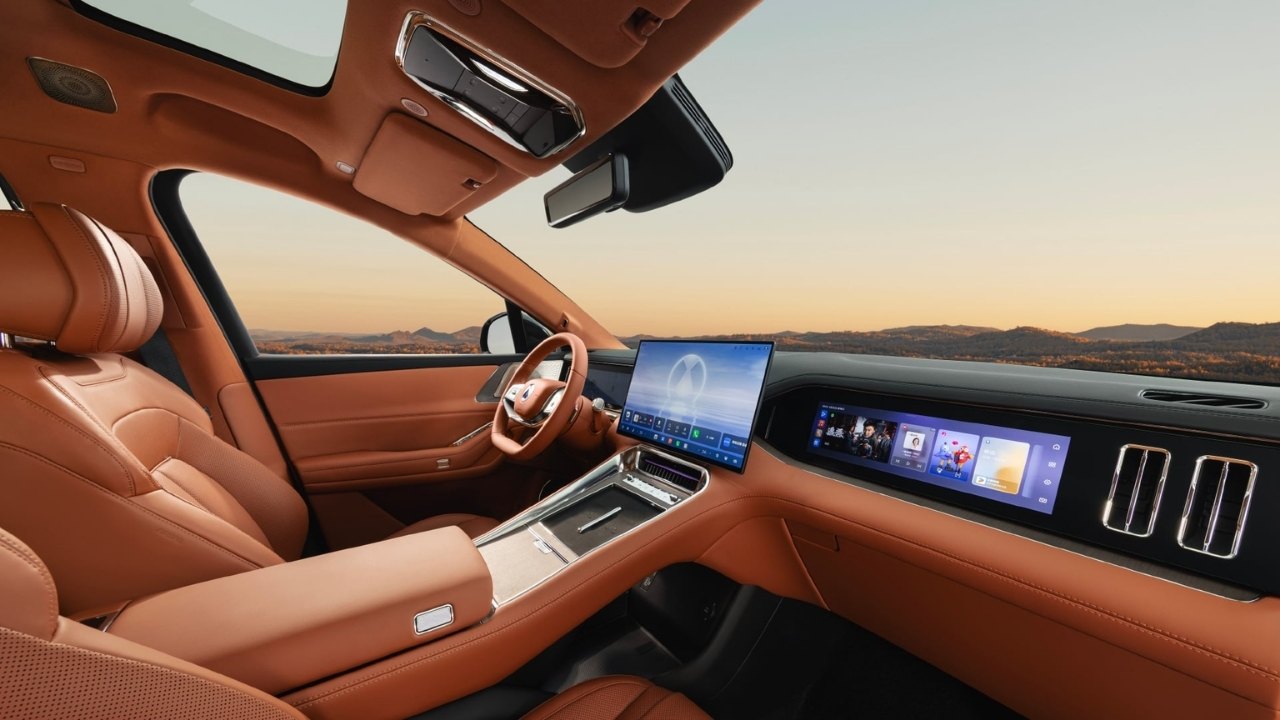
All seats come with nappa upholstery; the front and second-row seats are ventilated, heated, and also support massage functions. The third-row seats are only heated. In top trim, the front seats are zero-gravity and also electrically adjustable with a memory function.
The center of the dashboard is equipped with a 17.3-inch floating touchscreen infotainment system, and two 13.2-inch screens are integrated with the dashboard, one under the steering wheel as a digital instrument cluster and another before the co-passenger seat as an entertainment screen.
For the entertainment of rear-seating passengers, it also gets a 17.3-inch ceiling-mounted screen. In addition to the digital instrument cluster, it also has a 50-inch AR-HUD (augmented reality head-up display), which projects primary driving information on the windshield.
Inside of the traditional inside rear-view mirror, it gets a 9-inch display in the shape of a mirror showing the rear view through the camera mounted on the rear part of the body. Other notable features are foldable trays, PM2.5 filtration, a panoramic sunroof, ambient lighting, a dual wireless phone charging pad, and powered doors and tailgate.
Equipped with the DiPilot 300 intelligent driving system, which works with roof-mounted LiDAR, 3 millimeter-wave radars, and 7 cameras powered by NVIDIA Drive Orin-X that has computing power up to 300 TOPS. It features both city and urban navigation autopilots.
Under the hood, it gets a 2.0-liter turbocharged petrol-powered internal combustion engine with a power output of 152 kW (204 hp) and a total of three electric motors, one on the front axle and two on the rear; they combinedly deliver a maximum power of 560 kW (751 hp).
Features a 75.26 kWh LFP (lithium iron phosphate) next-generation Blade Battery pack under the floor giving the emission-free CLTC range of 430 kilometers; when the battery pack is fully charged and even the tank is full, it can run up to 1550 kilometers.
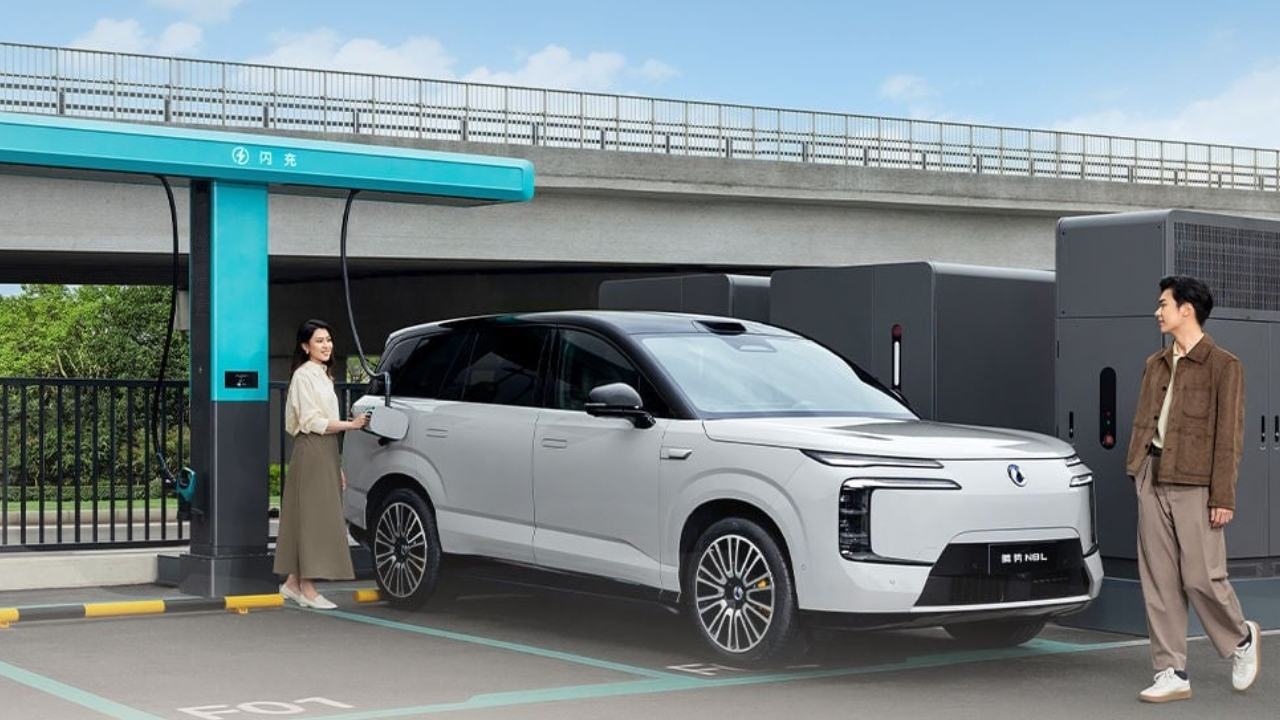
Support DC chargers up to 728 kW, which take a time of just 5 minutes for 10 to 70 percent charging; for charging up to 97 percent, they take only 9 minutes. Even in the case of extreme cold, such as -30 degrees, charging from 20 to 80 percent takes only 12 minutes.
