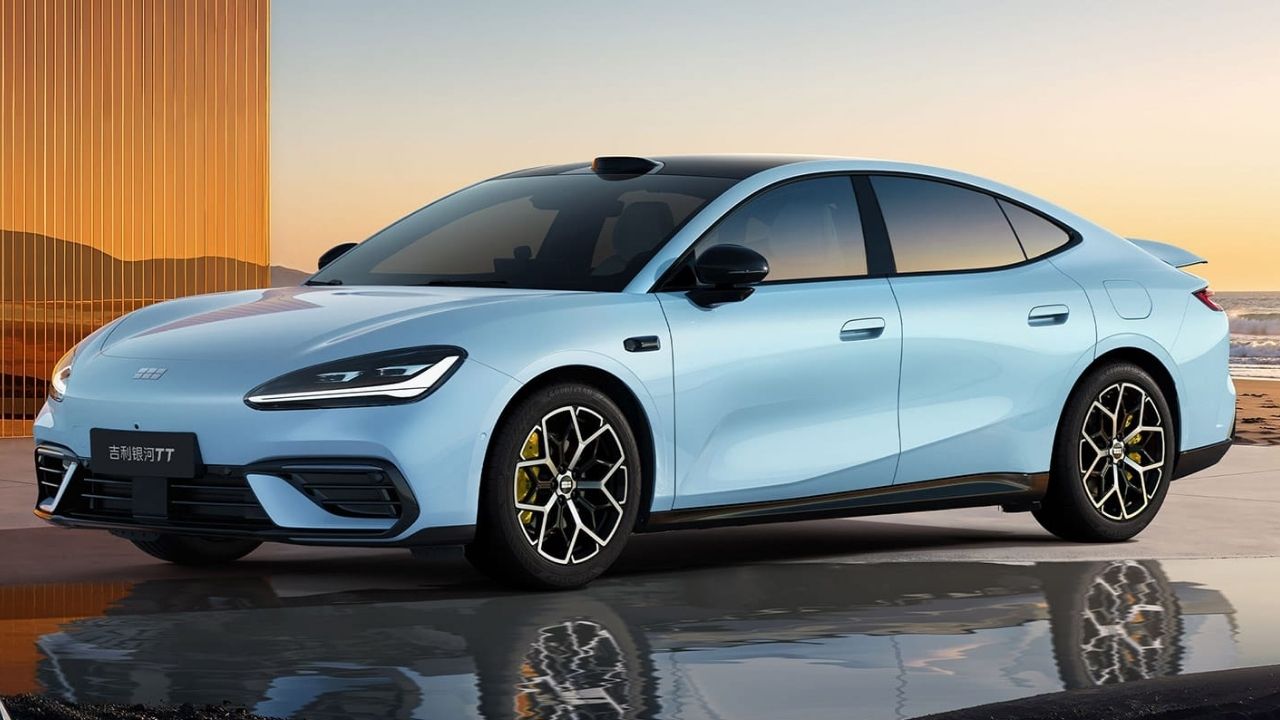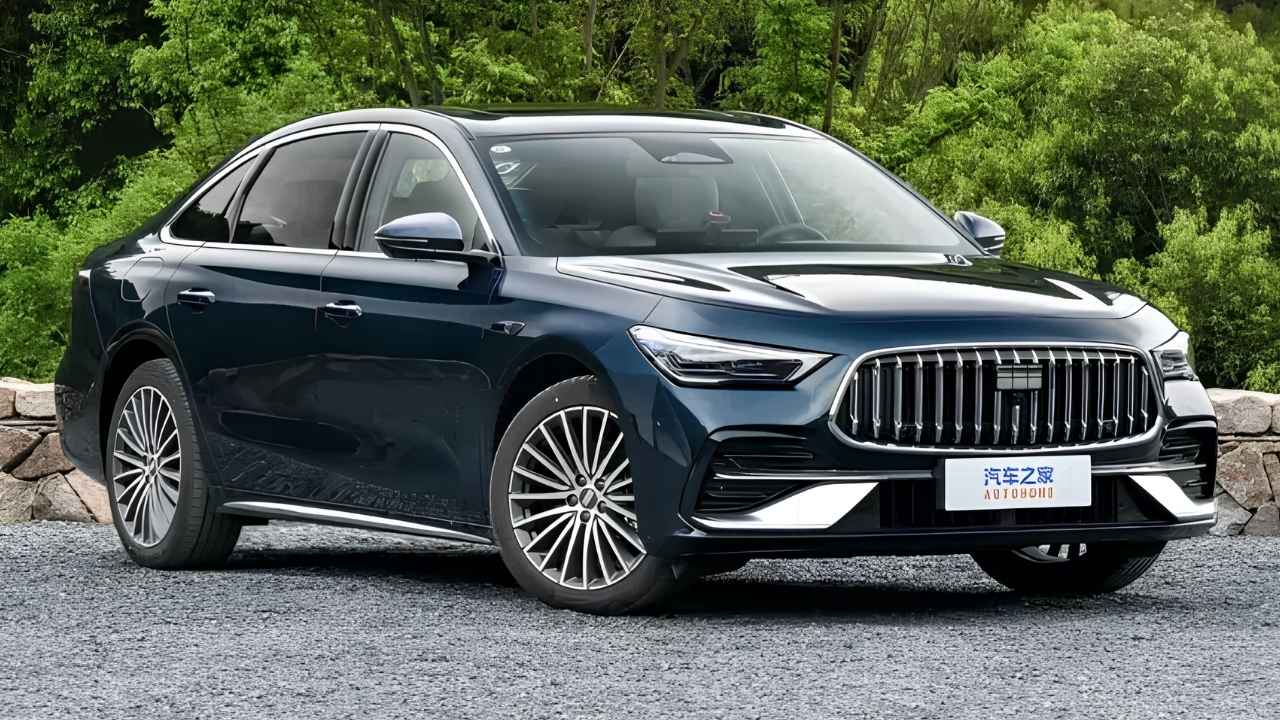
Geely Auto’s new energy vehicle brand, Geely Galaxy, launched the Starshine 7 (Xingyao 7), a premium plug-in hybrid fastback sedan, on May 22, 2026, for the domestic automaker in five variants, which are available for sale with the limited-time price range from 98,000 to 129,000 yuan. Refer to the table for variant-wise prices in yuan, rupee, and dollar.
| Variant | Limited-Time Price | ||
| Yuan | Dollar | Rupee | |
| 230 km RWD Long-Range | 98,800 | 14,820 | 13.97 lakh |
| 220 km AWD Long-Range Max | 106,800 | 16,020 | 15.10 lakh |
| 220 km AWD Pilot Max | 116,800 | 17,520 | 16.52 lakh |
| 220 km AWD Explorer+ Max | 122,800 | 18,420 | 17.37 lakh |
| 220 km AWD Starshine Max | 129,800 | 19,470 | 18.36 lakh |
Once the limited-time promotion offer ends, the price for each Starshine 7 variant will increase by 10,000 yuan, which is equivalent to 1.41 lakh rupees and $1,480.
Built on the Thor Hybrid 2.0 system, it features an 82 kW 1.5-liter petrol engine under the hood and one electric motor mounted on each axle, featuring an all-wheel drive configuration.
The system’s combined maximum power output is 312 kW, and peak torque is 526 Nm, which makes the 0 to 100 km/h acceleration in just 5.6 seconds possible. Also available with single-motor rear-wheel drive, whose power output is 120 kW, it goes up to the maximum speed of 190 km/h.
Notably, it is offered with a single battery pack of 28.3 kWh, whose all-electric CLTC range as RWD is 230 km and AWD is 220 km. With a thermal efficiency of 47.26%, it gives a mileage of 2 liters per 100 km for AWD and 2.8 liters per 100 km for RWD.
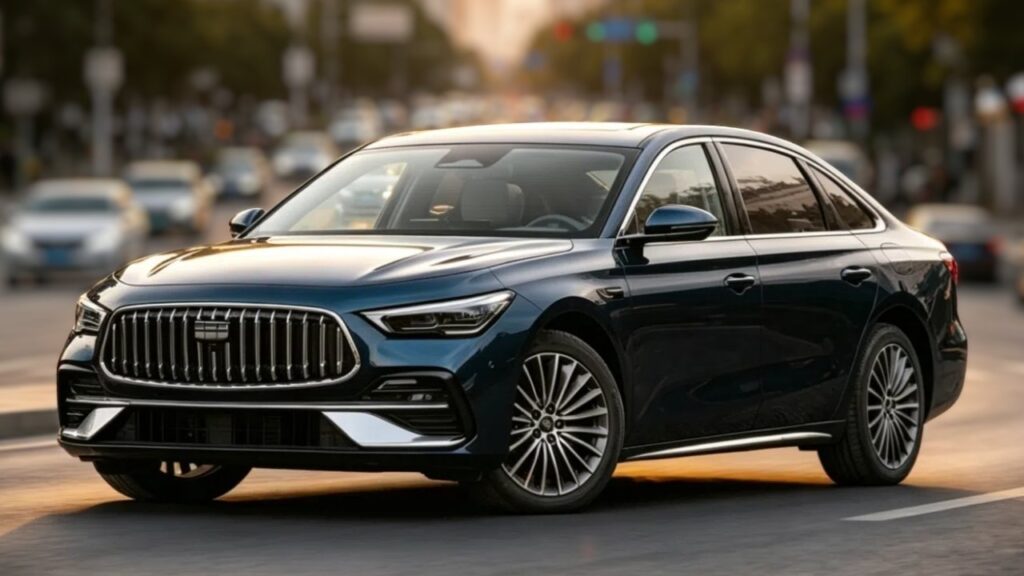
The exterior is based on Geely Galaxy’s “Ripple Aesthetics” design language; it gets a vertically layered “Galaxy Waterfall” front grille giving it a modern front look, flush-type door handles, and 19-inch multi-spoke alloy wheels at the sides, reflecting premium, and full-width rising sun through-type LED taillights at the rear create a wide stance.
Its length is 4,958 mm, width is 1,915 mm, and height is 1,505 mm. The wheelbase is 2,852 mm; compared to the BYD Seal DM-i, Tesla Model 3, Xiaomi SU7, and BYD Han DM-i, it is shorter by 48 mm, 23 mm, 148 mm, and 68 mm, respectively.
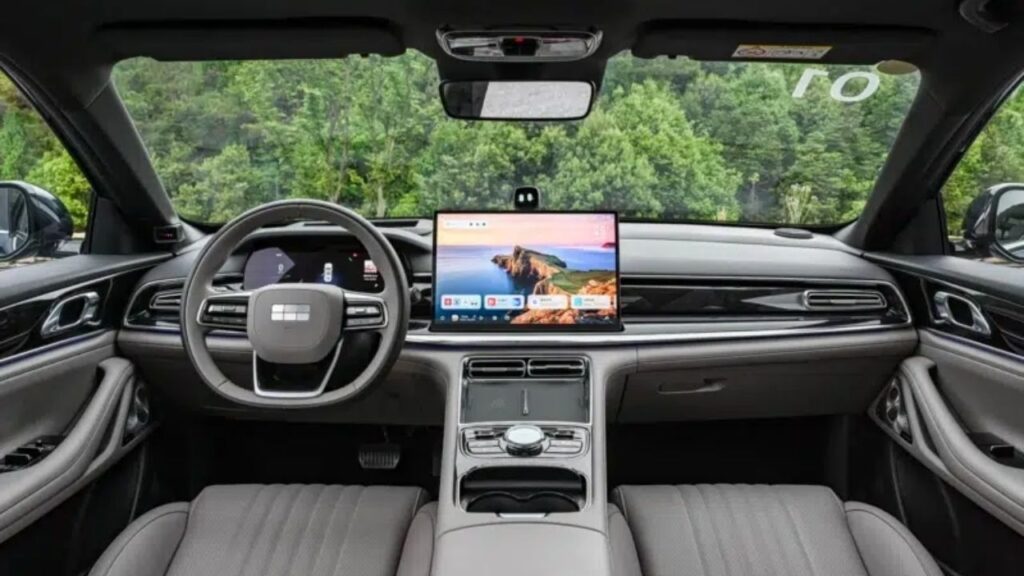
Comes with a seating capacity of 5 people in a layout of 2-3. Features a boot space of 541 liters behind the rear seats that helps in carrying multiple pieces of luggage. The dashboard gets a 14.6-inch or 15.4-inch touchscreen at the center of the dashboard, which runs on the Flyme Auto 2 infotainment system.
Equipped with a three-spoke steering wheel, under which there’s a 10.2-inch digital instrument cluster showing all driving data, and also a 16.6-inch HUD (Head-Up Display) that shows primary driving data on the windshield so the driver stays focused on the road.
Other notable features are ambient lighting, the “Eva” AI in-car robot, NFC interaction support, an emotion display system, a 16-speaker audio system, and the Qianli Haohan H3 advanced driving assistant system suite featuring highway navigation and autopilot.
The Geely Galaxy launched the Geely Galaxy M7 PHEV on April 28, 2026, with the price of 109,800 to 137,800 yuan (15.52 to 19.48 lakh rupees). It comes with two battery packs that are 18.4 kWh and 29.8 kWh, whose pure-electric CLTC ranges are 139 km and 225 km, respectively.
Notably, the Geely Galaxy will soon launch Geely Galaxy TT EV, a full-size executive sedan; it may be introduced in the second half of 2026. China’s MIIT filing shows that it will come with RWD with power output of 245 kW and AWD with 425 kW.