The electric crossover Luxeed RX presale began on August 20, 2026, and from the same date, booking has already started in China; drivers interested in buying can register their interest. The pre-order has begun with the starting price of 229,800 yuan, which translates to 34,150 USD, around a month earlier, as the market launch is slated for September.
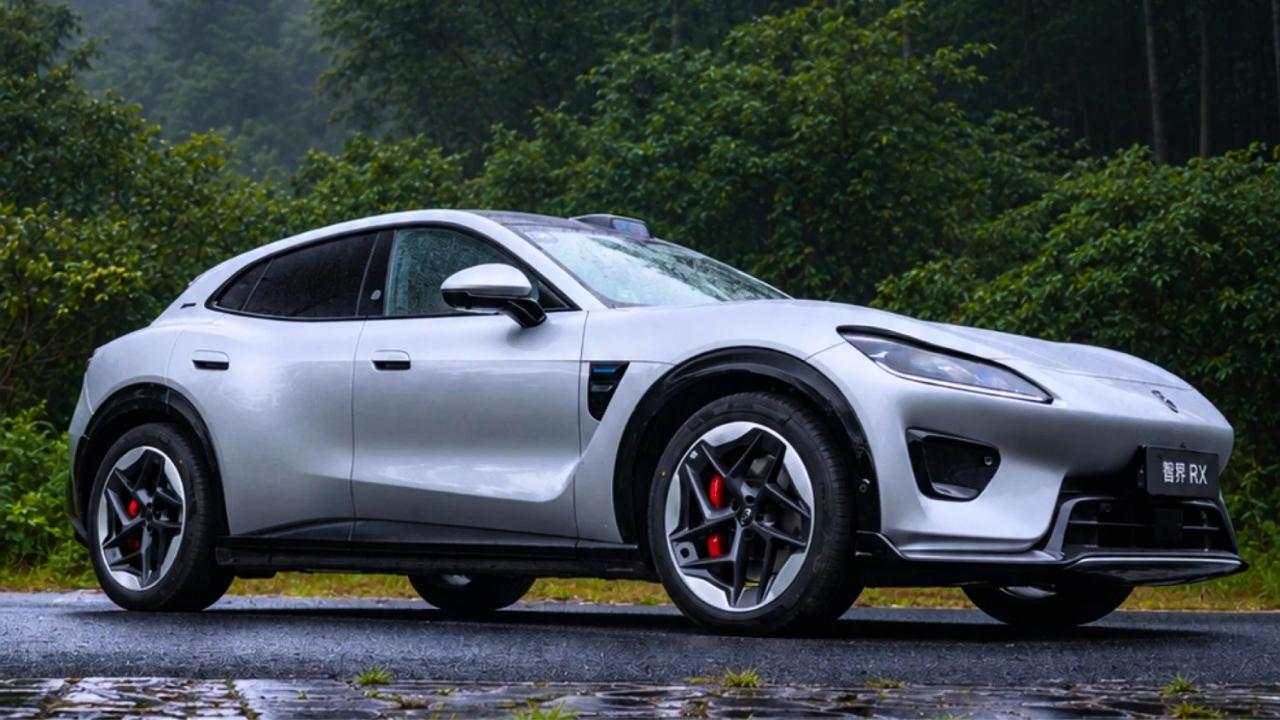
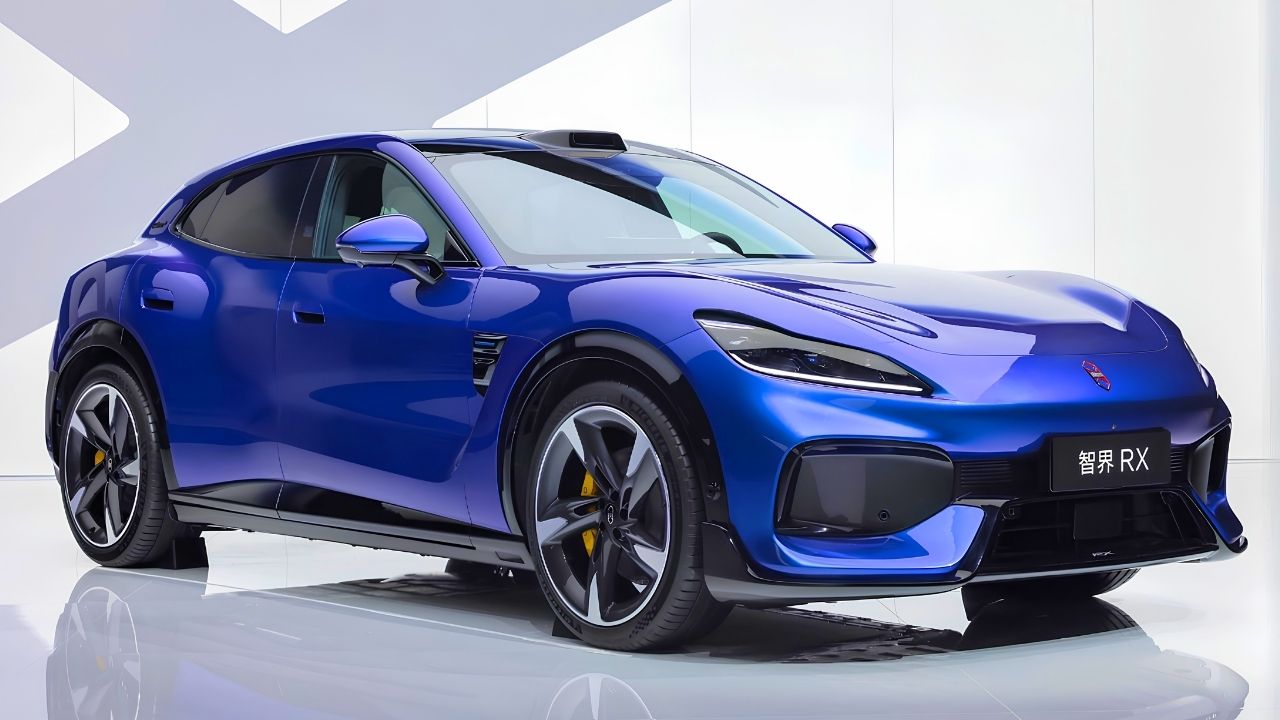
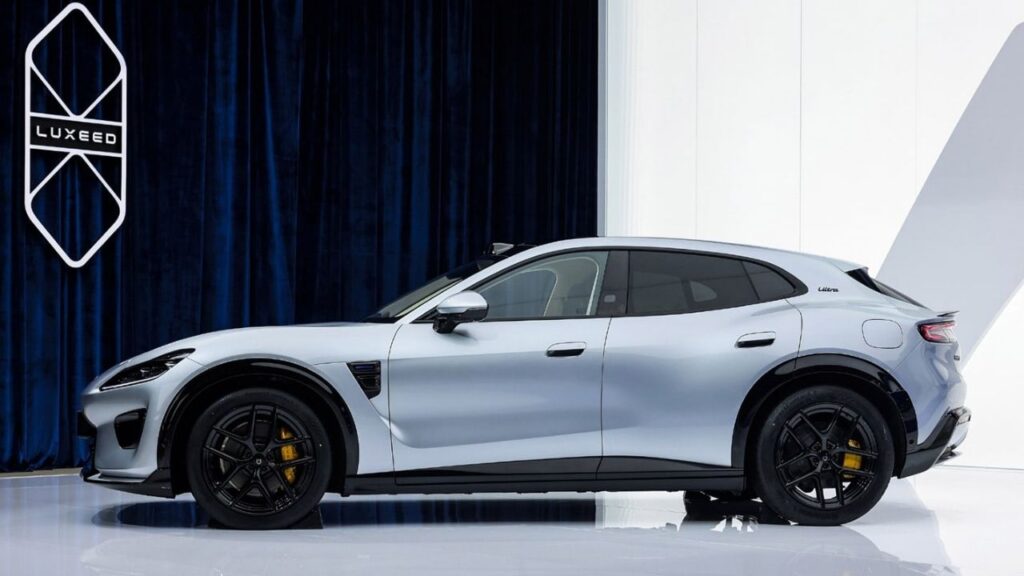
Notably, Luxeed is a new energy vehicle brand that has been created within the collaboration between the carmaker Chery and tech giant Huawei. This electric vehicle has quite a modern and futuristic design. At the front, we get to see integrated LED headlights and lower active air intakes.
Its sides have thick wheel arch cladding bracketing the dual-toned alloy wheels. Other highlights from the in-profile view are semi-hidden flush-type door handles and ORVMs on the front door. Creating the wide stance, the rear gets a full-width LED taillight, and the roof spoiler helps with better stability.
Dimensionally, it is 5,020 mm longer, 2,007 mm wider, and 1,585 mm taller with a wheelbase of 3,000 mm. One of its main rivals is the Xiaomi YU7, whose distance between the axles is identical. Its cabin has five seats in a 2-3 layout; due to its 3-metre-long wheelbase, three adults can sit comfortably.
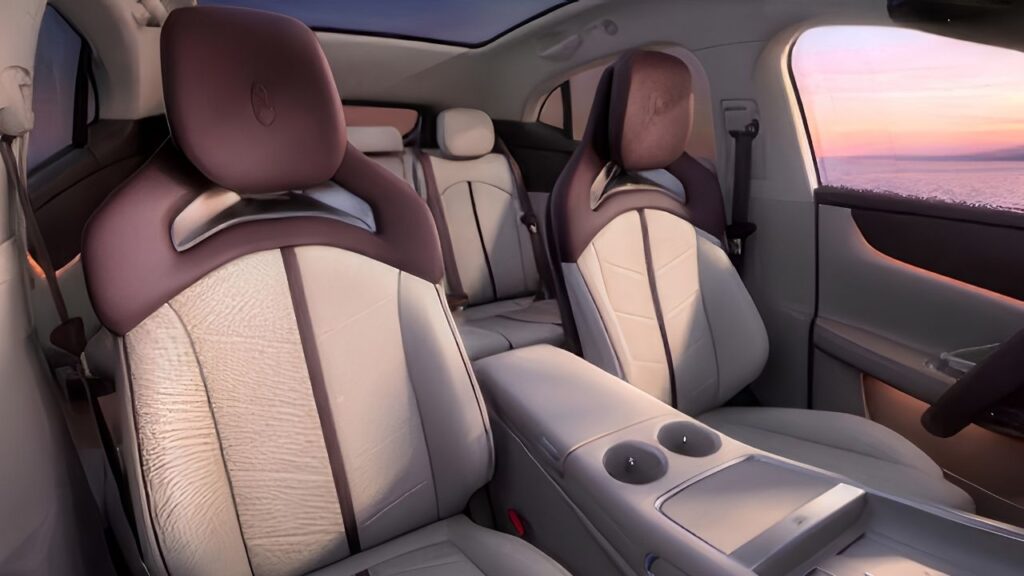
Travelling up to five people is convenient with the electric car, as it has quite a spacious cabin with good legroom, headroom, and shoulder room. Even to enhance practicality with luggage carrying, behind the second-row seats, it has enough space that it can accommodate up to four big pieces of luggage.
One more thing that is worth noting is a LIDAR sensor on its roof that we can clearly see from the front. It is part of Huawei’s Qiankun ADS (Advanced Driving System) featuring urban-road navigation assistance and highway navigation assistance and intelligent parking assistance.
Three wheel size options: 20-inch, 21-inch, and 22-inch, depending on variant. Its co-passenger and driver are separated by a centre console, which has a hidden compartment, two cup holders and a wireless smartphone charging pad. These features enhance practicality for all.
Its cabin is dominated by a 16.1-inch floating touchscreen infotainment system that is placed at the dashboard’s centre with which the driver/passenger can connect their phone wirelessly and avail themselves of the benefits of connected car technology. It also has the Huawei Xiaoyi voice assistant, which supports natural voice commands.
It has an 8.88-inch digital instrument cluster under the steering wheel, which is D-shaped and has three spokes. The spokes that are horizontally orientated have physical buttons for shortcuts and control; it will help you as a driver to act quickly during certain situations. Also has a 26-inch head-up display projecting driving data on the windscreen.
As it has a pure electric car, its wheels are moved by an electric motor instead of an internal combustion engine. A 277 kW (371 hp) electric motor is mounted on the rear axle, which gets power from a lithium-ion battery pack whose capacity varies from one another depending on the variant. The battery pack options are 81.1 kWh, 100.25 kWh, and 100.42 kWh.
There is also a powerful variant, which gets an additional 160 kW electric motor on the front axle, whose combined power output is 347 kW. Depending on the variant and battery pack configuration, the claimed, i.e., CLTC, condition range is 700 km to 852 km.
Before making any purchase decision, evaluate your requirements. The one that only comes with a single motor has less entry efficiency but is less powerful on road, due to which it significantly takes a little more time to accelerate from dash to 100 km/h, and if looking for power, then you may go with the AWD trim.
The range of 700 km or 852 km isn’t the world, which means after each full charge they won’t go for the claimed distance. The range in the real world is affected by many factors, mainly the driving style and road condition. The figure shared officially is on the road that meets CLTC conditions.
In the real world, the range of driving may drop up to 15%. It is also important to understand that with time passed the battery efficiency degraded; after excessive use of two or three years, the real-world range will also be affected.