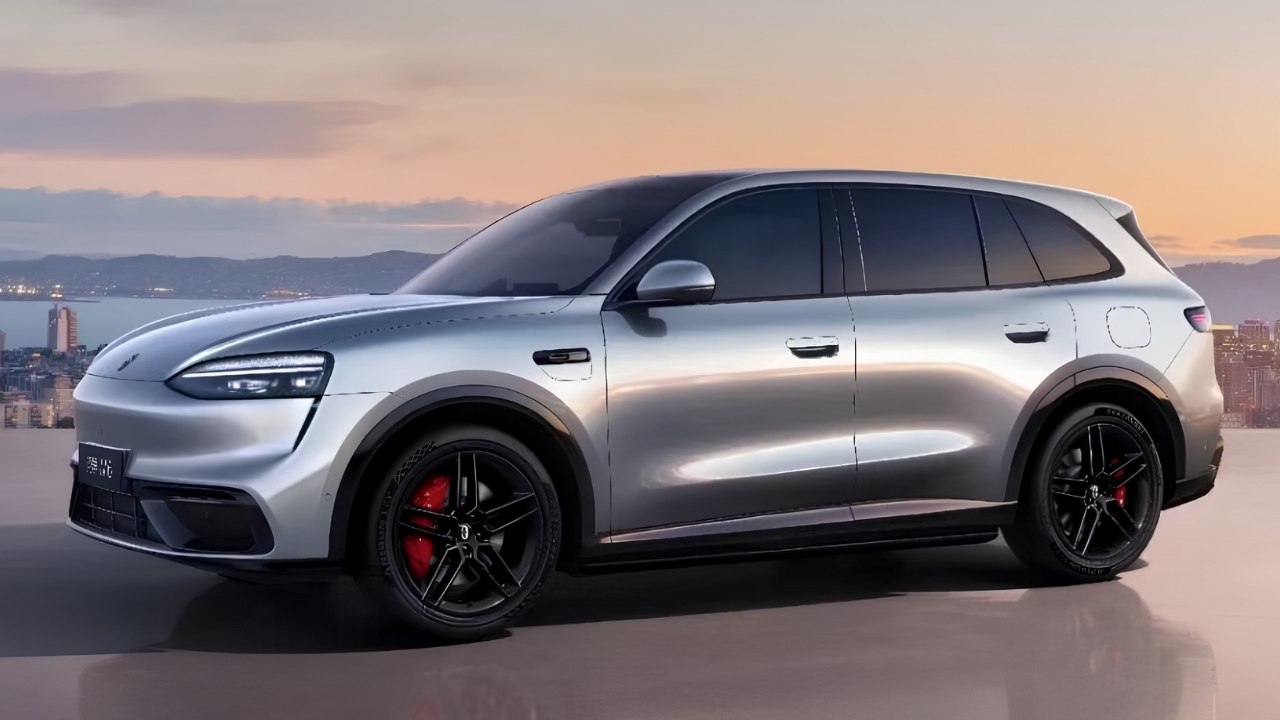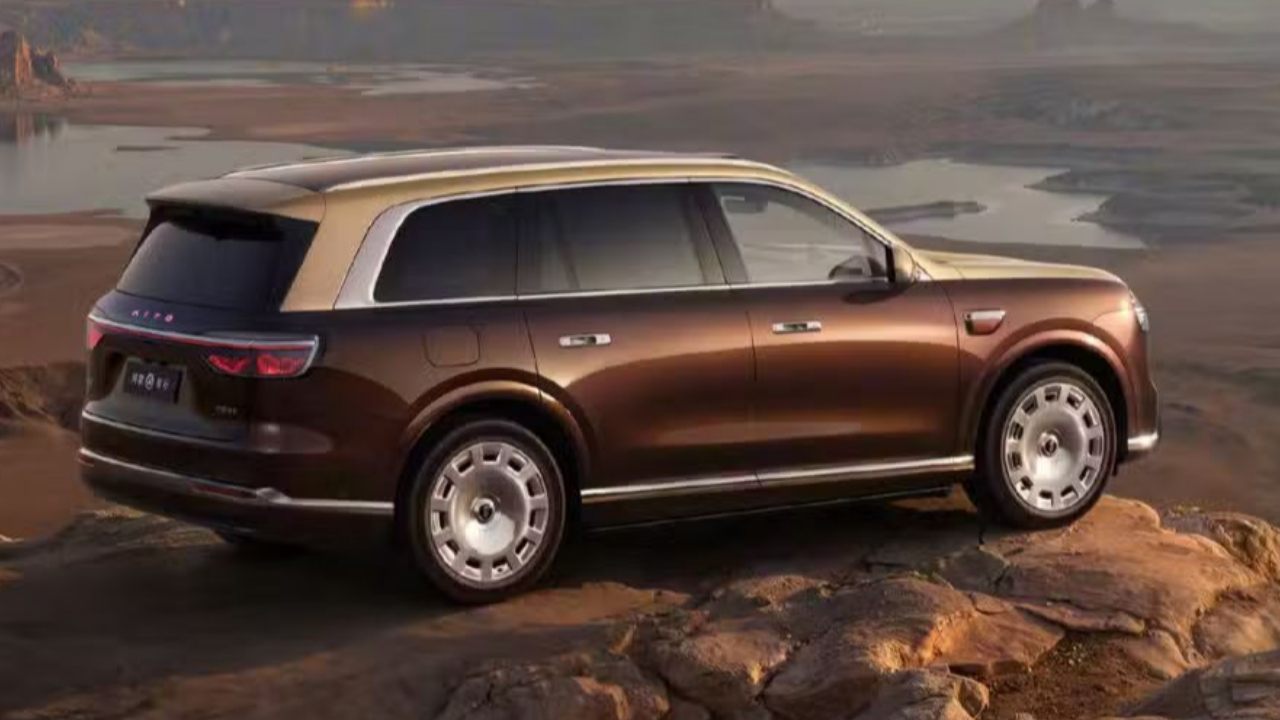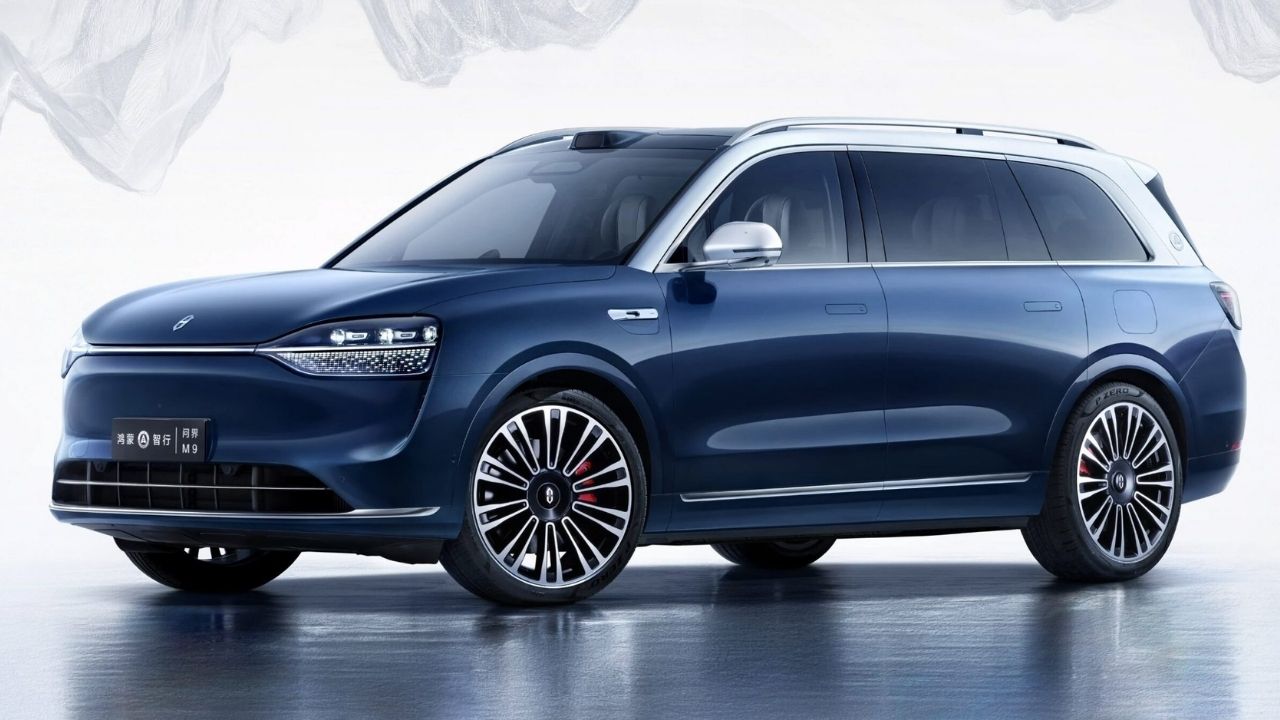
Aito, a new-energy vehicle (NEV) brand that is created jointly by Huawei and Seres Group, started the pre-sale of the all-new AITO M9 on April 22, 2026, in two variants, the Standard Edition and the Ultimate Lingshi Extended Edition, with the prices of 499,800 yuan (₹58 lakh) and 669,800 yuan (₹78 lakh). Reportedly, as of May 16, 2026, it has received more than 50,000 orders.
It was showcased to the public on April 24, 2026, at the 2026 Beijing Auto Show; however, as of now, there’s no word for its launch. Some reports suggest that the carmaker may launch it by late 2026. It is expected that the selling price is expected to be a little lower compared to the ones with which the pre-order is happening. Once launched, it will compete with Zeekr 9X, Denza N9 and Li Auto L9.
Notably, it is available with both a seating capacity of 5 people in a layout of 2-3 with large boot space and 6 people in a configuration of 2-2-2 with small cargo capacity compared to the five-seater version. The cabin is equipped with the 12.3-inch digital instrument cluster under the steering wheel, the 15.6-inch infotainment system at the centre of the dashboard, and the 16-inch front passenger display for entertainment.
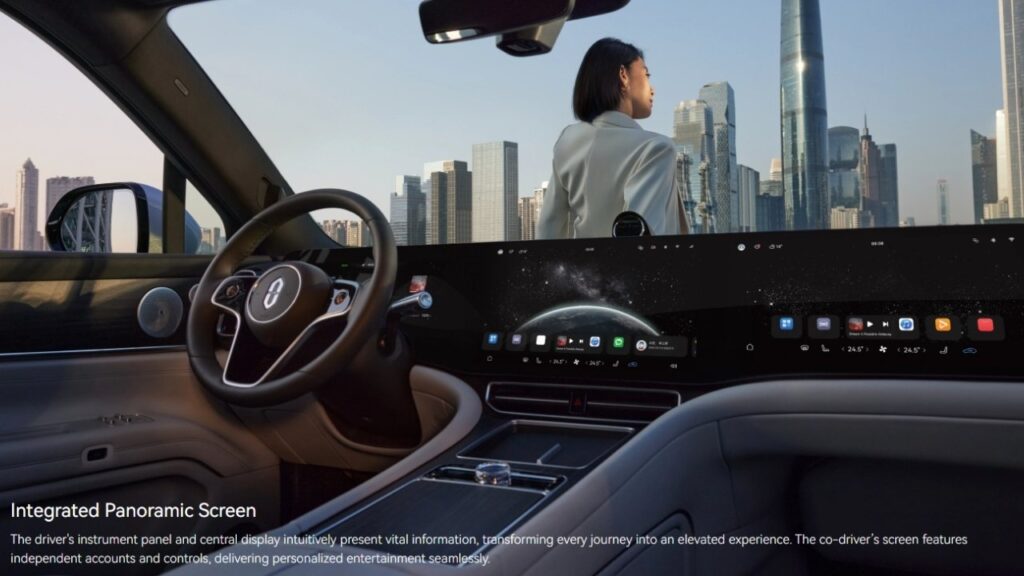
All these screens run on the next-generation HarmonyOS operating system, which supports multiple devices’ connectivity, OTA software updates and the XiaoYi AI Assistant, which controls vehicle functions, handles navigation, manages media and climate and supports conversational interaction. Both front seats are electrically adjustable with a memory function, which also supports heating, ventilation and massage functions.
The car, available with a seating capacity of 6 people gets a dual swivel captain’s seat with a separate armrest for better comfort in the second row and a bench-type seat in the third row. For rear-seating passenger entertainment, it also gets a 32-inch retractable projection screen with 3K resolution support. It gets a 25-speaker premium Huawei sound system inside the cabin to ensure an immersive sound experience.
Other notable features are a large refrigerator for heating and cooling, four-zone climate control, double-glazed acoustic glass, active sound insulation to have a peaceful cabin experience, ambient lighting, a wireless phone charging pad, a panoramic glass roof for premiumness and to make the cabin airy, a smart fragrance system and multiple storage compartments across the cabin for practicality.
It comes with the Huawei Qiankun ADS 5 with a total of six LiDAR sensors featuring both advanced urban and highway navigation autopilots. It is also equipped with the Car-to-Car Communication System 3.0, which features V2V communication without a cellular network with a range of 400 metres. The Ultimate Lingshi Extended Edition variant also comes with the onboard oxygen bar.
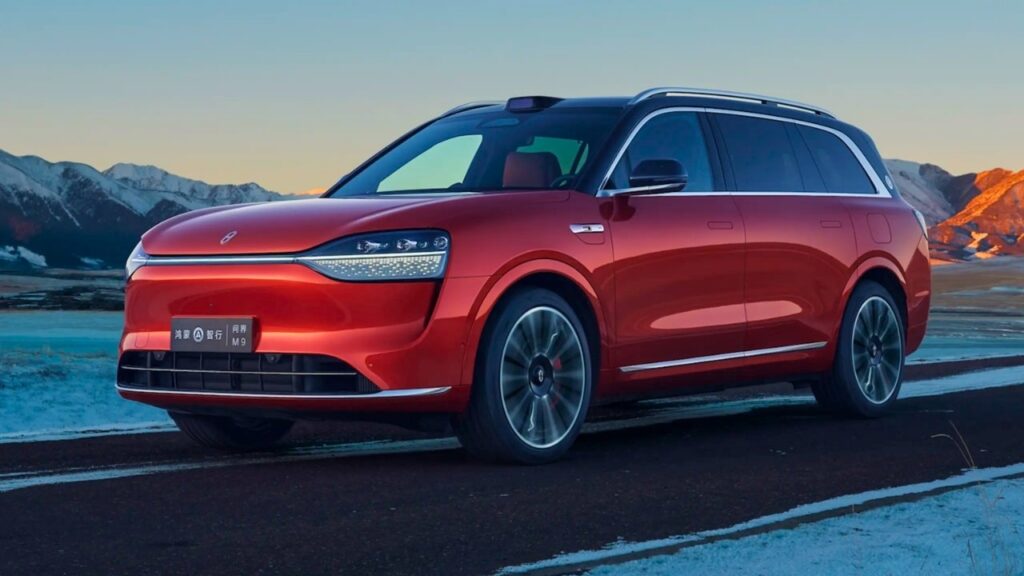
Dimensionally, the Standard Edition variant measures 5,285 mm in length, 2,026 mm in width, 1,845 mm in height, and its wheelbase is 3,125 mm; but the Ultimate Lingshi Extended Edition comes with the length, width, height and wheelbase of 5,402 mm, 2,026 mm, 1,845 mm and 3,236 mm, respectively. The former one is available with 21-inch alloy wheels, and the latter comes with 22-inch.
It is available for sale as EREV and EV; the extended-range electric version comes with two battery packs that are 60 kWh and 75 kWh. It is across six trims whose pure-electric CLTC range is 250 km, 255 km, 265 km, 315 km, 320 km, and 335 km and up to 1,474 km when the battery is fully charged and even the tank is full. Under the hood, it gets a 118 kWh 1.5-litre turbocharged petrol engine that acts as a generator, and its front and rear get a one-one electric motor, whose power output is 220 kW and 277 kW, respectively. Notably, its fuel efficiency is 6.9 litres per 100 km.
The all-electric version gets a battery pack of 120 kWh, whose CLTC range on a full charge is 628 km. It also features two motors, one on each axle, and coincidentally their maximum power output is the same. It comes as an all-wheel-drive car using single-speed automatic transmission. Reports even mention a tri-motor setup version with the maximum power output of 671 kW; however, there is no official confirmation regarding it. If there will be any with it, we will surely get to know with its launch that will take place soon.